Branding • Rebranding

Rebranding is a commercial risk. We manage it end to end.

A rebrand is one of the highest-leverage moves a serious business can make, and one of the easiest to get wrong. Customers remember the old brand. Your team is attached to it. Competitors exploit the transition window. Done well, a rebrand signals a real shift and pulls growth toward it. Done poorly, it erases recognition, confuses the pipeline, and sets the company back a year. We approach rebranding as a risk-managed engagement. Strategy before design, design before rollout, rollout before announcement. The new brand lands as the same company, matured, not a different company trying to explain itself.
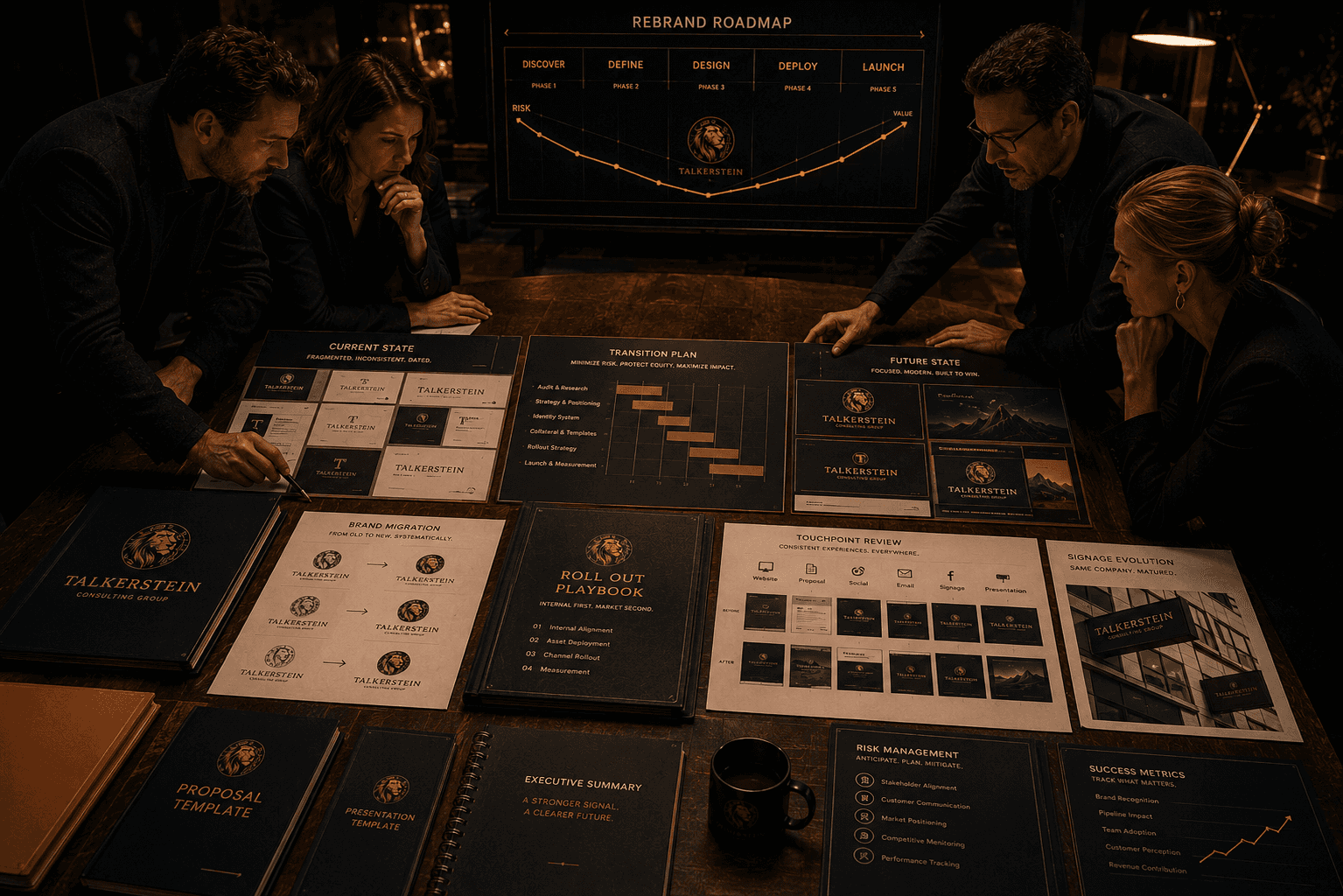
talkerstein consulting rebranding internal session

Most companies that should rebrand do not. Most that do rebrand do it for the wrong reason.

The companies that need a rebrand usually know it. The signal is not cosmetic. The signal is that every surface starts sending a conflicting message. New customers are confused about what you actually do now. Your team pitches the business five different ways on the same Monday. Investors ask what the company is again. The brand is working against the business instead of carrying it. Cosmetic refreshes will not fix that. The positioning has moved under the brand and the brand is still pointing at where the company used to be.

The companies that rebrand for the wrong reason usually do it because they are tired of their logo, or because a competitor launched a campaign they admire, or because a founder wants a creative reset. That is not a rebrand. That is a refresh dressed up as one. A refresh keeps the positioning and upgrades the surfaces. A rebrand changes the positioning and then rebuilds everything around it. Very different engagements. Very different costs. Very different risks. We will tell you which one you need on the intake call.

broken down warehouse showing the costs of a bad branding

A bad rebrand is a slow-motion revenue event.

Most rebrand damage is invisible for about ninety days. Then it shows up in the pipeline, in the team, and in the perception of the business in the market. These are the four patterns we are most often called in to repair after a rebrand has gone sideways.
Discard of brand equity

The old brand had recognition. Search terms, press mentions, partner references, customer habit. A rebrand without a migration plan throws all of it away and starts from zero. The cost of rebuilding that recognition usually exceeds the cost of the rebrand itself.

Internal team drift

If employees do not understand the why before customers do, the team pitches the company five different ways. CSMs use the old deck. AEs invent their own version. Marketing ships in the new voice. The internal split amplifies the external confusion.

Sales cycle lengthening

During transition, buyers see two versions of the company and trust neither. AEs explain the change on every call. Deals stall for a quarter. The drag on the pipeline is almost always larger than founders expect going in.

Vendor and partner misalignment

Vendors keep using the old logo. Partners keep listing the old name. Integrations, listings, press, and directories remain out of date for months. The market sees a half-rebrand and assumes the company is in trouble.

Discard of brand equity

The old brand had recognition. Search terms, press mentions, partner references, customer habit. A rebrand without a migration plan throws all of it away and starts from zero. The cost of rebuilding that recognition usually exceeds the cost of the rebrand itself.

Internal team drift

If employees do not understand the why before customers do, the team pitches the company five different ways. CSMs use the old deck. AEs invent their own version. Marketing ships in the new voice. The internal split amplifies the external confusion.

Sales cycle lengthening

During transition, buyers see two versions of the company and trust neither. AEs explain the change on every call. Deals stall for a quarter. The drag on the pipeline is almost always larger than founders expect going in.

Vendor and partner misalignment

Vendors keep using the old logo. Partners keep listing the old name. Integrations, listings, press, and directories remain out of date for months. The market sees a half-rebrand and assumes the company is in trouble.

Discard of brand equity

The old brand had recognition. Search terms, press mentions, partner references, customer habit. A rebrand without a migration plan throws all of it away and starts from zero. The cost of rebuilding that recognition usually exceeds the cost of the rebrand itself.

Sales cycle lengthening

During transition, buyers see two versions of the company and trust neither. AEs explain the change on every call. Deals stall for a quarter. The drag on the pipeline is almost always larger than founders expect going in.

Internal team drift

If employees do not understand the why before customers do, the team pitches the company five different ways. CSMs use the old deck. AEs invent their own version. Marketing ships in the new voice. The internal split amplifies the external confusion.

Vendor and partner misalignment

Vendors keep using the old logo. Partners keep listing the old name. Integrations, listings, press, and directories remain out of date for months. The market sees a half-rebrand and assumes the company is in trouble.

a rebranding startegy graphic by talkerstein consulting

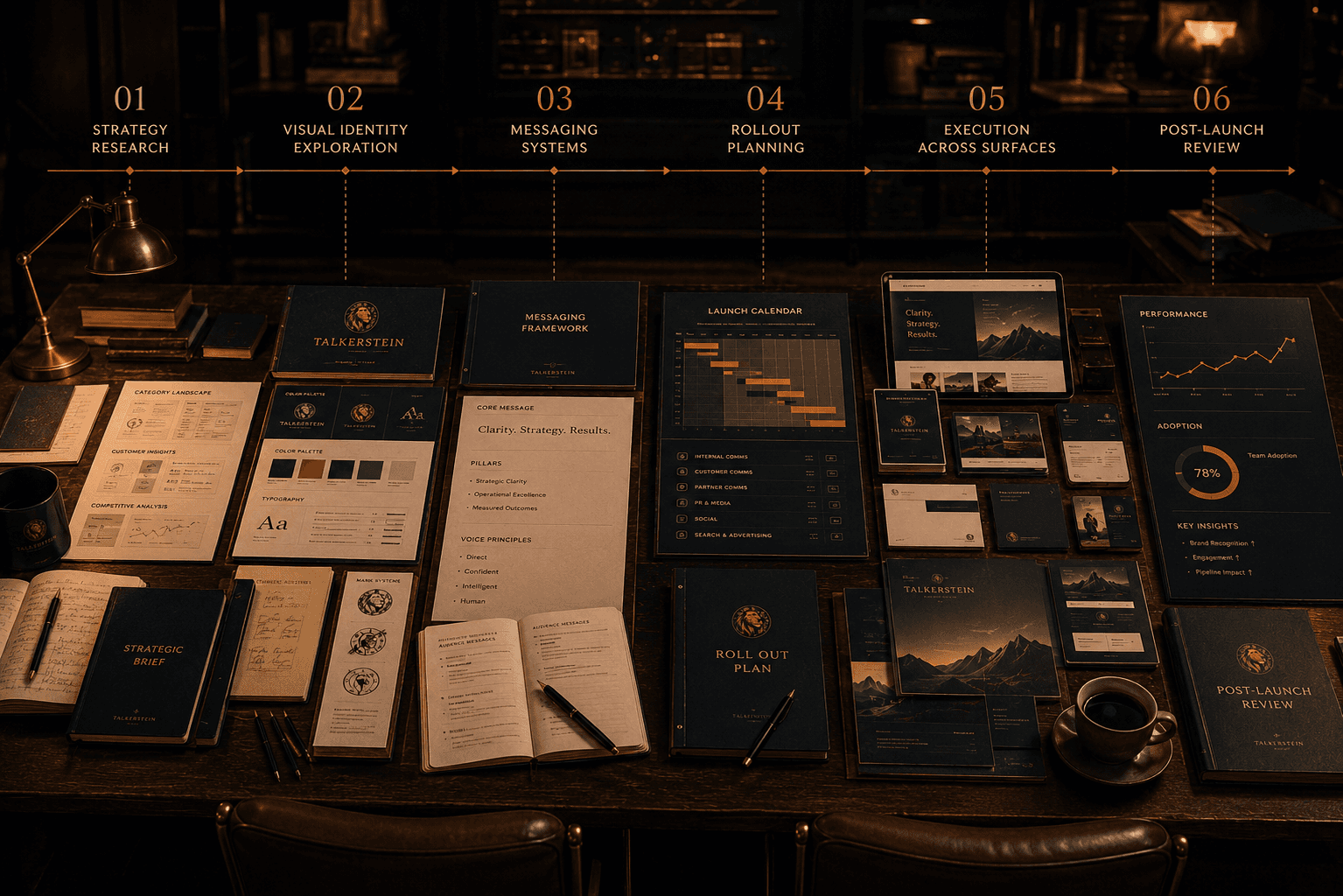
Six tracks run in a specific order. Nothing skipped.

A rebrand is scoped as a single engagement. Each track depends on the one before it, and skipping any single track is how rebrands quietly fail. Scope, timeline, and cost depend on company size, market presence, the complexity of the customer base, and how many surfaces the brand touches. We scope on the discovery call.

Strategy and positioning

Audit of the current brand against what the business actually is now. Customer and lost-deal interviews. Competitive and category read. Working session with leadership to land on the new positioning statement, pillars, and strategic brief. Output: the single document every later decision is tested against.

Messaging and voice

Core messaging, audience-specific language, voice principles, and worked examples for sales, marketing, support, and product copy. Shared vocabulary so the new language reaches the team in days, not quarters.

Execution across surfaces

Website, deck, proposals, email templates, social, signage, product UI surfaces, swag, and the twenty smaller artifacts that usually get forgotten. We inventory every live surface in the audit phase and ship them on launch day, not afterwards.

Visual identity rebuild

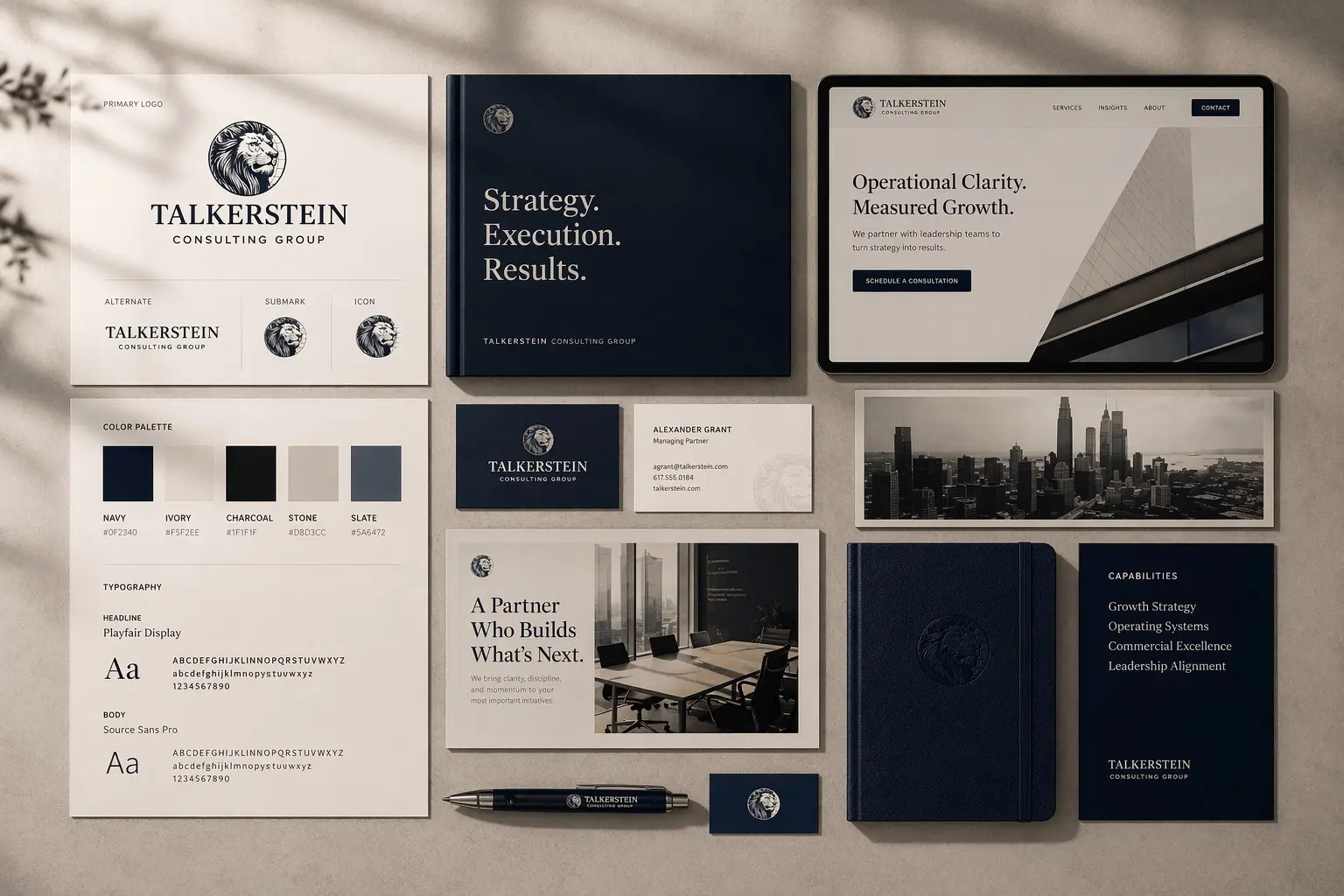
New logo system, colour, typography, imagery direction, and a full visual system built against the new positioning. Delivered as editable files, a system document, and enough application examples to prove the system works across the surfaces you actually ship on.

Rollout strategy

The launch calendar. Who hears first, when, in what order. Internal comms, external comms, customer comms, partner and vendor comms, PR, social, search, and advertising. The rollout sequence is where most rebrands succeed or fail.

Post-launch support and measurement

Sixty days of monitoring, team training, vendor follow-up, and adoption tracking. Every rebrand has questions that only surface after launch. We stay close through the window where those questions matter most.

Strategy and positioning

Audit of the current brand against what the business actually is now. Customer and lost-deal interviews. Competitive and category read. Working session with leadership to land on the new positioning statement, pillars, and strategic brief. Output: the single document every later decision is tested against.

Messaging and voice

Core messaging, audience-specific language, voice principles, and worked examples for sales, marketing, support, and product copy. Shared vocabulary so the new language reaches the team in days, not quarters.

Execution across surfaces

Website, deck, proposals, email templates, social, signage, product UI surfaces, swag, and the twenty smaller artifacts that usually get forgotten. We inventory every live surface in the audit phase and ship them on launch day, not afterwards.

Visual identity rebuild

New logo system, colour, typography, imagery direction, and a full visual system built against the new positioning. Delivered as editable files, a system document, and enough application examples to prove the system works across the surfaces you actually ship on.

Rollout strategy

The launch calendar. Who hears first, when, in what order. Internal comms, external comms, customer comms, partner and vendor comms, PR, social, search, and advertising. The rollout sequence is where most rebrands succeed or fail.

Post-launch support and measurement

Sixty days of monitoring, team training, vendor follow-up, and adoption tracking. Every rebrand has questions that only surface after launch. We stay close through the window where those questions matter most.

Strategy and positioning

Audit of the current brand against what the business actually is now. Customer and lost-deal interviews. Competitive and category read. Working session with leadership to land on the new positioning statement, pillars, and strategic brief. Output: the single document every later decision is tested against.

Visual identity rebuild

New logo system, colour, typography, imagery direction, and a full visual system built against the new positioning. Delivered as editable files, a system document, and enough application examples to prove the system works across the surfaces you actually ship on.

Messaging and voice

Core messaging, audience-specific language, voice principles, and worked examples for sales, marketing, support, and product copy. Shared vocabulary so the new language reaches the team in days, not quarters.

Rollout strategy

The launch calendar. Who hears first, when, in what order. Internal comms, external comms, customer comms, partner and vendor comms, PR, social, search, and advertising. The rollout sequence is where most rebrands succeed or fail.

Execution across surfaces

Website, deck, proposals, email templates, social, signage, product UI surfaces, swag, and the twenty smaller artifacts that usually get forgotten. We inventory every live surface in the audit phase and ship them on launch day, not afterwards.

Post-launch support and measurement

Sixty days of monitoring, team training, vendor follow-up, and adoption tracking. Every rebrand has questions that only surface after launch. We stay close through the window where those questions matter most.

rebranding graphic of strategizing a roadmap by talkerstein consulting

Four phases. Strategy, build, prepare, launch. Twelve to sixteen weeks typical.

Phase 1: Diagnose

We interview leadership, sales, support, and a targeted sample of customers and lost deals. We audit every live brand surface. We map every vendor and partner the brand touches. Output: a signals memo that tells you honestly whether a rebrand is the right move, and if so, which risks we need to manage on the way through.

Phase 2: Frame

A half-day working session with leadership. We land the new positioning, pillars, and brief. We decide the scope of the rebrand: what is changing, what is staying, what we are protecting from the old brand. Output: a strategic brief with enough agreement in the leadership room that nobody re-litigates it two months in.

Phase 3: Build

Visual identity rebuild. Messaging and voice. Rollout plan. Surface-by-surface execution. Internal training materials. External announcement assets. Output: a full launch-ready package plus a coordinated rollout calendar every stakeholder can see.

Phase 4: Hand off

Internal reveal first, external launch second, partner and vendor follow-up third. Team training sessions. Sixty-day monitoring of adoption, questions, and any signal that the market is misreading the change. Output: the company is living the new brand inside thirty days, and the transition noise is gone inside ninety.

a rebranding session meeting with talkerstein consulting

Five rules we enforce on every rebrand.

Rebrand because strategy demands it.

We will tell you no if the reason is cosmetic. A refresh will protect more equity and solve the real problem faster when the positioning is intact.

Retire the old brand cleanly.

Running two brands in parallel is how a rebrand dies. We inventory the old brand's surfaces, retire each one on a specific date, and archive rather than delete.

Coordination beats perfection.

A ninety percent ready launch that ships coordinated beats a hundred percent launch that ships staggered. The single launch day is the one asymmetric moment in the process.

Employees understand the why first.

If your team cannot answer why the company rebranded in plain language, the market will not either. Internal rollout runs before the external announcement, not after.

Build for longevity, not for trend.

A rebrand is a once-a-decade move. We design against longevity. Rapidly dated aesthetics are an expensive problem eighteen months after launch, not an interesting one.

Rebrand because strategy demands it.

We will tell you no if the reason is cosmetic. A refresh will protect more equity and solve the real problem faster when the positioning is intact.

Retire the old brand cleanly.

Running two brands in parallel is how a rebrand dies. We inventory the old brand's surfaces, retire each one on a specific date, and archive rather than delete.

Coordination beats perfection.

A ninety percent ready launch that ships coordinated beats a hundred percent launch that ships staggered. The single launch day is the one asymmetric moment in the process.

Employees understand the why first.

If your team cannot answer why the company rebranded in plain language, the market will not either. Internal rollout runs before the external announcement, not after.

Build for longevity, not for trend.

A rebrand is a once-a-decade move. We design against longevity. Rapidly dated aesthetics are an expensive problem eighteen months after launch, not an interesting one.

Rebrand because strategy demands it.

We will tell you no if the reason is cosmetic. A refresh will protect more equity and solve the real problem faster when the positioning is intact.

Employees understand the why first.

If your team cannot answer why the company rebranded in plain language, the market will not either. Internal rollout runs before the external announcement, not after.

Retire the old brand cleanly.

Running two brands in parallel is how a rebrand dies. We inventory the old brand's surfaces, retire each one on a specific date, and archive rather than delete.

Build for longevity, not for trend.

A rebrand is a once-a-decade move. We design against longevity. Rapidly dated aesthetics are an expensive problem eighteen months after launch, not an interesting one.

Coordination beats perfection.

A ninety percent ready launch that ships coordinated beats a hundred percent launch that ships staggered. The single launch day is the one asymmetric moment in the process.

a roadmap graphic of the first ninety days after a successful rebranding launch by talkerstein consulting group

Six shifts you will notice in the first ninety days.

Companies that adopt the system inside a real rollout window tend to see the same pattern inside ninety days. The sales team starts pitching the same company. Marketing stops rewriting foundations on every campaign. Content tightens. New hires ramp faster.

Sales calls open cleanly. The deck matches the website matches the proposal matches the team's language. Buyers understand the offer in the first two minutes, not the last five.
The rebrand creates a natural moment for a second look from the market. Partners, press, and investors re-engage. Conversations that stalled on the old positioning resume.
A brand that signals the current seriousness of the business holds price better than one stuck at an earlier stage. Discount asks drop. Mid-market and enterprise conversations get easier.
The people who reach out to you after launch match the new positioning better than the ones who reached out before it. The pipeline starts to concentrate around the buyer you are now built for.
New hires pick up the positioning in days. Existing team members stop pitching the company five different ways. The internal narrative becomes the external narrative.
The brand compounds instead of drifting. Every new surface reinforces the last one. The brand starts to feel thicker and more serious over time, not thinner.
Sales calls open cleanly. The deck matches the website matches the proposal matches the team's language. Buyers understand the offer in the first two minutes, not the last five.
The rebrand creates a natural moment for a second look from the market. Partners, press, and investors re-engage. Conversations that stalled on the old positioning resume.
A brand that signals the current seriousness of the business holds price better than one stuck at an earlier stage. Discount asks drop. Mid-market and enterprise conversations get easier.
The people who reach out to you after launch match the new positioning better than the ones who reached out before it. The pipeline starts to concentrate around the buyer you are now built for.
New hires pick up the positioning in days. Existing team members stop pitching the company five different ways. The internal narrative becomes the external narrative.
The brand compounds instead of drifting. Every new surface reinforces the last one. The brand starts to feel thicker and more serious over time, not thinner.
Sales calls open cleanly. The deck matches the website matches the proposal matches the team's language. Buyers understand the offer in the first two minutes, not the last five.
The people who reach out to you after launch match the new positioning better than the ones who reached out before it. The pipeline starts to concentrate around the buyer you are now built for.
The rebrand creates a natural moment for a second look from the market. Partners, press, and investors re-engage. Conversations that stalled on the old positioning resume.
New hires pick up the positioning in days. Existing team members stop pitching the company five different ways. The internal narrative becomes the external narrative.
A brand that signals the current seriousness of the business holds price better than one stuck at an earlier stage. Discount asks drop. Mid-market and enterprise conversations get easier.
The brand compounds instead of drifting. Every new surface reinforces the last one. The brand starts to feel thicker and more serious over time, not thinner.
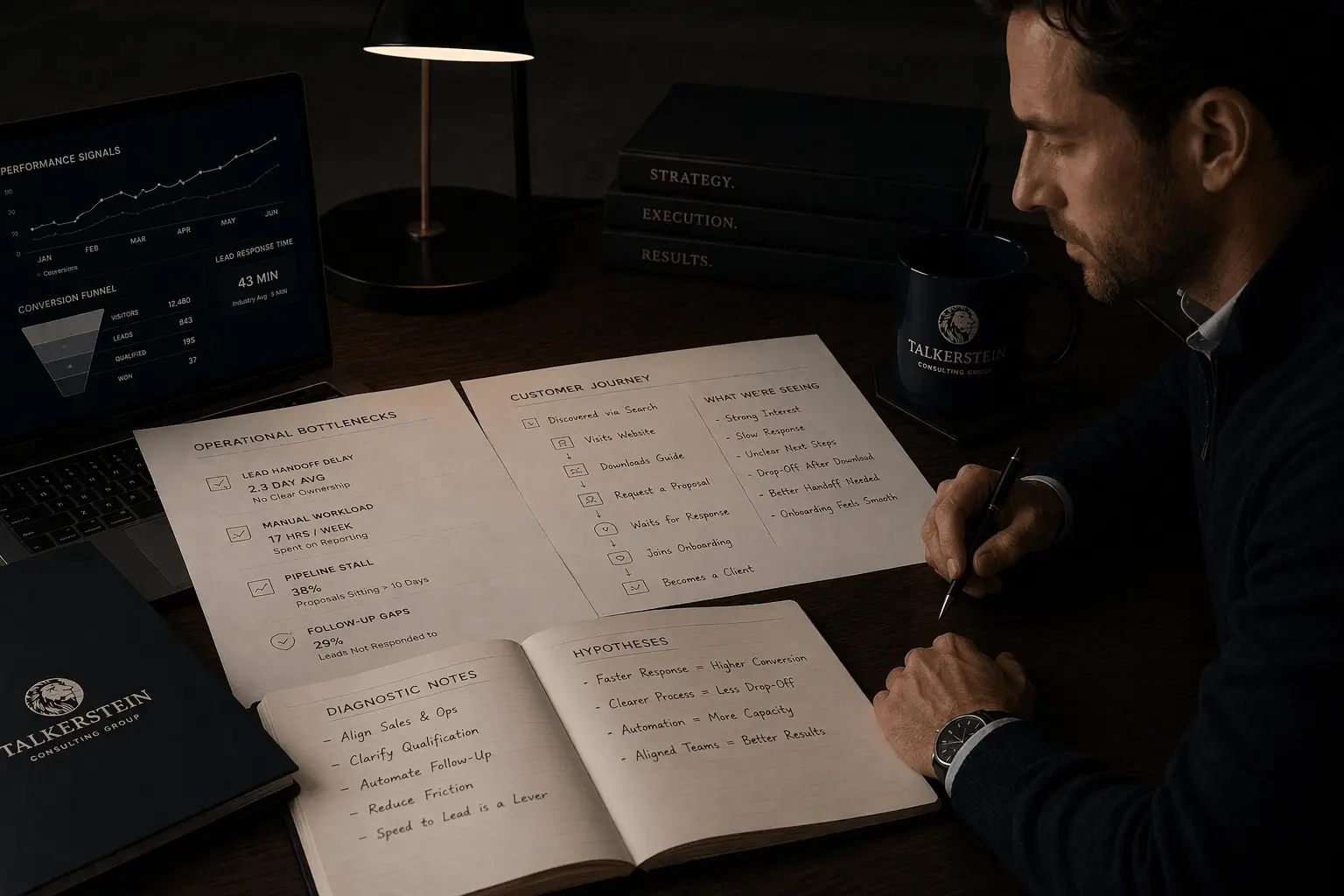
a closing session by talkerstein consulting discussing the rebranding plan with the company

Who is a rebrand built for?

Work with us on a rebrand if
  • Your brand is measurably out of step with what the business now is or where it is going.

  • You have grown past your founder-era identity, or pivoted into a category the old brand cannot carry.

  • You have acquired or merged, and the combined company needs one coherent brand.

  • Competitors are now occupying the position your brand used to claim, and a refresh will not reclaim it.

  • Leadership is willing to commit the bandwidth and authority a real rebrand needs.

Probably not the right fit
  • You want a refresh, not a rebrand. Those are different engagements with different costs and different risks.

  • Your leadership team is not aligned on the need. A rebrand cannot resolve a strategic disagreement the leadership has not had yet.

  • You plan to run the old brand alongside the new one. That is how rebrands die in the market.

  • You are mid-fundraise or mid-sale and looking for a cosmetic boost. The timing will burn cash and confuse buyers.

  • You cannot protect a single launch day across every surface. A staggered rebrand is a worse outcome than no rebrand.

What serious buyers usually ask.

How do we know if we need a rebrand versus a refresh?

Simplest test: write the one sentence that describes the company you are now. Then look at your current brand. If the brand is pointing at where you were, not where you are, you are looking at a rebrand. If the brand still reflects the company but the surfaces are dated, inconsistent, or off-trend, a refresh does the job and is usually a third of the cost and risk. We will give you an honest read on the intake call.

How long does a full rebrand actually take?

Twelve to sixteen weeks for most companies. Eight to ten weeks for a simpler company with fewer surfaces and a decisive leadership group. Twenty-plus weeks for companies with multiple business units, high stakeholder counts, or regulated markets. Faster timelines compress quality or compress coordination. We will tell you what a realistic timeline looks like before you commit.

What does a full rebrand typically cost?

The scope drives the number. Most rebrands we run sit in the low-five to mid-five-figure range for strategy, identity, messaging, and guidelines. Rollout execution across every surface adds meaningfully on top. Multi-brand portfolios and enterprise rebrands sit higher. We scope on the discovery call and we will not quote until we understand the surfaces.

What happens to customers who know the old brand?

We plan for them. Customer communication starts at the announcement, not before. The message is consistent: same company, evolved, here is why. Most customers follow. A small number do not. We have never seen the customer loss exceed what leadership expected when the rebrand had genuine strategic justification. When it did not, the losses tended to be larger than the rebrand's intended benefit.

How long should the guidelines actually be?

Between eight and twenty pages for most companies. Fewer than eight usually means something was cut that should not have been. More than twenty means the document is about to go unread, which defeats the purpose.

How do we get the team to actually use it after launch?

Three things move the needle. A one-hour training session where the document is walked through in use. The Figma file and templates installed in the workspace people already live in. A named internal owner for the rulebook so updates and questions have a home.

What happens when something needs to break the rule?

That is a leadership call, not a guideline failure. The document gives your team permission to execute inside the rules. When a real reason exists to break one, leadership calls it, and the exception gets documented for next time.

Can you include product or UI guidelines in the same document?

We can document the brand side of product and UI: typography, color, voice in product copy, and iconography direction. Full design-system work with components, states, and accessibility tokens is a separate engagement that we scope with your product team.

How do we keep the guidelines current as the brand evolves?

The Figma file is versioned. The PDF is exported on demand. Most teams run a light revision every twelve to eighteen months. We offer a retainer for that cadence for companies that want the update managed externally.

What usually turns into the next step after guidelines land?

The most common next step is a brand rollout engagement, which is how the new rules actually reach the team, the market, and your channels. The second most common is a website rebuild or a sales enablement refresh that uses the new templates.

What does a strong messaging engagement usually turn into next?

A website messaging rebuild, a sales enablement sprint, a campaign concept build, or a full visual identity refresh informed by the new narrative. Messaging is upstream of most of the marketing work that actually moves revenue.

Our Services
What Our Partners Think

They are highly supportive! I feel completely supported in every part of my marketing. They are a wonderful team of people each bring in their own talents and strengths. They are responsive and eager to please and it's been a pleasure working with them.

Tova, Toronto

Co-owner of FRINGE boutique

What Our Partners Think

They are highly supportive! I feel completely supported in every part of my marketing. They are a wonderful team of people each bring in their own talents and strengths. They are responsive and eager to please and it's been a pleasure working with them.

Tova, Toronto

Co-owner of FRINGE boutique

Let's Work Together

What Our Partners Think

They are highly supportive! I feel completely supported in every part of my marketing. They are a wonderful team of people each bring in their own talents and strengths. They are responsive and eager to please and it's been a pleasure working with them.

Tova, Toronto

Co-owner of FRINGE boutique

What Our Partners Think

They are highly supportive! I feel completely supported in every part of my marketing. They are a wonderful team of people each bring in their own talents and strengths. They are responsive and eager to please and it's been a pleasure working with them.

Tova, Toronto

Co-owner of FRINGE boutique

Let's Work Together