
Consulting • Business Diagnostics
Most founders misdiagnose the problem. The diagnostic exists so you do not fix the wrong thing.
Business diagnostics for Toronto founders — find where growth is actually stuck.
Something is off. Revenue is flat in a quarter it should have grown. The sales team is busy and missing a target. The marketing program is running and the pipeline is not responding. Churn is creeping up in a segment nobody has time to look at closely. You know enough to feel the pressure. You do not know enough to name the one thing. So the pattern repeats. The founder picks the most visible candidate, the team launches a fix, six months disappear, and the pattern holds.
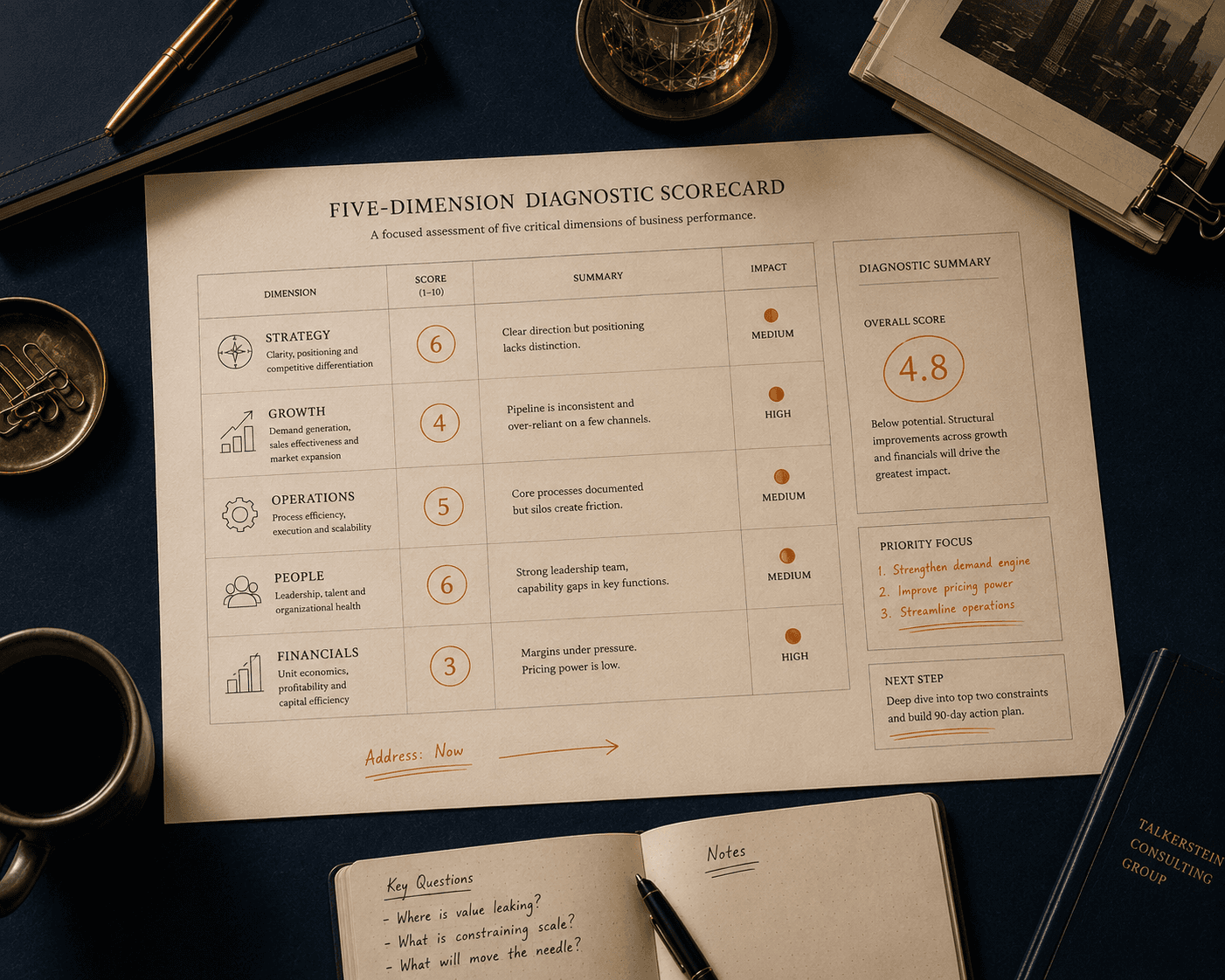
The Move Most Founders Skip
The most expensive mistake in a growth-stage business is rarely the fix itself. It is the unchecked diagnosis that put the fix on the whiteboard in the first place. A founder decides sales is the problem, hires a VP of Sales, and two quarters later the pipeline behaves the same way it did before the hire. Sales was downstream of a positioning gap the team never resolved. Another founder decides the issue is operations, restructures the team, and watches margin improve on paper while revenue stays flat. The real issue was a product-market fit gap in the largest segment.
A diagnostic reverses the order. Before any fix gets named, we answer the question nobody has time to answer. Where is the actual bottleneck, and what evidence defends that call. We look at the five dimensions that contain almost every growth-stage failure mode: strategy and positioning, market and category, operations and team, execution and delivery, growth and revenue. Each is scored against what is working, what is fraying, and what is quietly structural.
The output is a defensible, evidence-backed point of view on the one thing to fix first, why, and what the probable cost of delaying it is. That point of view is the cheapest piece of decision protection a growth-stage business can buy, because it guards every downstream execution dollar.
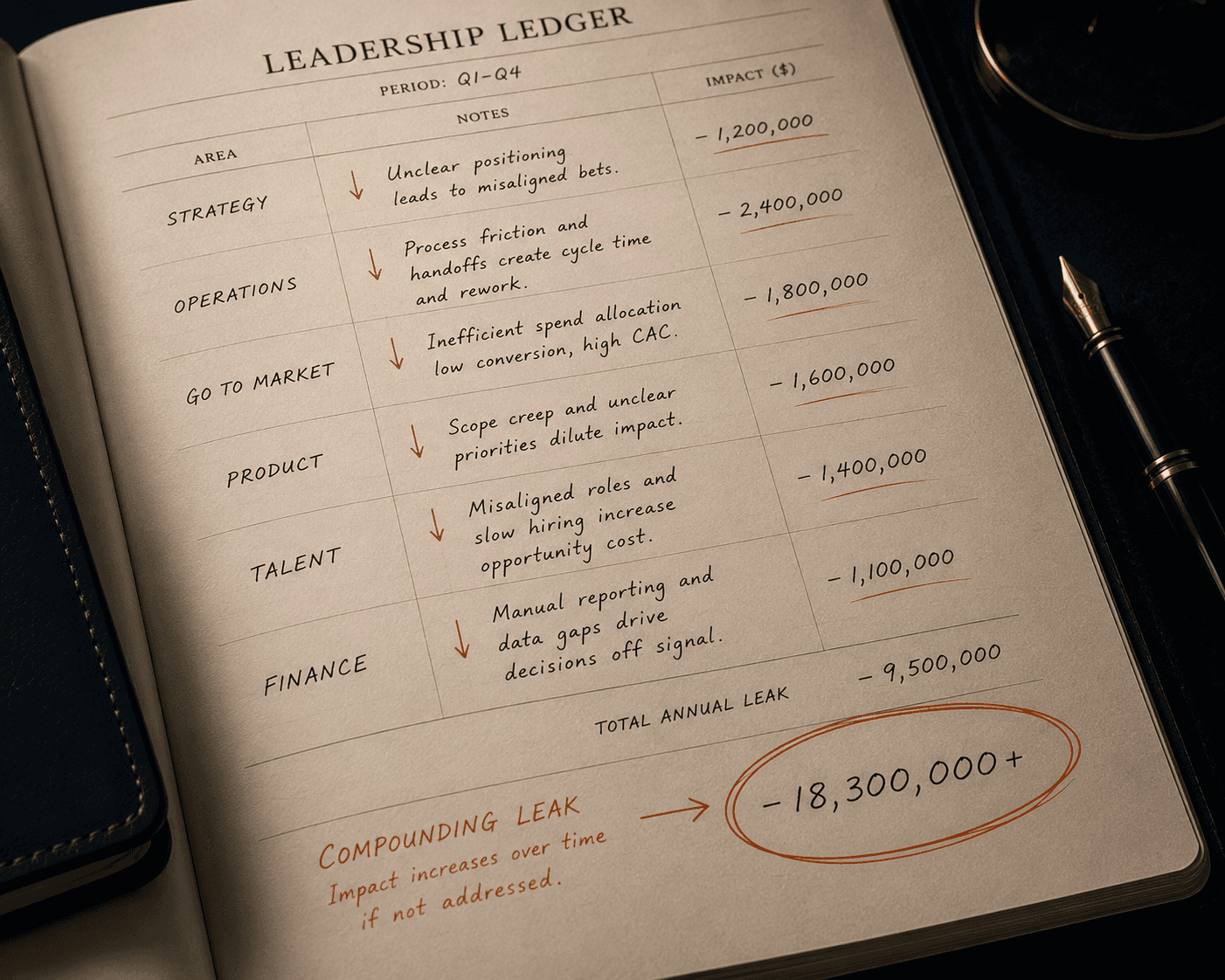
What Skipping Diagnosis Actually Costs
Six quiet leaks that show up when a growth-stage business runs without a structured diagnosis.
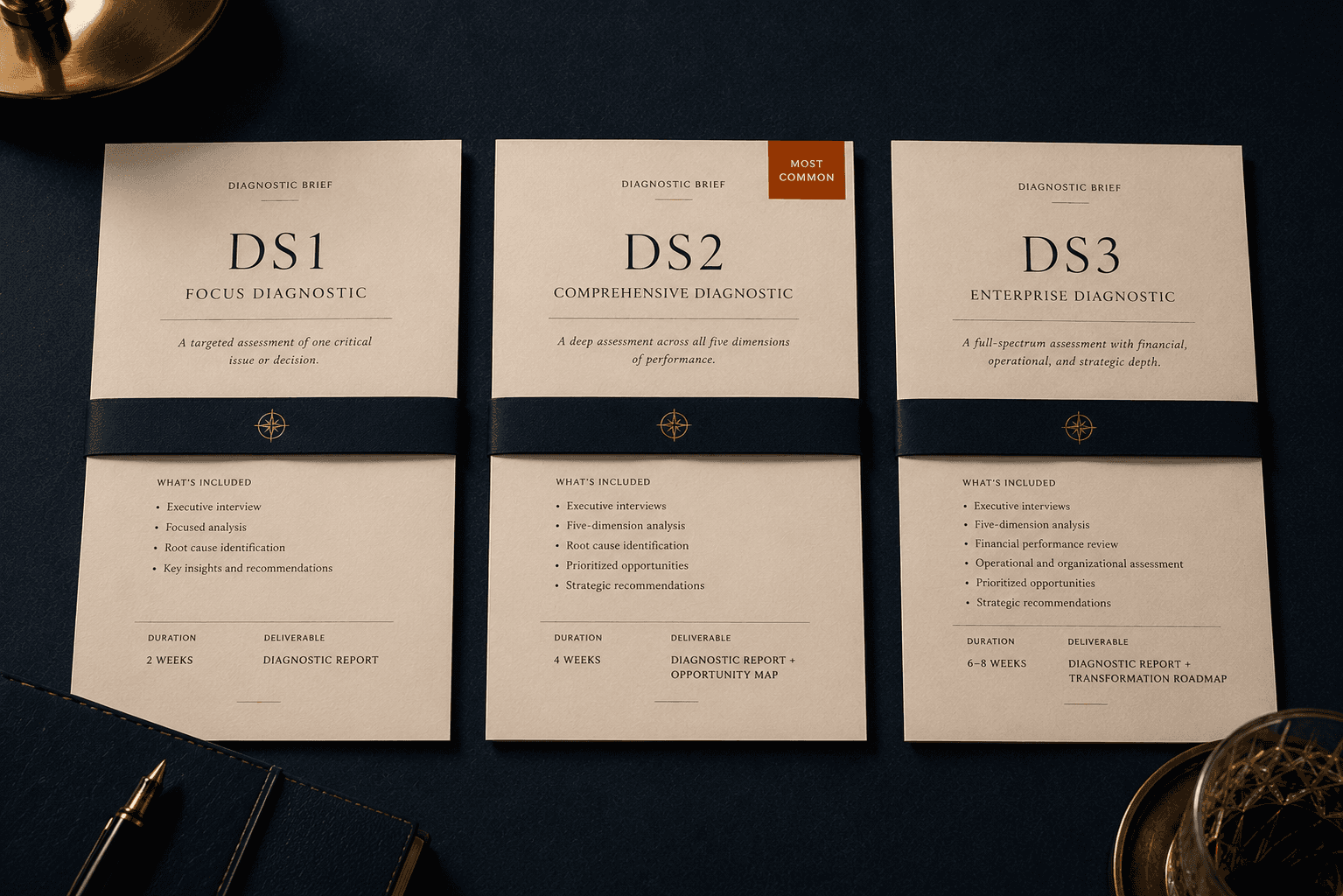
How we scope the work
Three engagement shapes. Same diagnostic spine, different depth and horizon.
The diagnostic runs as its own engagement and also sits at the front of any consulting or growth-planning engagement where the founder is not yet confident about the bottleneck. All three shapes produce the same core output: a written diagnostic, a five-dimension scorecard, and a prioritized recommendation. What changes is depth of interviews, breadth of customer evidence, and the amount of post-diagnostic advisory included.
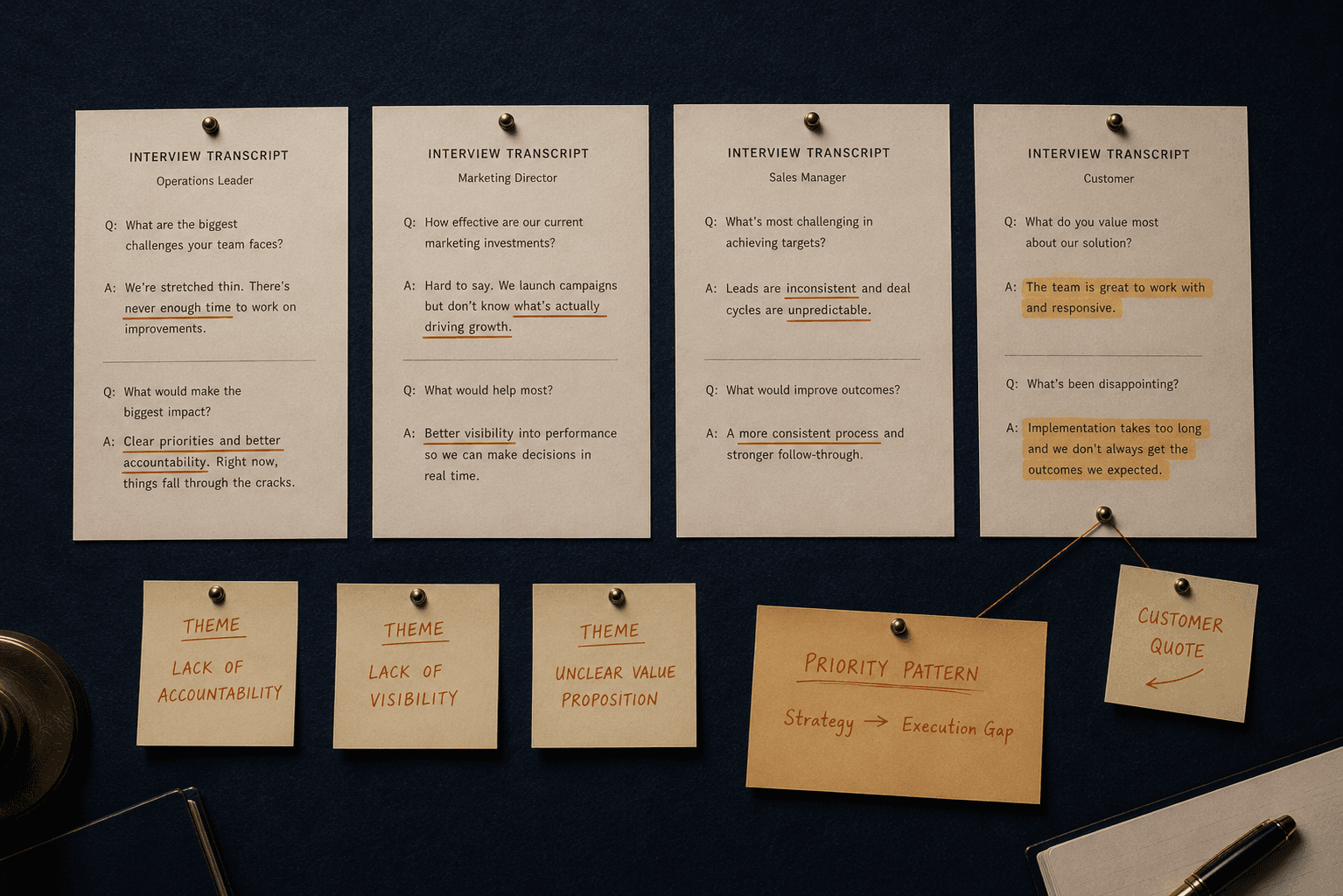
How the work actually runs. Four phases. You own the decision. We do the interviews, the data work, and the hard priority call.
01 / Intake
We start with a structured intake across all five dimensions. A ninety-minute kickoff with the founder. A written diagnostic questionnaire. A data request covering revenue, pipeline, margin, and the commercial and product metrics already being tracked. The goal of this phase is not to draw conclusions. It is to make sure we know what the leadership team already believes, what the data actually says, and where the gaps sit.
02 / Investigate
We collect the signal that lives outside the founder's head. Stakeholder interviews across leadership, sales, marketing, product, ops, and support with a consistent protocol so answers are comparable. Customer interviews across current accounts, churned accounts, and target prospects, which is where the truth about positioning and product almost always lives. A competitive scan and a financial read against unit economics. This is where the diagnosis stops being a hypothesis and becomes a defensible point of view.
03 / Synthesize
We pull the evidence into a five-dimension scorecard with scoring, confidence ratings, and the patterns that show up across interviews and data. We identify the bottleneck that moves the most downstream revenue, the second-order problems it is creating, the distractor problems it is being mistaken for, and the honest trade-offs in the prioritization call. This is the hardest part of the work and the part we refuse to outsource to a junior.
04 / Present
We deliver the written diagnostic, the scorecard dashboard, and a ninety-minute leadership walkthrough. The walkthrough is built for pressure-testing, not applause. The leadership team interrogates the call, challenges the evidence, and makes the prioritization decision on the record. You leave with a defended read on the one thing to fix first, the second and third things that will get cheaper once the first is resolved, and a routing recommendation into whichever engagement moves the diagnosed bottleneck.

Four commitments we refuse to compromise.
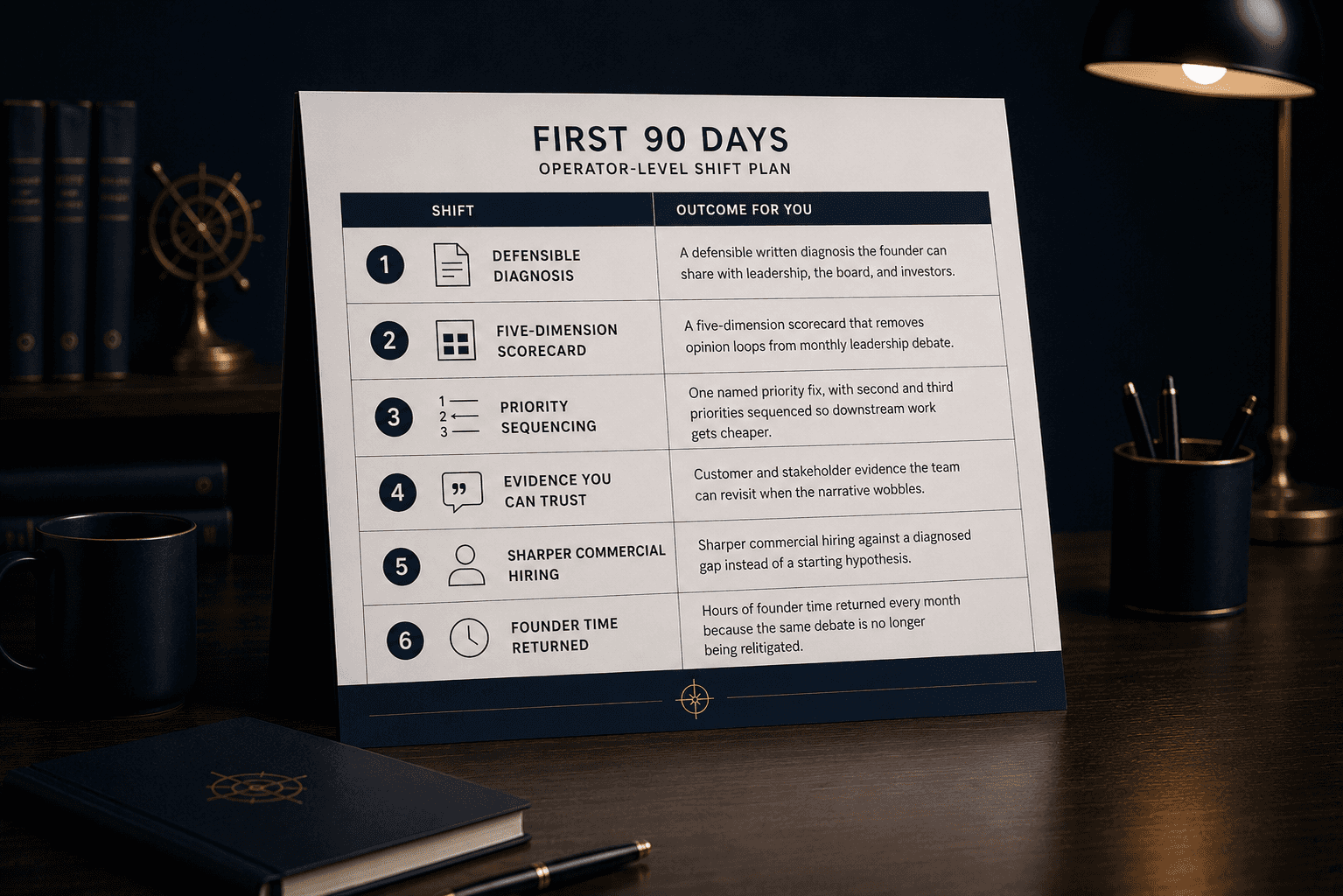
Six operator-level shifts in the first ninety days.
The leadership team stops having the same circular debate in every staff meeting. The founder stops being the tiebreaker on questions the scorecard now answers. Execution dollars stop flowing into parallel experiments and start flowing into the priority the diagnostic named. Hires get scoped against the diagnosed gap rather than against the loudest internal voice. Board conversations get sharper because the founder can name the bottleneck, the fix, and the evidence behind the call. And the team feels the difference fastest. A team that has been working hard on the wrong problem knows it, and the moment the focus shifts, engagement and retention shift with it.
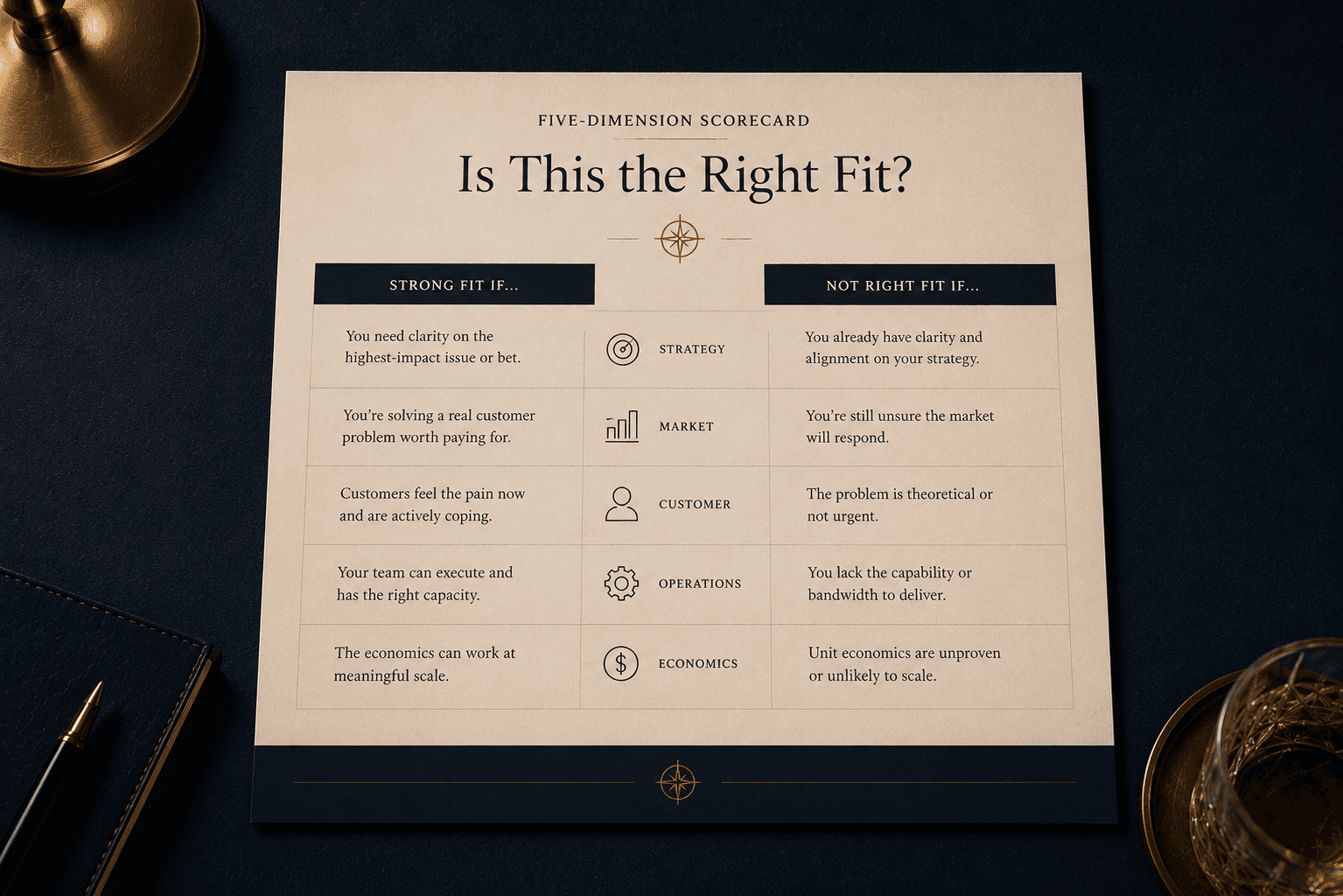
Is a diagnostic the right engagement?
Strong fit if
You have a strong feeling something structural is off and you can feel the pattern repeating.
Your leadership team has three different explanations for the same performance gap.
You are about to make a major commercial or operational hire and want it aimed at the right gap.
You are preparing for a raise, a board change, or a governance event and need the bottleneck named.
You are willing to let evidence overrule the leadership team's starting hypothesis, including the founder's.
Probably not right if
You are pre-revenue and should be spending the money on distribution and product discovery first.
You want confirmation of a decision the founder has already made.
Your leadership team is not willing to participate in interviews or release core commercial data.
You are unable to commit to acting on the recommendation within ninety days of delivery.
What serious buyers ask before scoping a diagnostic.
How long does a real diagnostic engagement take?
Two to ten weeks, depending on shape. DS1 rapid read, two to three weeks. DS2 full diagnostic, four to five. DS3 with advisory, eight to ten. Anything compressed below two weeks is not a diagnostic. It is a workshop with the founder's starting hypothesis wrapped in fresh slides.
What if I already know what the problem is?
Most founders who feel certain turn out to be two-thirds right. The remaining third is usually the part that explains why the previous fix did not move the needle. The failure mode is paying a diagnostic to nod back at the starting hypothesis.
What if the leadership team does not agree with the recommendation?
Good. That is the moment the engagement starts being valuable. We present the recommendation alongside the evidence that supports it and the counter-evidence we considered and ruled out. The team interrogates the call and ultimately owns the decision. Our job is not to be right in the room. Our job is to give you a diagnosis that holds up under pressure.
How confidential is the diagnostic?
Completely. Mutual NDA at the start. The written diagnostic, the scorecard, the transcripts, and the data belong to you. We do not discuss client engagements externally under any circumstance and provide redacted summary versions when leadership teams want to circulate the diagnosis without releasing the full evidence appendix.
Can the diagnostic be used in investor conversations?
Often yes, and often it makes the conversation easier. A founder who can name the diagnosed bottleneck, the evidence behind it, and the sequenced response sounds significantly sharper on the board call. We help teams prepare a redacted investor version.
What if we cannot commit the time for interviews?
A DS2 needs roughly six to ten hours of leadership time. If the team cannot commit that time, the diagnostic will be shallower than it should be and the confidence rating will reflect that. If the time is not realistic, we recommend waiting rather than running a weak read.
Does a diagnostic always recommend more work with your agency?
No. Sometimes the diagnosed priority is something we do not deliver, in which case we route to the right specialist and exit. Sometimes the priority is internal: a hire, a restructure, or an operating rhythm change that does not need an outside agency at all. A diagnostic that steers the client toward the wrong fix destroys our credibility with the market.
What budget does a real diagnostic sit in?
Scoped against shape, interview depth, and advisory window. We cover the range on the discovery call so neither side wastes a proposal cycle. Companies running a real diagnostic on a token budget tend to end up with a confirmation of the starting hypothesis, which is the exact output the engagement was supposed to protect against.
When is a diagnostic worth doing now versus later?
Now, if the business has run against the same perceived bottleneck for more than two quarters without the metric moving, if the leadership team has three different explanations for the same gap, or if you are about to make a commercial hire or a major capital decision. Later, if the business is mid-pivot and the data will not stabilize for another quarter.
What happens after the diagnostic?
One of three paths. The team acts on the recommendation directly, usually with the diagnostic as a living reference across the next two quarters. The team engages us in advisory or a scoped downstream engagement where we hold the priority fix accountable. The team routes the fix to a specialist partner and we exit. All three are valid.
Our Services
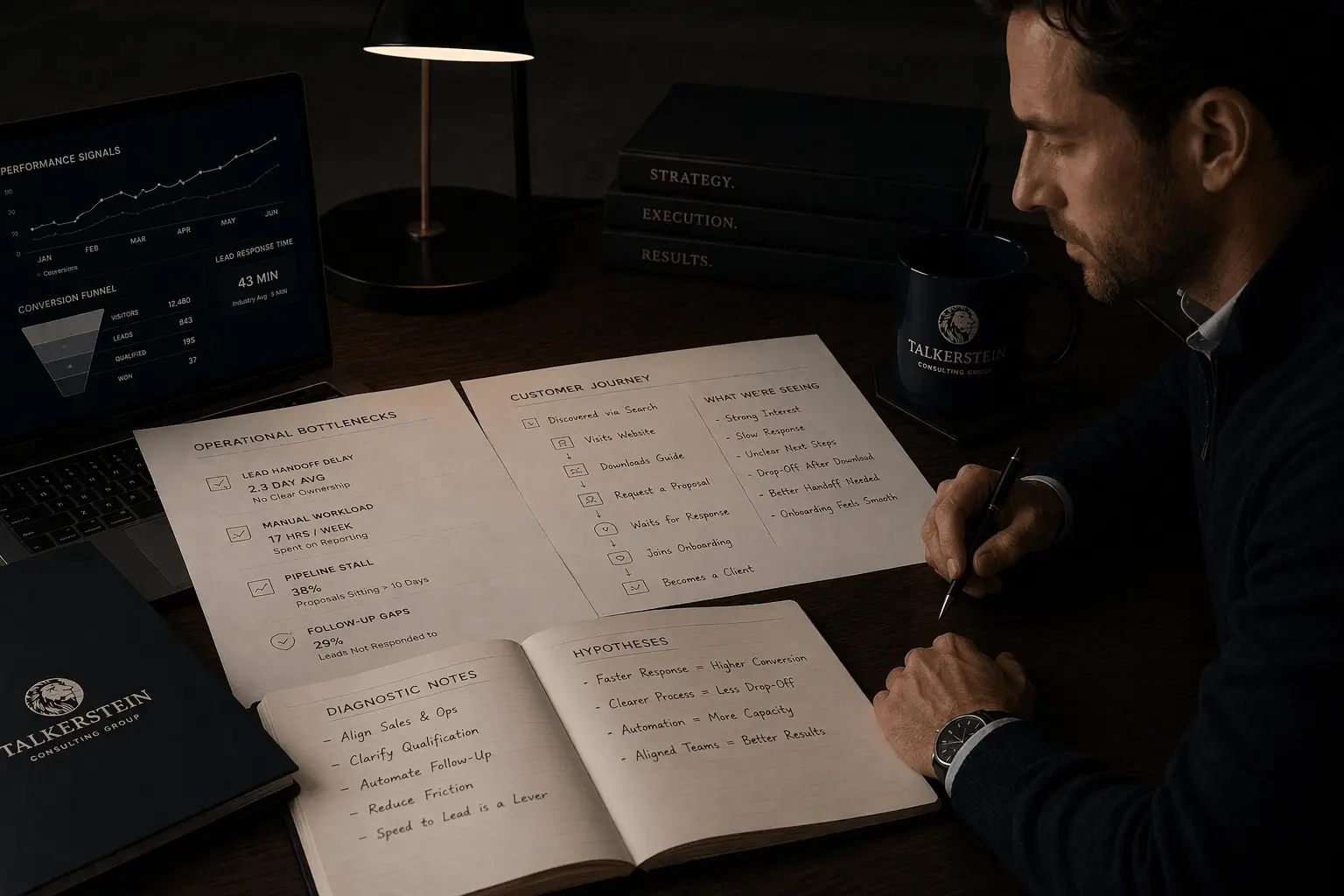
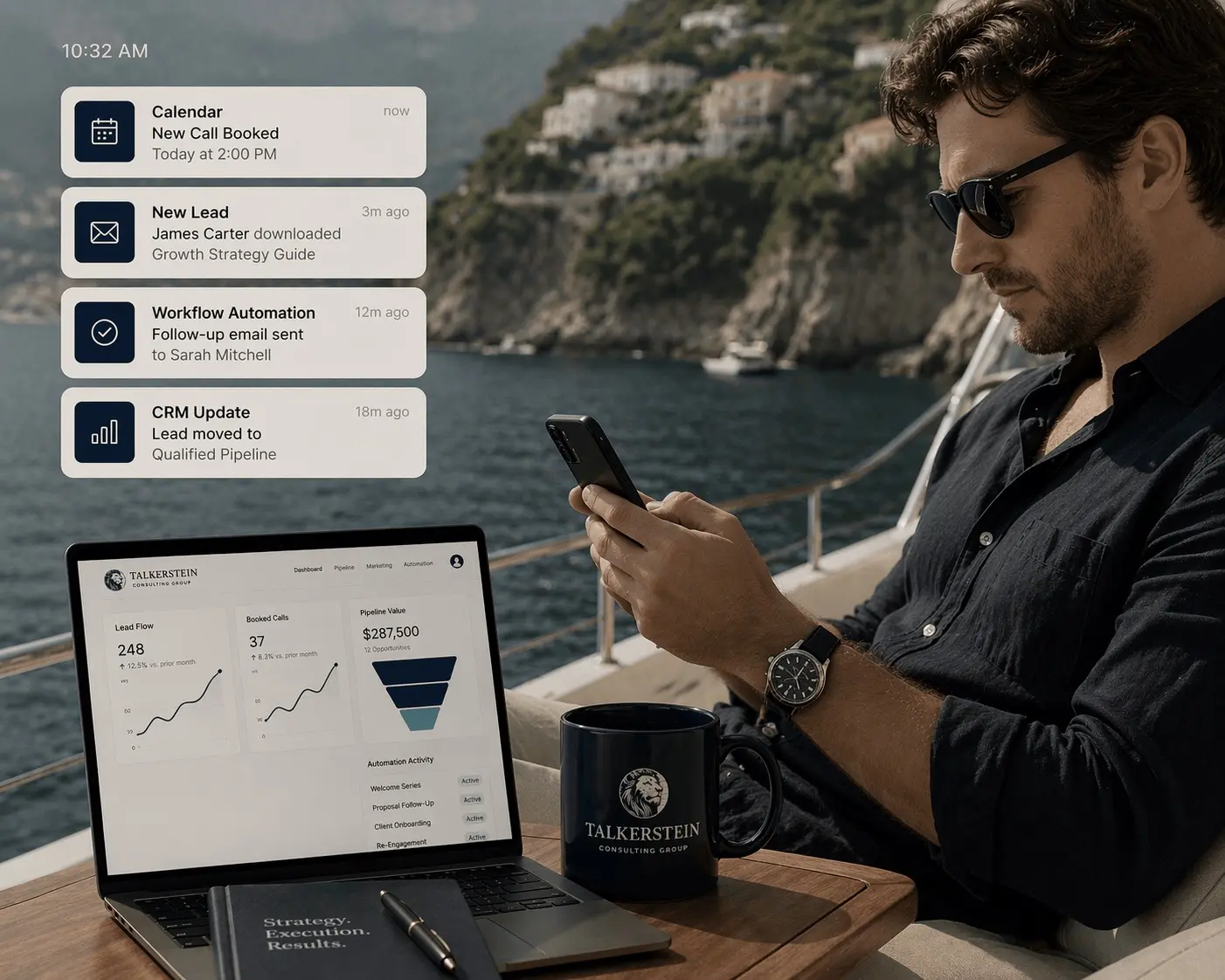






Find out where your growth is actually stuck.
Book a discovery call. We will scope the right diagnostic for your situation and give you the budget range on the call — no proposal cycle wasted.

Quick Links


" height="149.2535067768008px" id="IOCTf08f5" width="1199.9520008715217px"/></svg>)