
Websites • Systems • Digital Infrastructure
We Do Not Just Build Websites. We Build the Infrastructure Behind Growth.
Website development for Toronto & GTA businesses — built as growth infrastructure.
The barrier to making a website has dropped. The standard for building a good one has not. There is a difference between something that looks finished and something that is strategically sound. A real business website should clarify the offer, support the customer journey, reduce friction, connect into operations, and help the company grow. That takes more than a tool. It takes judgment.

Websites Are Part of the Infrastructure
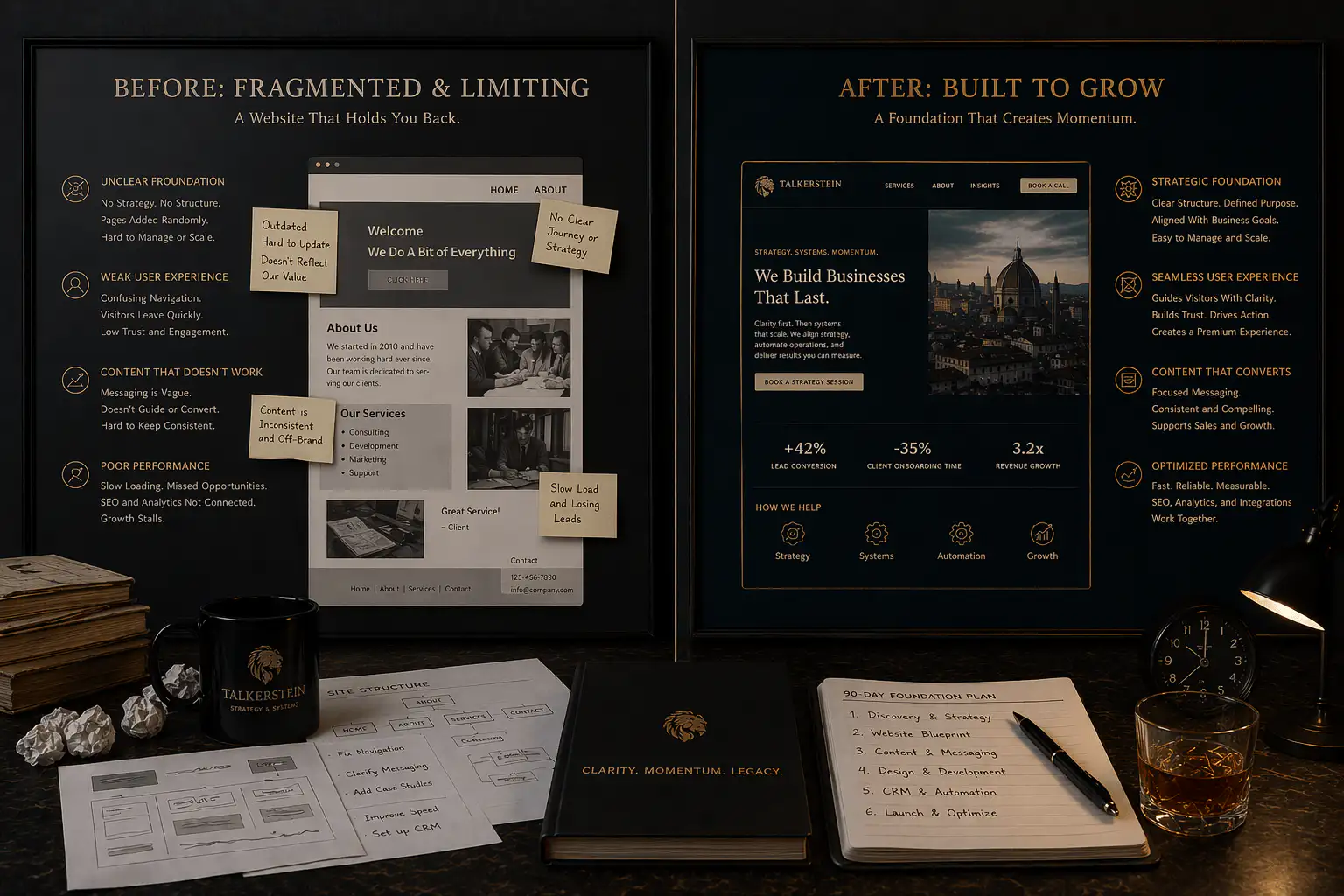
We do not think about websites as isolated design or development projects. We think about them as part of a larger business system - one that may include lead capture, CRM, booking, automation, reporting, content, SEO, portals, workflows, and the operational logic behind how the business actually runs. That changes how we approach the work. The website is often the front door, but it is rarely the whole structure. It needs to connect cleanly to the systems behind it, support the right journey, and hold up as the business grows. That is one of the biggest differences between a site that looks fine and a site that is actually useful.
Sometimes the Rebuild Is the Starting Point, Not the Main Event
A lot of websites are built to appear finished, not to function as real business infrastructure. Sometimes the problem is not the design. It is the foundation. The structure is weak. The content is unclear. The SEO layer is broken. The forms go nowhere. The site is slow, hard to manage, difficult to trust, or disconnected from the rest of the business. In those cases, rebuilding is not the strategy. It is the prerequisite. Sometimes we need to clean up the site first so the real work can begin - better lead flow, cleaner operations, stronger visibility, better automation, or a more capable digital system overall.
Built Around the Role the Website Needs to Play
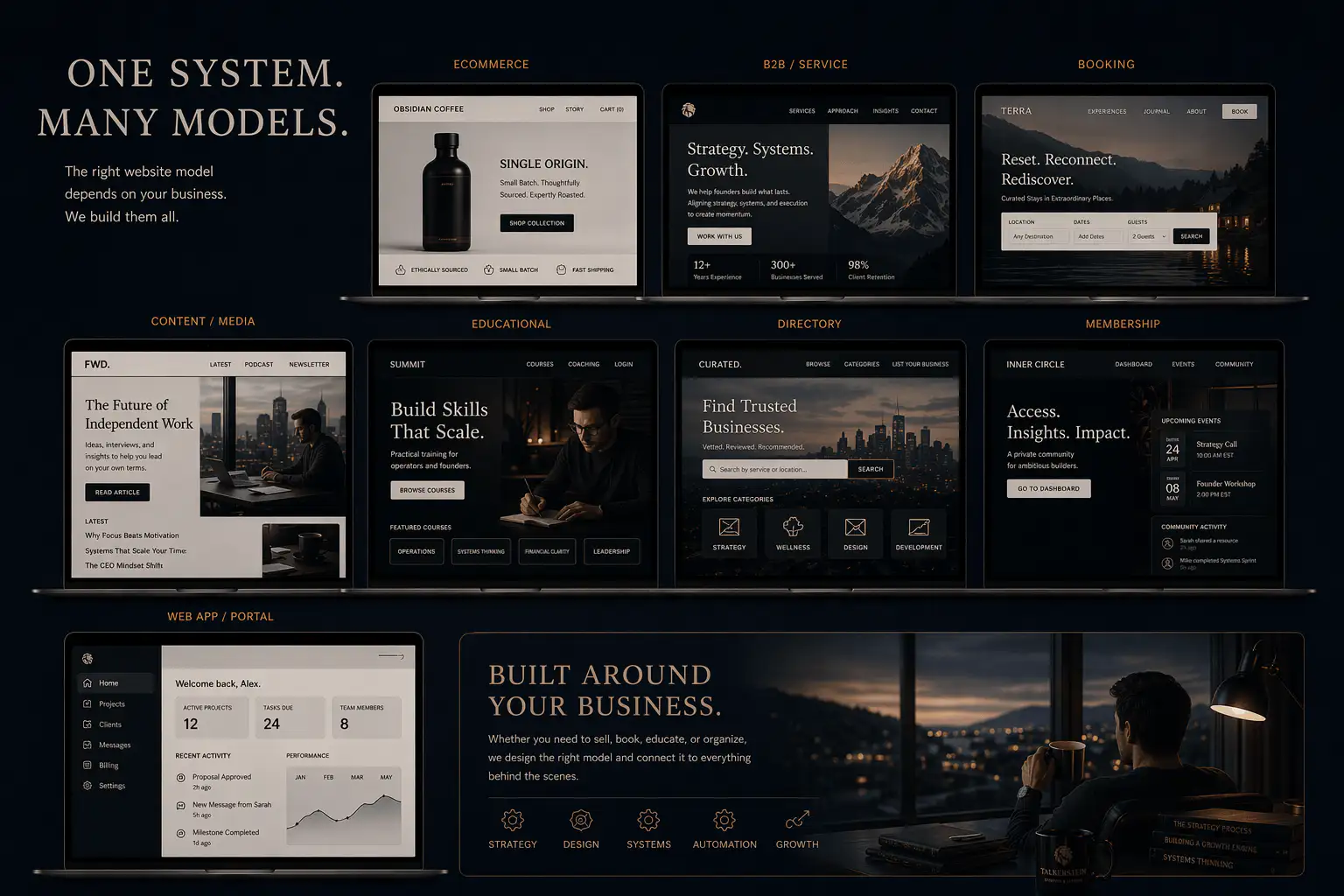
Different businesses need different website structures. Some need a store. Some need a B2B trust engine. Some need booking, content, education, memberships, directories, or more advanced product-like functionality. We build around the actual business model, user journey, and operational role the website needs to play.
What Our Websites Are Built to Support
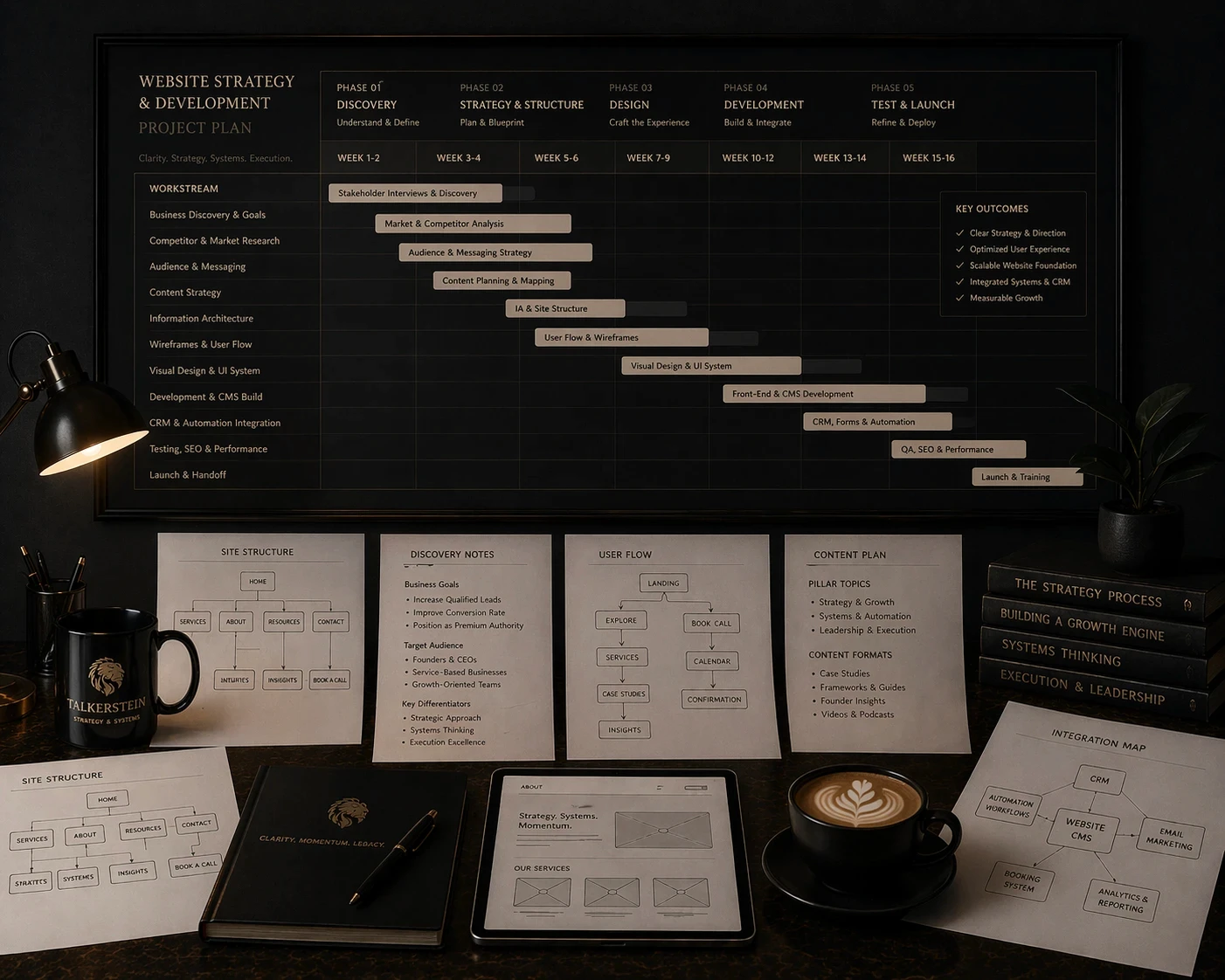
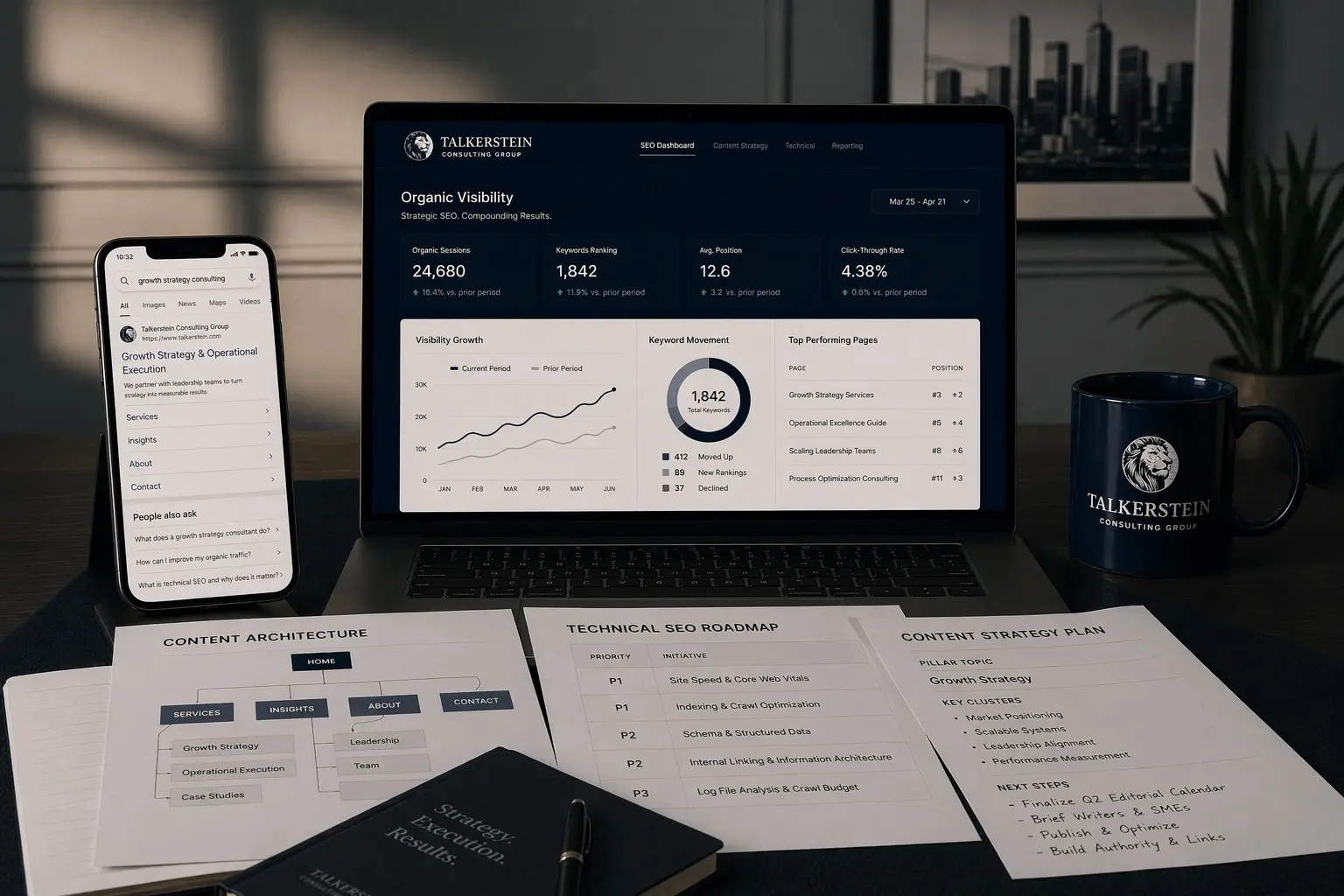
A website should support the business in real ways. Depending on the project, that may mean clarifying the offer, improving first impression, increasing inquiries, supporting bookings, helping products sell more cleanly, organizing information more effectively, supporting SEO and content growth, connecting into CRM and automation workflows, or reducing friction across the customer journey. Sometimes the website is the asset. Sometimes it is the entry point into a broader operating system. Either way, the goal is the same: make the business easier to understand, easier to trust, and easier to engage with.

Built Around the Role the Website Needs to Play
Different businesses need different website structures. Some need a store. Some need a B2B trust engine. Some need booking, content, education, memberships, directories, or more advanced product-like functionality. We build around the actual business model, user journey, and operational role the website needs to play.
Frequently Asked Questions
Do you only build websites on one platform?
No. We are platform agnostic. The right answer depends on the business, the goal, the content needs, the workflow, and the long-term plan.
What makes your websites different?
We focus on business fit, structure, positioning, trust, conversion, and operational usefulness - not just whether the pages look polished.
Can AI build a website now?
Yes, AI can help generate and accelerate a lot of the production side. What it does not replace is judgment - knowing what the site should say, how it should flow, what it should connect to, and how it should actually support the business.
Do you just build websites, or do you build systems too?
Both. In many cases, the website is only one part of the solution. Depending on the project, it may need to connect to booking, CRM, automation, content, lead flow, reporting, portals, or broader operational systems.
When does a website need a rebuild instead of a patch?
When the foundation is too weak to support what comes next. That may be a structural issue, a trust issue, a performance issue, an SEO issue, a content issue, or simply the fact that the site was never built to support the business properly in the first place.
Can you improve an existing site without rebuilding it?
Sometimes, yes. Sometimes the smartest move is to improve what already exists. Other times, the site is too compromised or too limiting, and rebuilding becomes the cleaner and more cost-effective path.
Why are so many websites disappointing even when they look decent?
Because appearance is only one layer. A website can look finished and still be weak in structure, positioning, UX, trust, SEO, performance, operational integration, or conversion logic.
How do I know what kind of website I need?
That depends on what the website is meant to do. Some businesses need a store. Some need lead generation. Some need bookings, content, education, directories, or a more custom experience. Part of our job is helping define the right fit.
Our Services







Quick Links


" height="149.2535067768008px" id="IOCTf08f5" width="1199.9520008715217px"/></svg>)