
Branding • Packaging & Collateral
Where your brand lives outside the website.
Packaging & collateral design for Toronto brands — decks, print, events & product surfaces.
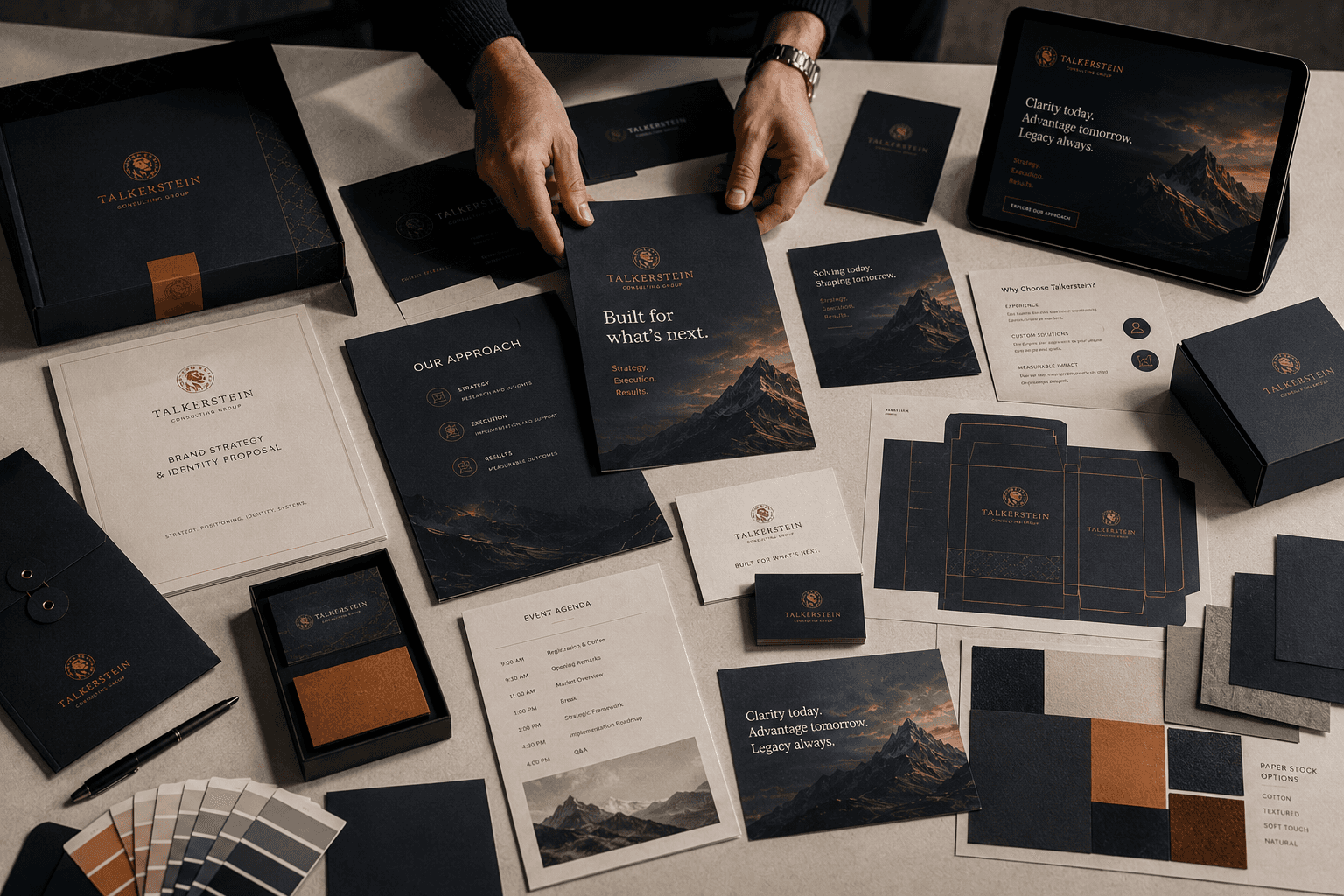
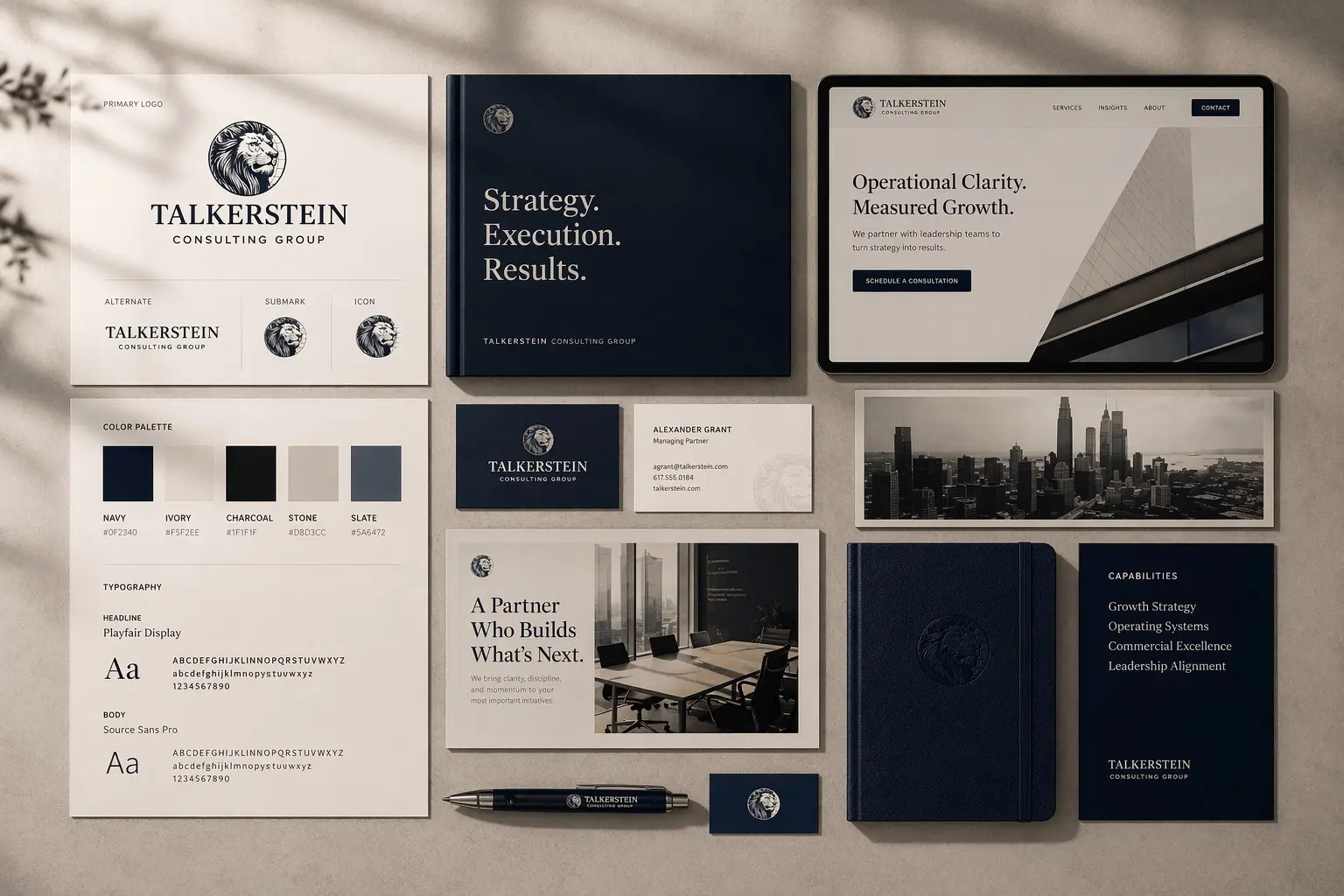
The website is the surface buyers see most, but it is not the one that decides the deal. A proposal that lands on a desk, a pitch deck that sits beside the decision-maker, a business card a CFO keeps for a week, a package a customer opens and photographs. Each one is a brand moment, and each one either reinforces the premium you are asking for or quietly undermines it. We design collateral as a system. Packaging, sales surfaces, operational artifacts, physical and digital, all flowing from the same visual language and voice. Production-ready, vendor-ready, and built to scale as your team grows.
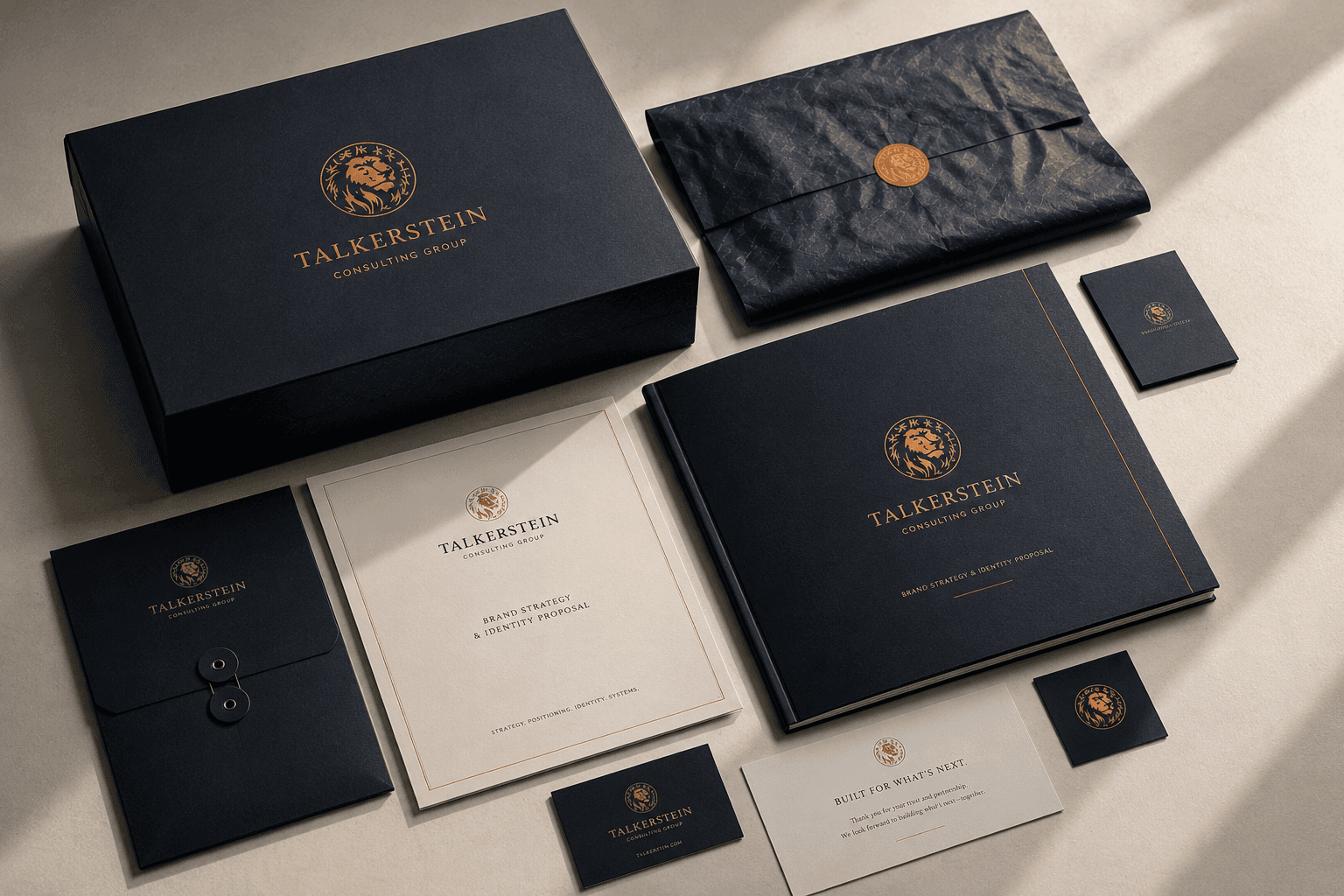
Collateral is the brand experience buyers hold in their hands.
Most companies treat collateral as an afterthought. Business cards outsourced to a template site in three clicks. Proposals dropped into a Word template a decade out of date. Decks inherited from a pitch someone did four years ago and patched ever since. Packaging chosen from the manufacturer's default options because the founder was busy. Each of those choices is a small one, and each one sends a signal. The signal is not usually the one the founder thinks they are sending. Buyers form a feel about the company before they form a view. A business card on thin cardstock reads as low budget. A proposal in a default template reads as low care. A package that looks like everyone else's reads as commodity. None of those signals fire consciously. They compound quietly across the buying cycle and lower the price a buyer is willing to say yes to. The fix is not prettier one-offs. The fix is a system that makes every surface feel like the same serious, deliberate company.
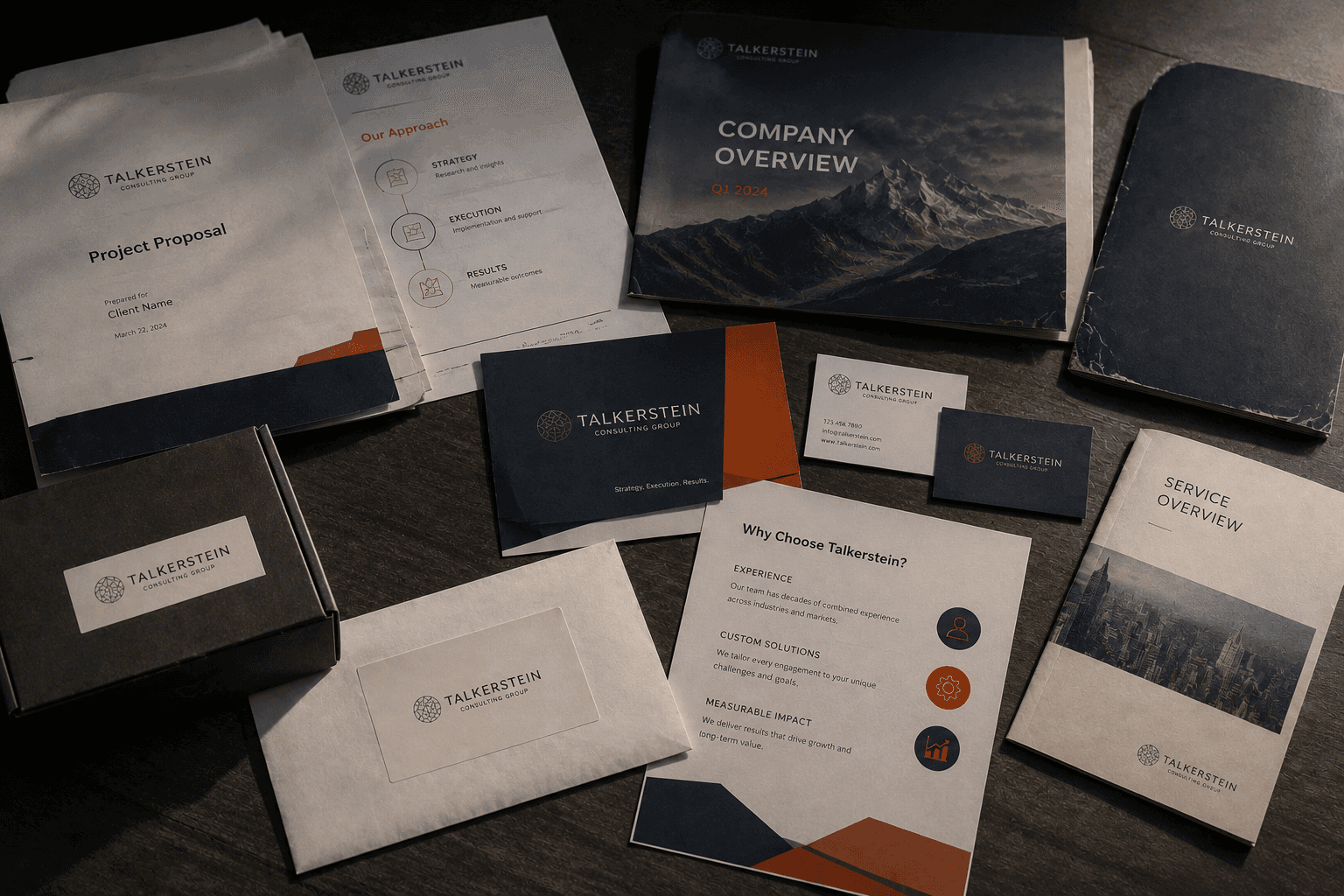
The damage is real. It just does not show up on a line item.
You do not see the cost of weak collateral on the P&L. You feel it in the sales conversations that never quite convert, in the packaging that never gets photographed, in the internal meetings where people quietly reach for a competitor's deck as a reference. These are the four patterns we see most often when we do an audit.
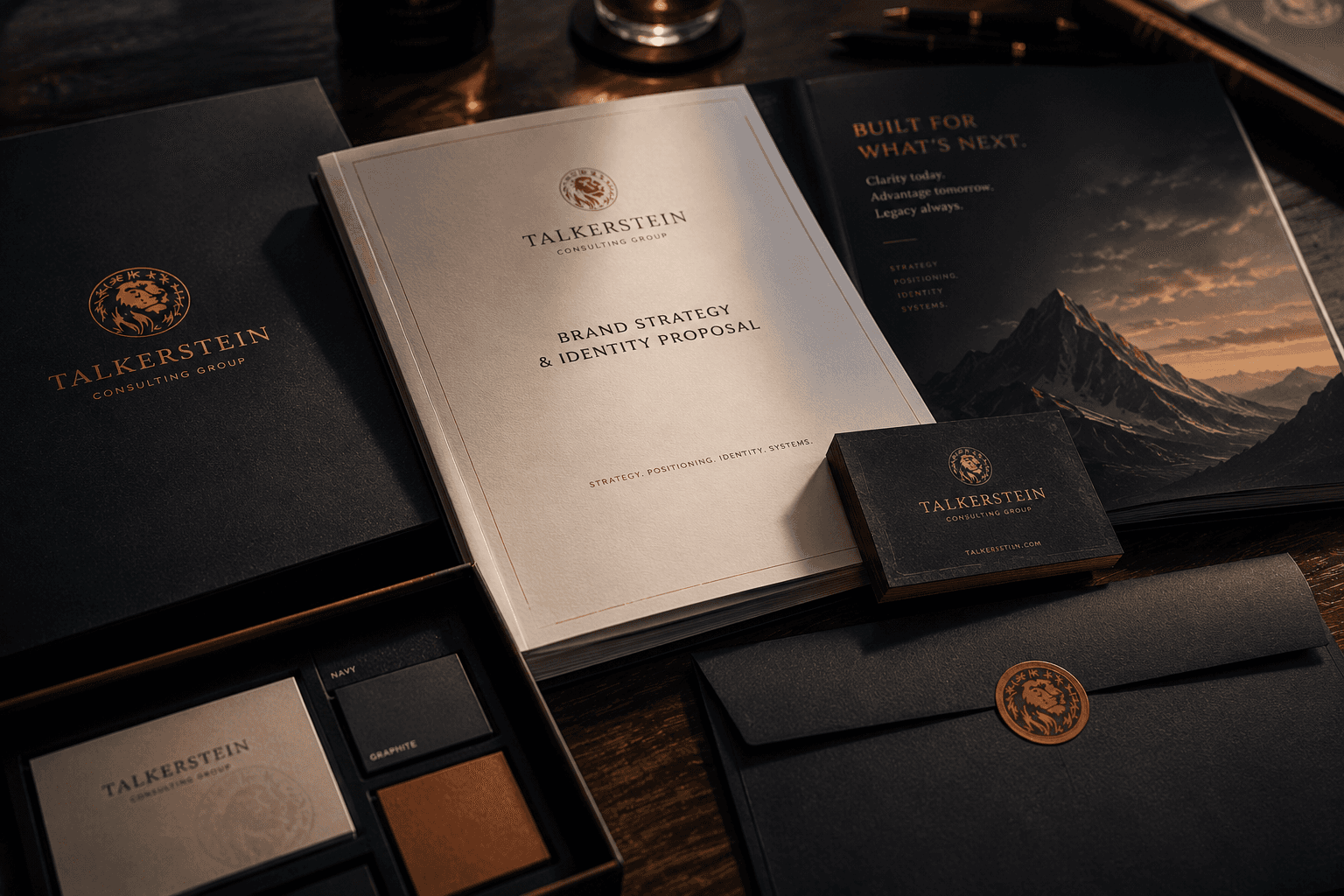
Six surface groups, scoped to what your business actually ships.
We do not design everything. We design the surfaces that move the business. On the discovery call we will inventory what you ship today, what is missing, and what is costing you the most when it goes out the door. The six groups below cover the surface mix we see most often. Scope is shaped to what you actually need, not to a menu.
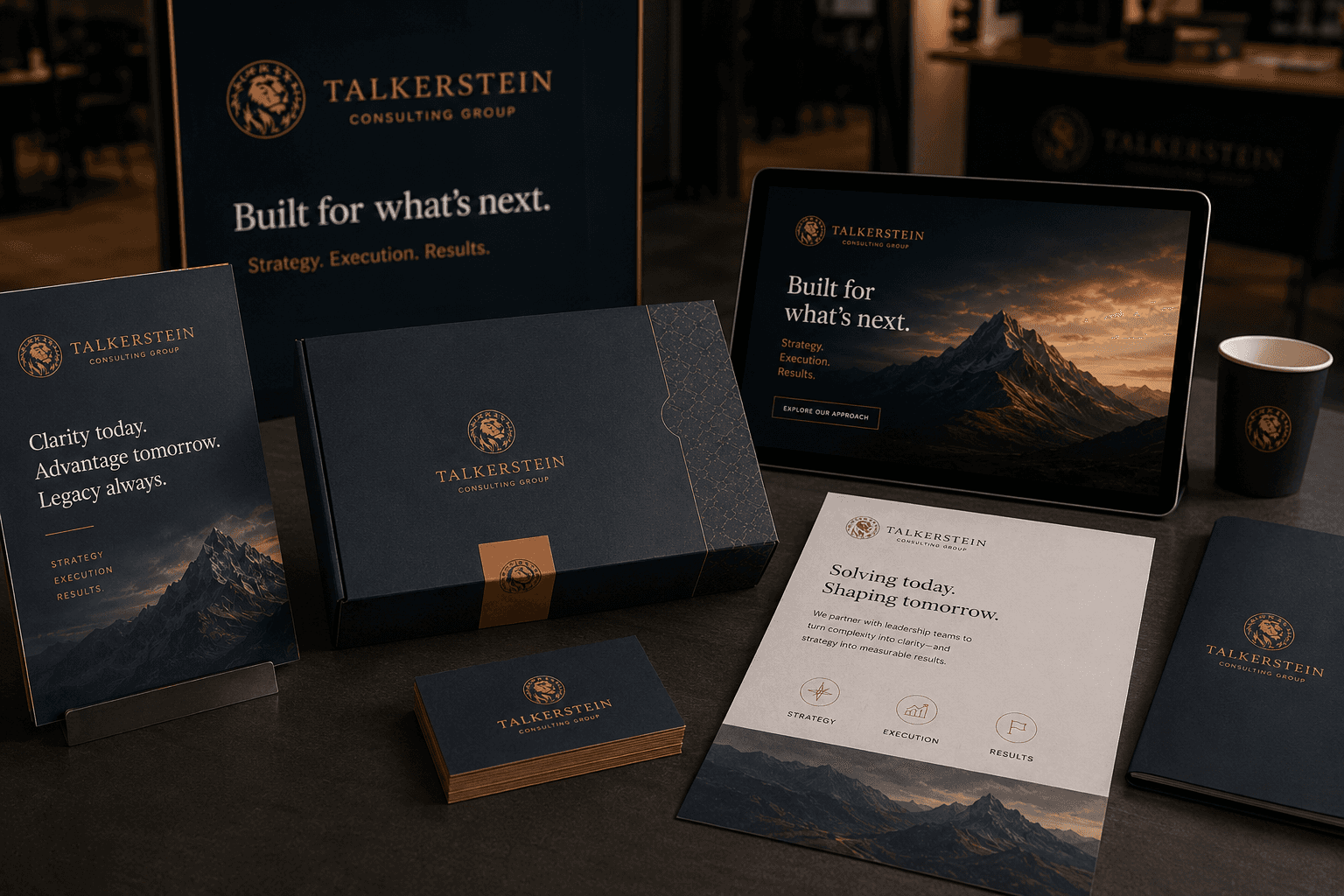
Four phases. Audit, design, produce, hand off.
Phase 1. Diagnose
We inventory every collateral surface the company ships today. We review the use case for each one. Who uses it, when, in what context, and what it is supposed to accomplish. Output: a map of what is working, what is dated, what is missing, and which surfaces will return the most if we tighten them first.
Phase 2. Frame
We agree on the scope and priority order with leadership. Most engagements ship the sales and pitch surfaces first because they move the business fastest. Packaging and physical collateral follow, with production lead time planned in. Output: a prioritised build calendar so the team sees what lands first and why.
Phase 3. Build
Design each surface against the visual system and voice. Build templates your team can use without a designer in the loop. Ship production-ready files with print specs, dielines, and vendor notes. Pressure-test everything against the actual use case, not against a render. Output: an approved, production-ready collateral set.
Phase 4. Hand off
Templates installed in your team's tools. Vendor introductions for printing, packaging, and production. Training session for sales, marketing, and ops on how to use the system without breaking it. Sixty-day support window for the questions that surface once the team starts shipping from the new set. Output: a team that can ship on-brand collateral without asking.
Four rules we hold the work to.
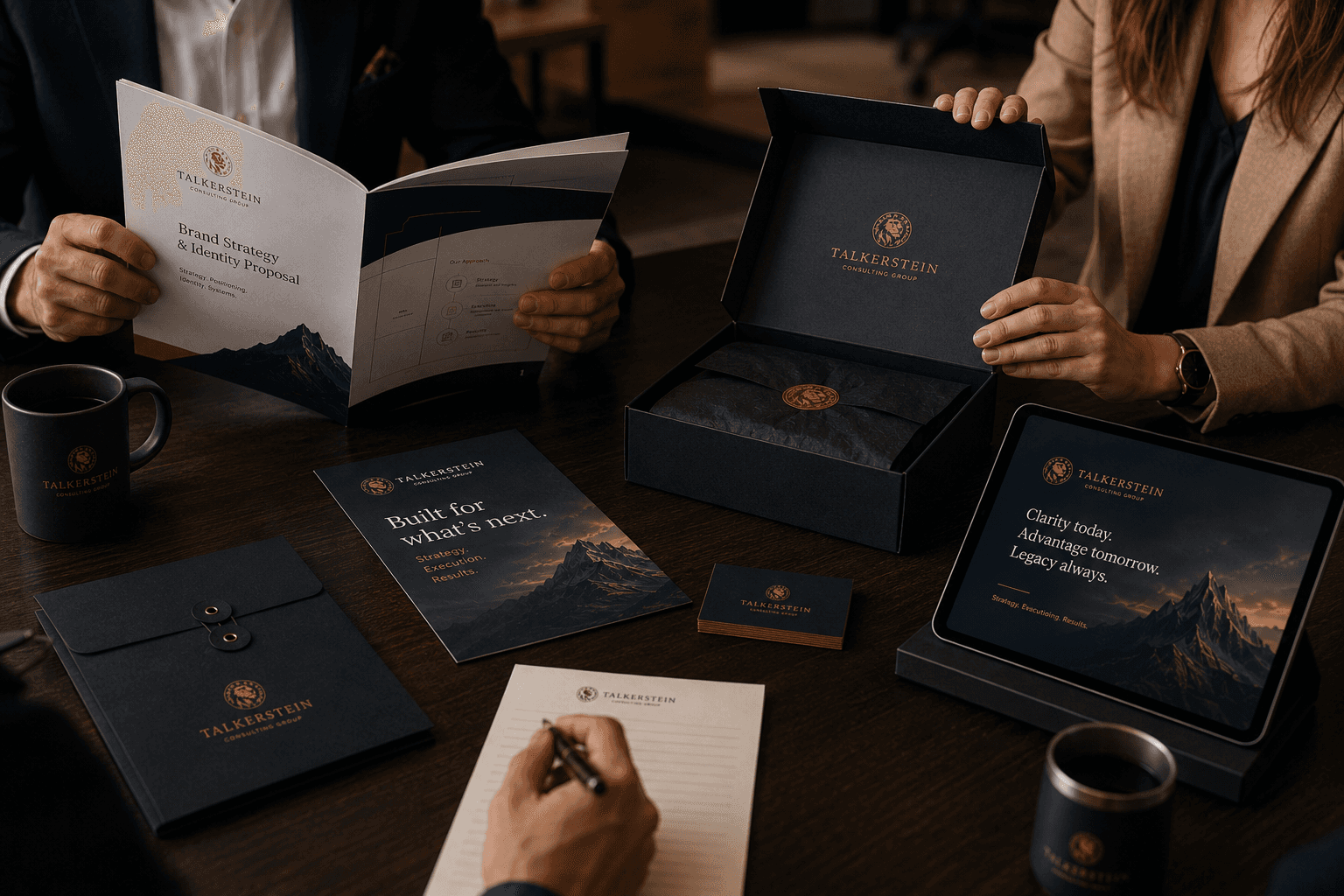
Six shifts you will notice in the first ninety days.
A system turns collateral from a recurring scramble into an asset. These are the first changes teams usually feel once the new surfaces are in market and in use.
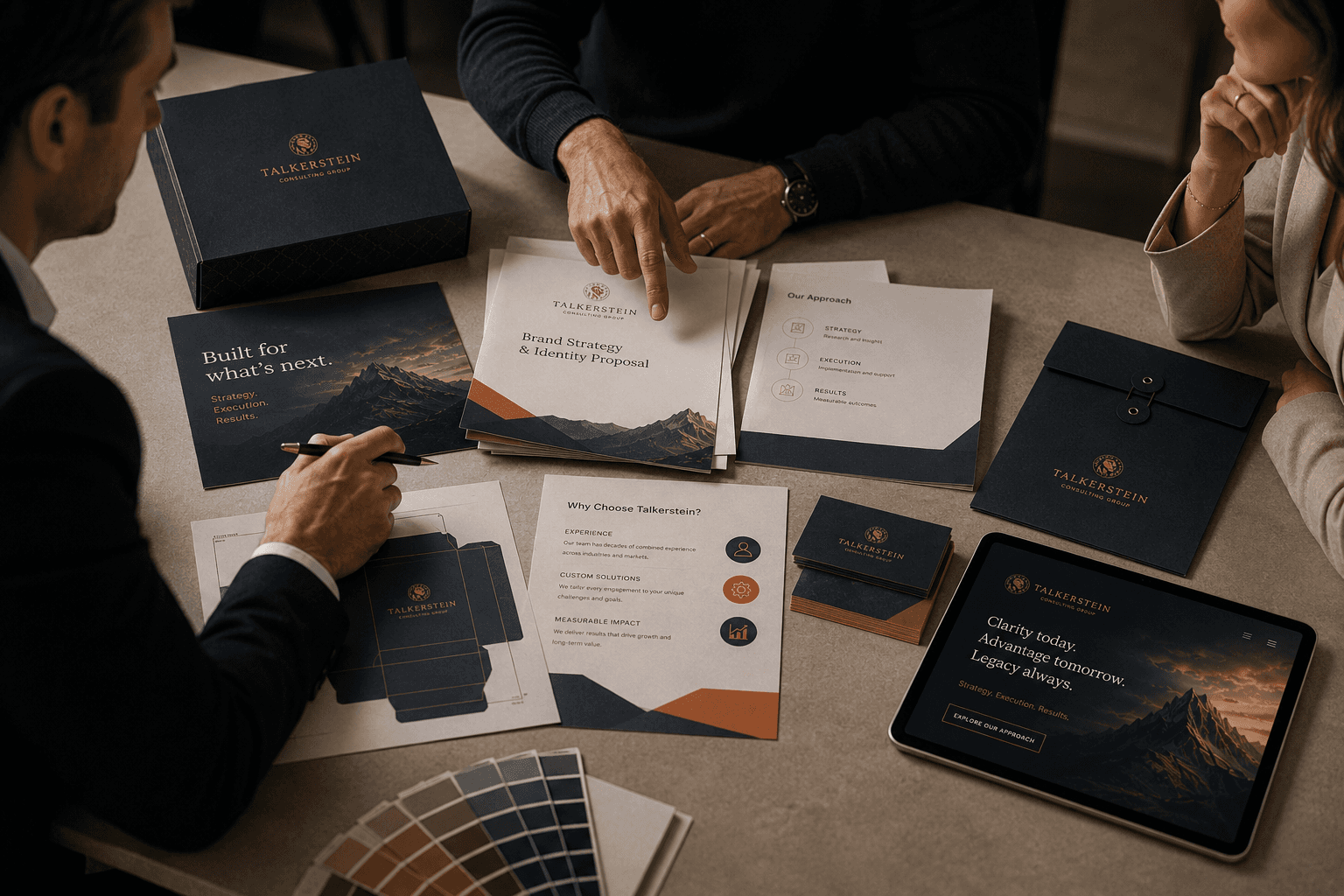
Who this engagement is built for.
Work with us on collateral if
You have a visual identity in place but it is not yet applied across the surfaces you actually ship.
Your business cards, proposals, decks, or packaging feel out of step with what the rest of the brand is doing.
You are launching a product and want packaging that reflects the price you are charging.
You sell through both B2B and direct-to-consumer surfaces and need a coherent system across both.
You want templates your team can use without pulling a designer in every week.
This is not the right engagement if
You do not have a visual identity yet. Build the system first, apply it second.
You are looking for templates you can download for free.
You want custom packaging but are unwilling to discuss minimum order quantities or production budgets.
You need pieces produced inside two weeks.
You want one-off pieces and are unwilling to commit to a system.
The questions serious buyers ask us.
Do you handle the actual printing or manufacturing?
No. We design, provide production specs, and introduce trusted vendors across printing, packaging, promotional, and large-format. You handle the production contract. That keeps you in control of cost, timeline, and vendor relationships, and it keeps our incentives clean. We will recommend vendors we have worked with and trust, and we will review the first production proofs with you.
What does a collateral engagement typically cost?
Standalone engagements scale with scope. A focused sales and pitch surface engagement sits in the mid-four to low-five-figure range. A full collateral system including packaging, operational surfaces, and a template kit sits higher. Packaging with custom structural design adds meaningfully on top because of the engineering and dieline work. We scope on the discovery call.
How long does a collateral project take?
Four to eight weeks for most engagements. Sales and pitch surfaces ship inside two to three weeks when priority is set. Packaging runs longer because of dieline iteration, material samples, and manufacturer lead time. We publish a calendar during the frame phase so nothing surprises you.
Can we use one design across print and digital?
The core visual system stays consistent. The execution adapts to the medium. Print allows embossing, specialty stocks, and foils we cannot reproduce in email. Email renders fight us across every client. Social templates need specific aspect ratios. We design the system once and adapt each expression to the medium.
What about product packaging specifically?
We design the graphics, structure direction, and production specs. We provide dielines the manufacturer can work from. We introduce manufacturers and review their proofs. We do not handle the manufacturing contract directly. That sits between you and the packaging vendor.
How many revisions are included?
Two rounds of revision on each template or piece. Beyond that, additional rounds get scoped as additional work. Two rounds is almost always enough when the frame phase lands cleanly.
What file formats do we get?
Native source files in Figma, Illustrator, or InDesign depending on the piece. Print-ready PDFs for production. Editable Office templates in PowerPoint, Word, Slides, or Docs depending on your team's tools. Email templates as HTML and as the appropriate platform format. You own everything.
Can you design for multiple product lines or brands under one parent?
Yes. We design a core system once and build line-level variations that inherit from it. Consistency at the parent level, flexibility at the line level. The architecture of the system matters more than any individual piece inside it, and we scope the parent decisions up front.
How do you handle confidentiality on product launches?
Mutual NDA at the start of the engagement. Unreleased product information, unreleased packaging, and pre-launch collateral stay inside the engagement. We can accommodate stricter IT and confidentiality protocols on request and will adapt our workflow to the buyer's security posture.
What turns into the next step after a collateral engagement?
Usually one of three. A brand rollout so the new collateral reaches your team and the market deliberately. A website refresh so the digital surface matches the new physical ones. Or a sales enablement engagement so the team actually uses the new pitch and proposal templates. We do not make any of them dependent on hiring us to run them.
What does the first call cover?
Bring your current proposal, your deck, or your packaging. We will walk through the surfaces you ship today, show where the drift is, and tell you which two or three pieces would return the most if we tightened them first.
Our Services



Quick Links


" height="149.2535067768008px" id="IOCTf08f5" width="1199.9520008715217px"/></svg>)