Websites • Custom Development

Some problems do not fit inside a theme, a template, or a drag-and-drop editor.

Most websites belong on a platform. WordPress, Webflow, Shopify, and a handful of others solve the vast majority of the commercial web at a fraction of the time and cost of custom code. We will tell you when that is true and we will build it that way. This page is for the other set of problems. The ones where you have tried to force a platform to do something it was never designed to do, or where your business logic, integrations, or usage patterns have genuinely outgrown what a theme-based site can support. Custom development is longer, harder, and more expensive than platform work. When it is the right call, it is also the only way to unlock the outcome you actually want.
The image featured at the top of the about us page #1

You do not have a design problem. You have an architecture problem.

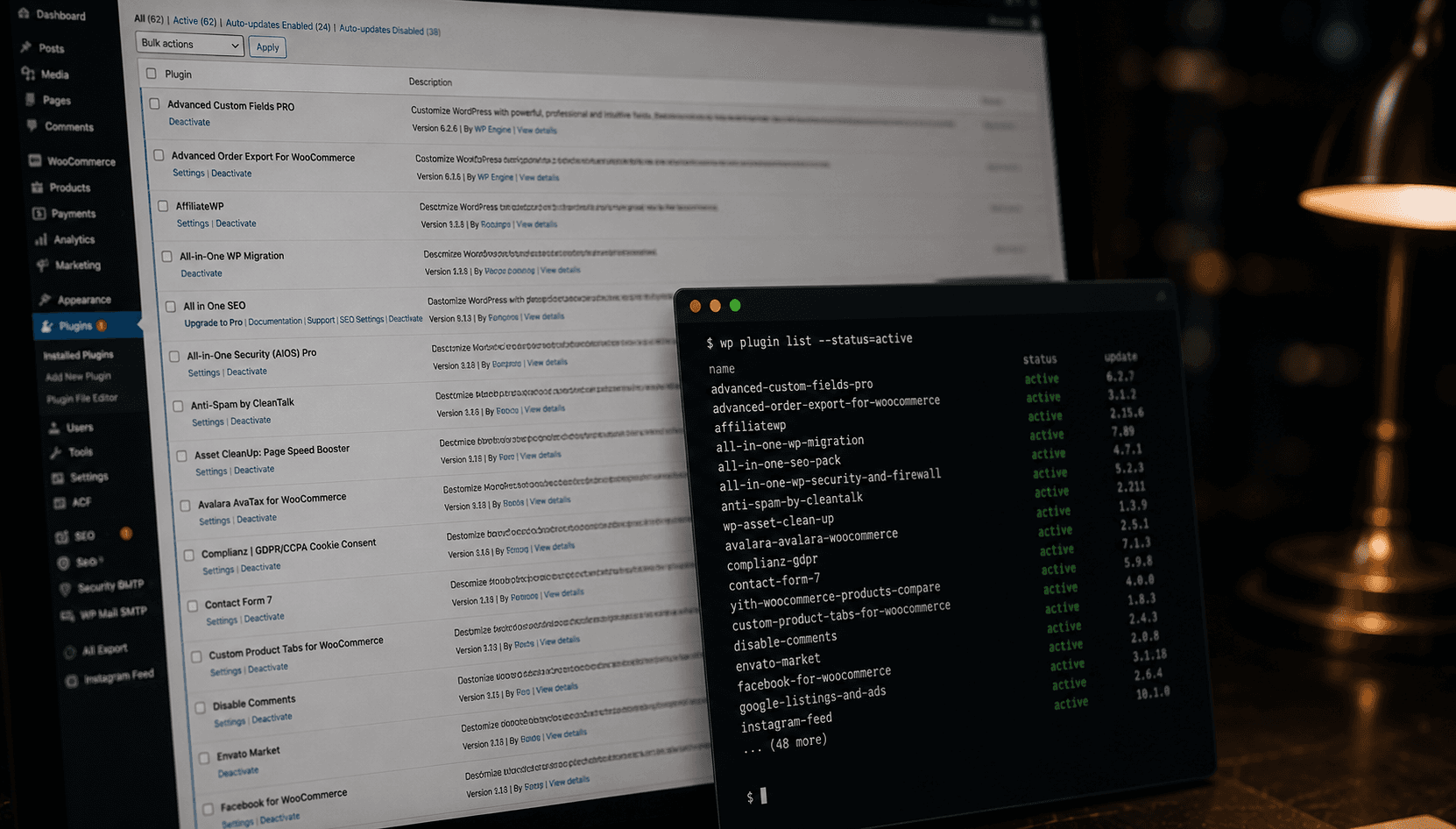
The teams that end up here usually arrive after trying to solve the wrong problem. They have spent six months bending Webflow, WordPress, or Shopify into shapes it was not built to hold. They have layered plugin on plugin, paid for three different SaaS tools to fake a feature, and hired a freelancer to stitch it all together with Zapier. The site works until it does not. Pages load slowly. Integrations break on every update. Every new feature request turns into a week of debugging. The real issue is not that the designer missed or the agency was weak. It is that the business has outgrown the architecture underneath the website, and no amount of polish on the surface will fix what is wrong at the foundation. Custom development is the answer when the foundation itself needs to change.
The image featured at the top of the about us page #1

What it costs

A platform that almost fits is more expensive than the custom build you keep delaying.

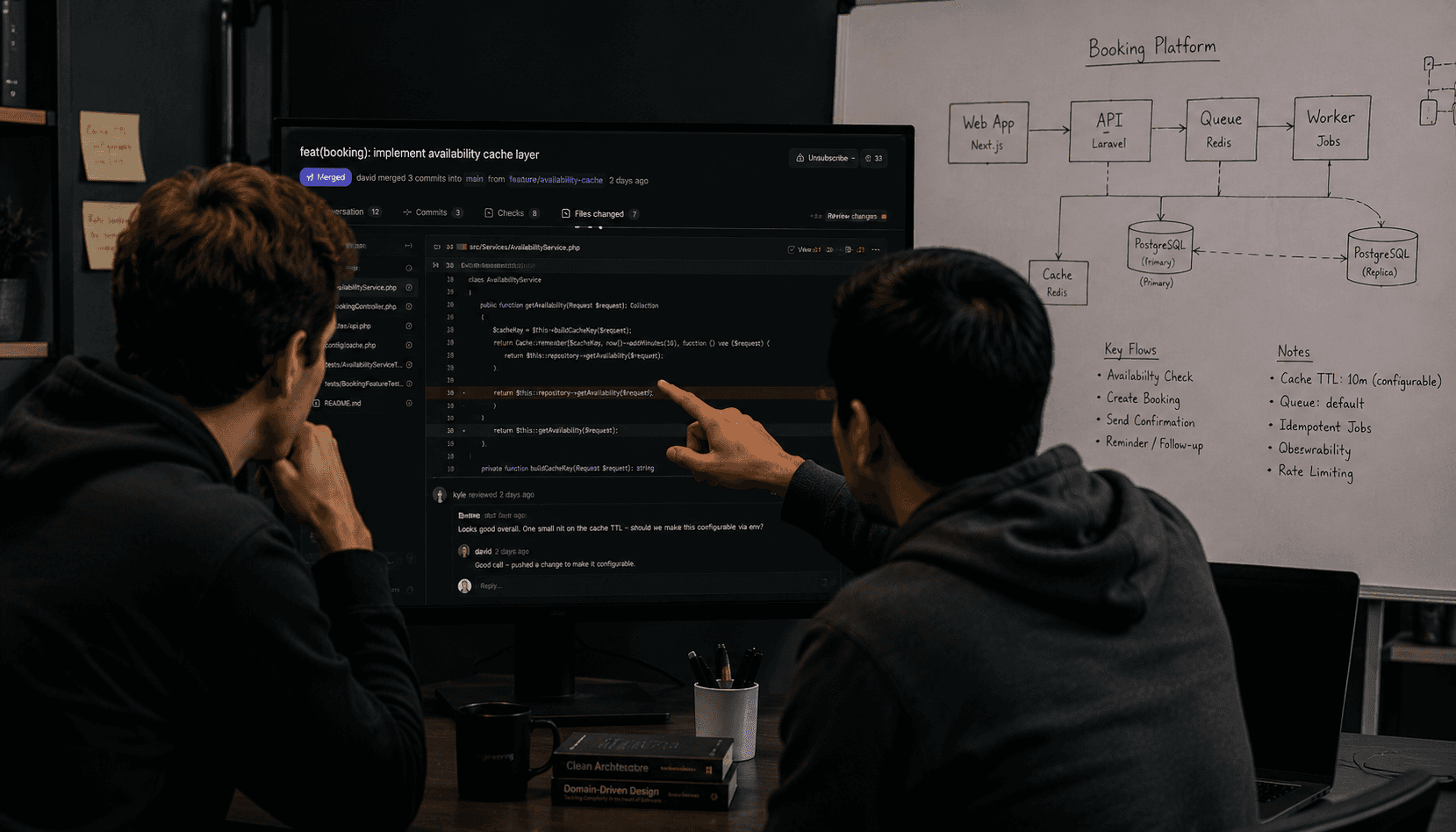
The cost of not choosing custom, when custom is the right call, is rarely a single line item. It arrives as a tax on almost everything else the business tries to do. New features take longer than they should. Integrations break in places the team does not understand. Engineers and agencies come in, poke at the stack, and decline to work with it. Every hire onto the team spends their first month learning a bespoke tangle of plugins instead of shipping. The opportunity cost of carrying the wrong architecture is usually much larger than the cost of replacing it.
1. Plugin sprawl

Ten third-party tools doing the work of one system. Each update risks breaking a different part of the site. Each renewal costs real money.

3. Integration fragility

Data flowing through three middleware layers to reach the CRM. One rate limit, one schema change, and the pipeline stops.

5. Feature lag

Every new idea has to go through the platform's limits first. Competitors who own their stack ship in days which take you months

2. Performance debt

Pages that load slowly because the platform is doing work it was never designed to do. Conversion drops before anyone notices the cause.

4. Hiring tax

New engineers or agencies refuse to work on the stack, or quote disproportionately because the system is unknowable from the outside.

6. Strategic lock-in

The business case depends on a vendor roadmap you do not control. When the platform pivots, so does your product.

1. Plugin sprawl

Ten third-party tools doing the work of one system. Each update risks breaking a different part of the site. Each renewal costs real money.

3. Integration fragility

Data flowing through three middleware layers to reach the CRM. One rate limit, one schema change, and the pipeline stops.

5. Feature lag

Every new idea has to go through the platform's limits first. Competitors who own their stack ship in days which take you months

2. Performance debt

Pages that load slowly because the platform is doing work it was never designed to do. Conversion drops before anyone notices the cause.

4. Hiring tax

New engineers or agencies refuse to work on the stack, or quote disproportionately because the system is unknowable from the outside.

6. Strategic lock-in

The business case depends on a vendor roadmap you do not control. When the platform pivots, so does your product.

1. Plugin sprawl

Ten third-party tools doing the work of one system. Each update risks breaking a different part of the site. Each renewal costs real money.

2. Performance debt

Pages that load slowly because the platform is doing work it was never designed to do. Conversion drops before anyone notices the cause.

3. Integration fragility

Data flowing through three middleware layers to reach the CRM. One rate limit, one schema change, and the pipeline stops.

4. Hiring tax

New engineers or agencies refuse to work on the stack, or quote disproportionately because the system is unknowable from the outside.

5. Feature lag

Every new idea has to go through the platform's limits first. Competitors who own their stack ship in days which take you months

6. Strategic lock-in

The business case depends on a vendor roadmap you do not control. When the platform pivots, so does your product.

The image featured at the top of the about us page #1

Custom code, scoped around the problem, not the tool.

Custom development covers a wide surface. What unifies the work is not the language or the framework. It is the fact that the system is designed around your business logic first, and the tooling second. Inside any given engagement, we may build one or several of the following. Scope is always agreed before a line of code is written.

W3

Focused Custom Build

Scoped engagement

A single custom application or site with a clearly defined feature set and integration footprint. Right for teams replacing one broken tool or shipping one new product surface.

What's Included?

W4

Flagship Custom Build

Most Common

Full platform engagement

A larger, multi-surface build where the custom system is the commercial centre of the business. Right for founders and leadership teams making a deliberate architecture investment.

What's Included?

W4+

Enterprise Custom Build

Multi-phase engagement

Complex systems with regulated data, bespoke integrations, or multi-region requirements. Delivered in phases with governance that can survive a due diligence review.

What's Included?

W3

Focused Custom Build

Scoped engagement

A single custom application or site with a clearly defined feature set and integration footprint. Right for teams replacing one broken tool or shipping one new product surface.

What's Included?

W4

Flagship Custom Build

Most Common

Full platform engagement

A larger, multi-surface build where the custom system is the commercial centre of the business. Right for founders and leadership teams making a deliberate architecture investment.

What's Included?

W4+

Enterprise Custom Build

Multi-phase engagement

Complex systems with regulated data, bespoke integrations, or multi-region requirements. Delivered in phases with governance that can survive a due diligence review.

What's Included?

W3

Focused Custom Build

Scoped engagement

A single custom application or site with a clearly defined feature set and integration footprint. Right for teams replacing one broken tool or shipping one new product surface.

What's Included?

W4

Flagship Custom Build

Most Common

Full platform engagement

A larger, multi-surface build where the custom system is the commercial centre of the business. Right for founders and leadership teams making a deliberate architecture investment.

What's Included?

W4+

Enterprise Custom Build

Multi-phase engagement

Complex systems with regulated data, bespoke integrations, or multi-region requirements. Delivered in phases with governance that can survive a due diligence review.

What's Included?

The image featured at the bottom of the about us page

What we build

Custom websites and web platforms

Fully coded marketing sites, product sites, or web platforms where performance, logic, or content architecture has outgrown a CMS. Includes headless builds on top of Next.js, Astro, or similar where a CMS is still useful but the front end is custom.

Client portals and member areas

Authenticated experiences for customers or partners. Document hubs, job trackers, billing consoles, onboarding workspaces. Usually sits alongside the marketing site and is powered by the same identity layer.

Reporting layers and data pipelines

Custom dashboards that pull from multiple systems and show the business what it actually wants to see. Often sits behind Reporting Dashboards work and powers leadership scorecards.

Internal tools and operator dashboards

Private software your team uses every day. Intake tools, ops dashboards, approvals workflows, inventory systems, account consoles. Built once, maintained lightly, replaces a rotation of spreadsheets and SaaS subscriptions.

API integrations and middleware

Connective tissue between CRM, billing, support, marketing, and operations tools. Replaces brittle no-code wiring with a service that can be versioned, logged, and debugged.

Marketplace and multi-sided platforms

Systems where one side of the market creates and the other side consumes. Vendors and buyers, providers and members, instructors and students. Includes listings, identity, payments, and trust mechanics.

Custom websites and web platforms

Fully coded marketing sites, product sites, or web platforms where performance, logic, or content architecture has outgrown a CMS. Includes headless builds on top of Next.js, Astro, or similar where a CMS is still useful but the front end is custom.

Client portals and member areas

Authenticated experiences for customers or partners. Document hubs, job trackers, billing consoles, onboarding workspaces. Usually sits alongside the marketing site and is powered by the same identity layer.

Reporting layers and data pipelines

Custom dashboards that pull from multiple systems and show the business what it actually wants to see. Often sits behind Reporting Dashboards work and powers leadership scorecards.

Internal tools and operator dashboards

Private software your team uses every day. Intake tools, ops dashboards, approvals workflows, inventory systems, account consoles. Built once, maintained lightly, replaces a rotation of spreadsheets and SaaS subscriptions.

API integrations and middleware

Connective tissue between CRM, billing, support, marketing, and operations tools. Replaces brittle no-code wiring with a service that can be versioned, logged, and debugged.

Marketplace and multi-sided platforms

Systems where one side of the market creates and the other side consumes. Vendors and buyers, providers and members, instructors and students. Includes listings, identity, payments, and trust mechanics.

Custom websites and web platforms

Fully coded marketing sites, product sites, or web platforms where performance, logic, or content architecture has outgrown a CMS. Includes headless builds on top of Next.js, Astro, or similar where a CMS is still useful but the front end is custom.

Internal tools and operator dashboards

Private software your team uses every day. Intake tools, ops dashboards, approvals workflows, inventory systems, account consoles. Built once, maintained lightly, replaces a rotation of spreadsheets and SaaS subscriptions.

Client portals and member areas

Authenticated experiences for customers or partners. Document hubs, job trackers, billing consoles, onboarding workspaces. Usually sits alongside the marketing site and is powered by the same identity layer.

API integrations and middleware

Connective tissue between CRM, billing, support, marketing, and operations tools. Replaces brittle no-code wiring with a service that can be versioned, logged, and debugged.

Reporting layers and data pipelines

Custom dashboards that pull from multiple systems and show the business what it actually wants to see. Often sits behind Reporting Dashboards work and powers leadership scorecards.

Marketplace and multi-sided platforms

Systems where one side of the market creates and the other side consumes. Vendors and buyers, providers and members, instructors and students. Includes listings, identity, payments, and trust mechanics.

The image featured at the top of the about us page #1

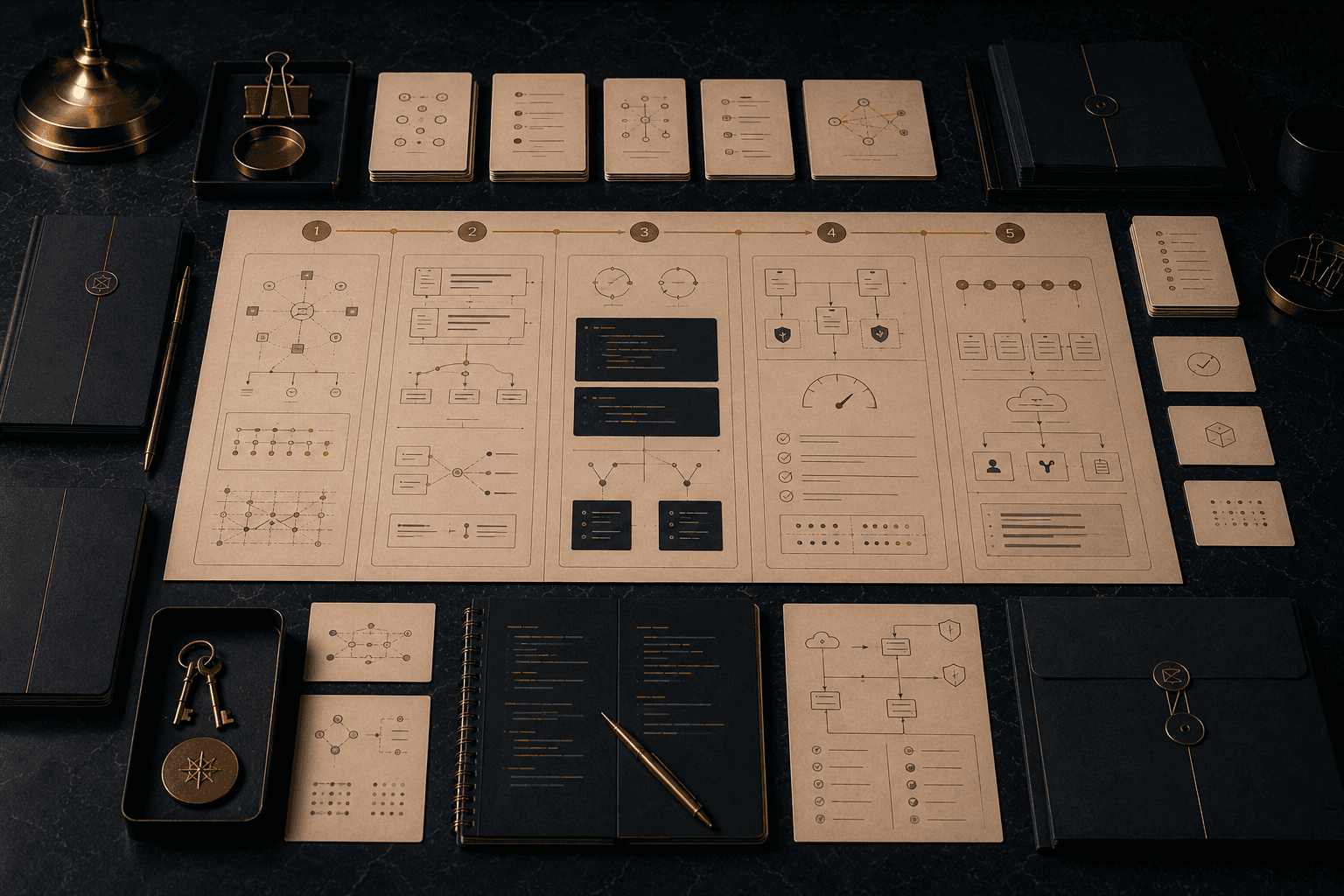
Five phases. Nothing shipped without an architecture behind it.

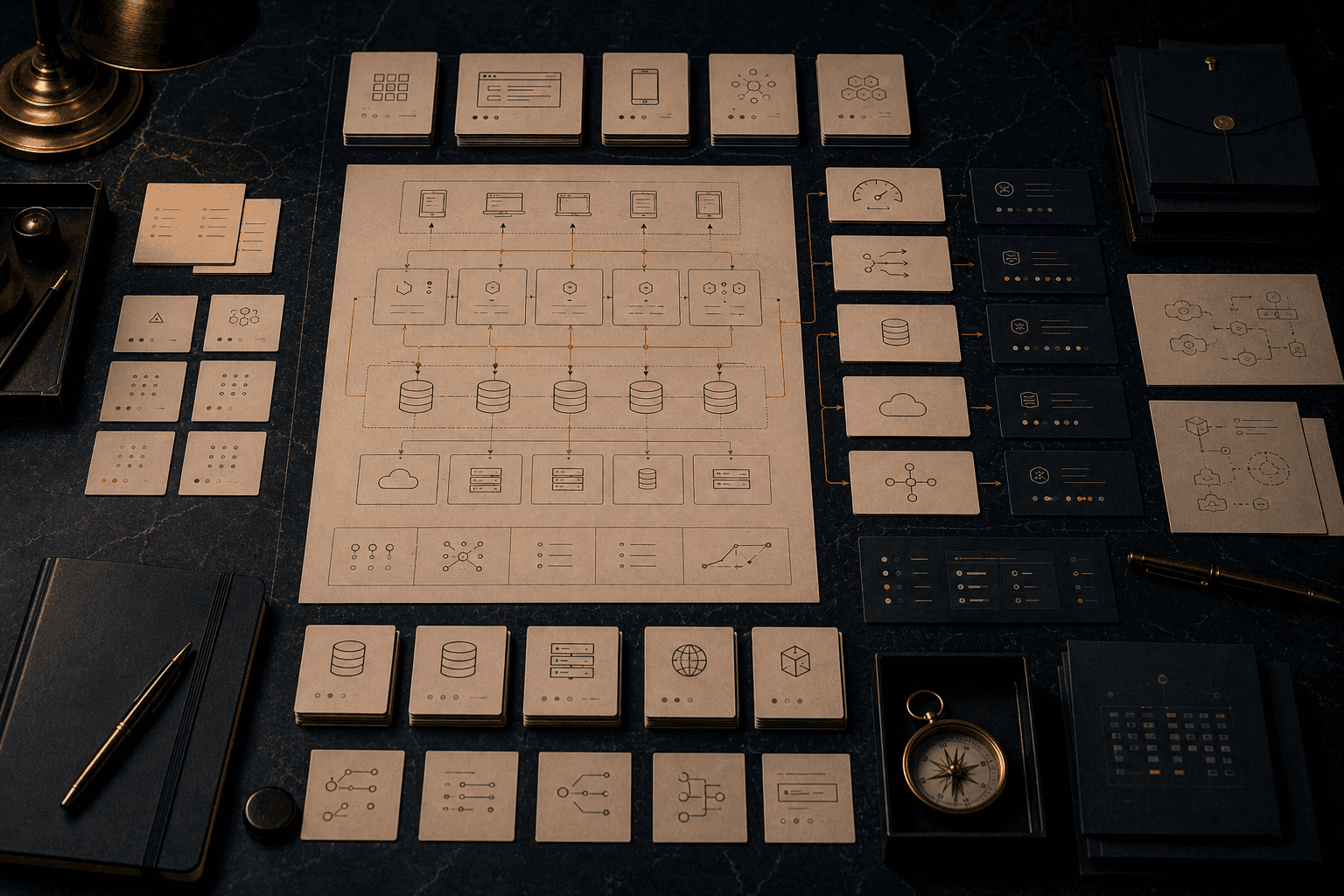
Custom development without discipline is how budgets disappear. Our process is not exotic. It is the version of agile that agencies tend to skip because it slows down the part where you get to write code. We keep it in because it is what makes the rest survive.

01  Discovery and architecture

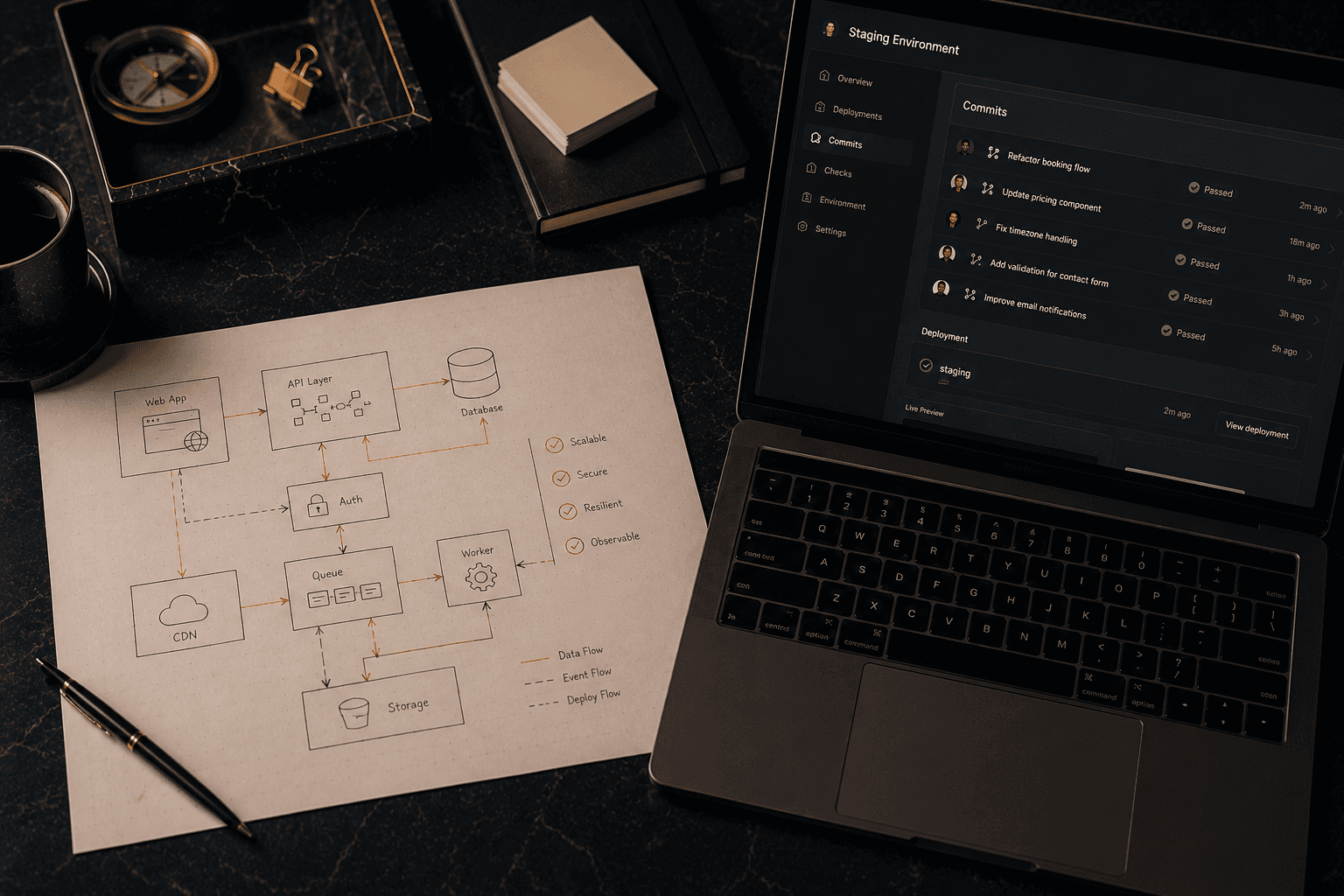
We map the business problem, not the feature list. We diagram the system, name the risky edges, and agree on what we are actually building before estimates are worth anything.

02  Specification and planning

Every feature is written up with inputs, outputs, edge cases, and the behaviour that will be considered done. Timeline is built on these specs, not on vibes.

03  Build and review

Two-week working cycles. Staging is live from week one. Code review, automated tests, and weekly walkthroughs with you. No surprise demo at the end of the project.

04  Integration and hardening

Systems connected, end-to-end flows tested on real data, performance tuned, security hardened. Documentation written alongside the code, not after.

05  Launch and handover

Staged rollout. Monitoring on from day one. Thirty to sixty days of post-launch calibration and bug window. Source code, environments, and docs owned by you.
The image featured at the top of the about us page #1

We pick the stack for the problem, not the portfolio.

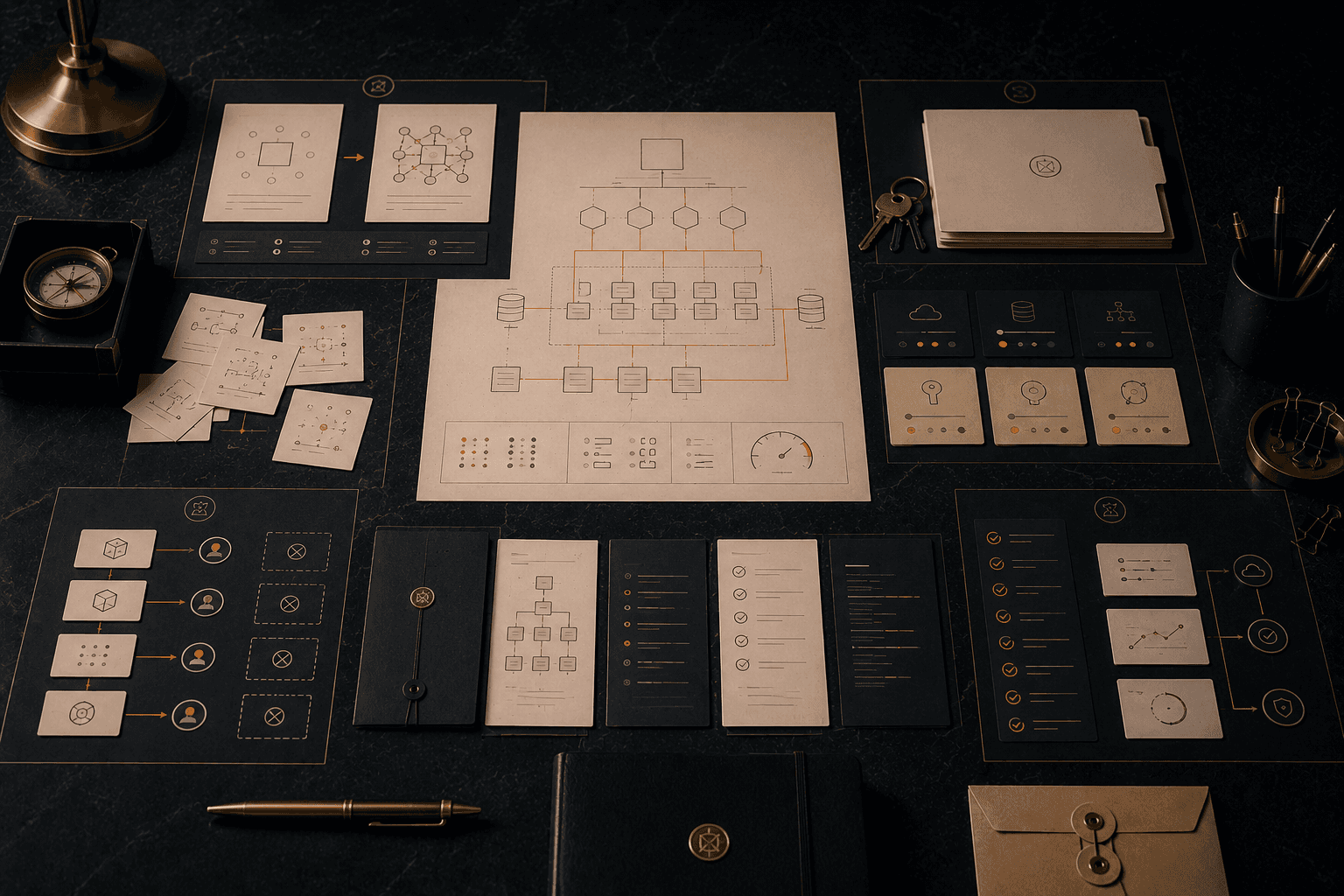
We do not evangelise a single framework. We have shipped production work across the stacks below and choose based on your problem, your performance profile, your hiring realities, and what your team will be able to own after we hand it over.
Front end

React and Next.js for most product surfaces. Astro or SvelteKit for content-heavy sites where performance is non-negotiable. Plain TypeScript and HTML where a framework is overkill.

Databases

Postgres is the default. Redis where caching or queues earn their keep. Document stores only when the data is genuinely document-shaped.

Integration layer

Typed API clients, event-driven middleware, and webhooks with audit trails. No Zapier tangles for anything your business depends on.

Back end

Node, Python, or Go depending on concurrency and team fit. Lightweight services over monoliths unless the monolith is obviously right.

Hosting and infrastructure

Vercel, Render, Fly, or AWS. Chosen on scale, cost, and how much ops you want to own. Infrastructure as code where the footprint justifies it.

Front end

React and Next.js for most product surfaces. Astro or SvelteKit for content-heavy sites where performance is non-negotiable. Plain TypeScript and HTML where a framework is overkill.

Databases

Postgres is the default. Redis where caching or queues earn their keep. Document stores only when the data is genuinely document-shaped.

Integration layer

Typed API clients, event-driven middleware, and webhooks with audit trails. No Zapier tangles for anything your business depends on.

Back end

Node, Python, or Go depending on concurrency and team fit. Lightweight services over monoliths unless the monolith is obviously right.

Hosting and infrastructure

Vercel, Render, Fly, or AWS. Chosen on scale, cost, and how much ops you want to own. Infrastructure as code where the footprint justifies it.

Front end

React and Next.js for most product surfaces. Astro or SvelteKit for content-heavy sites where performance is non-negotiable. Plain TypeScript and HTML where a framework is overkill.

Back end

Node, Python, or Go depending on concurrency and team fit. Lightweight services over monoliths unless the monolith is obviously right.

Databases

Postgres is the default. Redis where caching or queues earn their keep. Document stores only when the data is genuinely document-shaped.

Hosting and infrastructure

Vercel, Render, Fly, or AWS. Chosen on scale, cost, and how much ops you want to own. Infrastructure as code where the footprint justifies it.

Integration layer

Typed API clients, event-driven middleware, and webhooks with audit trails. No Zapier tangles for anything your business depends on.

The image featured at the top of the about us page #1

Principles

Four rules that keep custom work honest.
1. Platform first, custom where it earns the right.

We do not upsell custom for the sake of it. Most problems belong on a platform. We only recommend custom when the architecture, integrations, or logic cannot be met otherwise.

3. Every feature has a reason and an owner.

We will push back on scope that exists only because someone in a meeting thought it would be nice. Custom budgets die inside features that no one is truly accountable for.

2. The system you end up with is yours.

Source code, documentation, environments, and accounts are in your name from day one. No vendor lock. No hostage situations. The test of a good build is that another team could take it over if they had to.

4. Quality is visible in the work, not in the claim.

Tests, reviews, staging, observability, and documentation are not optional extras. They are how we know the system will still be running in a year, and how your team keeps shipping after we leave.

1. Platform first, custom where it earns the right.

We do not upsell custom for the sake of it. Most problems belong on a platform. We only recommend custom when the architecture, integrations, or logic cannot be met otherwise.

3. Every feature has a reason and an owner.

We will push back on scope that exists only because someone in a meeting thought it would be nice. Custom budgets die inside features that no one is truly accountable for.

2. The system you end up with is yours.

Source code, documentation, environments, and accounts are in your name from day one. No vendor lock. No hostage situations. The test of a good build is that another team could take it over if they had to.

4. Quality is visible in the work, not in the claim.

Tests, reviews, staging, observability, and documentation are not optional extras. They are how we know the system will still be running in a year, and how your team keeps shipping after we leave.

1. Platform first, custom where it earns the right.

We do not upsell custom for the sake of it. Most problems belong on a platform. We only recommend custom when the architecture, integrations, or logic cannot be met otherwise.

2. The system you end up with is yours.

Source code, documentation, environments, and accounts are in your name from day one. No vendor lock. No hostage situations. The test of a good build is that another team could take it over if they had to.

3. Every feature has a reason and an owner.

We will push back on scope that exists only because someone in a meeting thought it would be nice. Custom budgets die inside features that no one is truly accountable for.

4. Quality is visible in the work, not in the claim.

Tests, reviews, staging, observability, and documentation are not optional extras. They are how we know the system will still be running in a year, and how your team keeps shipping after we leave.

The image featured at the top of the about us page #1

You stop fighting the stack and start shipping against it.

When a custom build is done properly, the team's relationship with the website or the tool changes. Pages load the way you expected them to. Integrations stop surprising you. Engineers and agencies coming into the business can read the architecture diagram and get productive inside a week. New features stop being a negotiation with a platform and become a question of what the business actually wants to build next.

Performance is predictable under the loads you actually see.
Your team ships new features in days instead of weeks.
The product roadmap stops being constrained by what a platform allows.
Integrations are versioned, logged, and maintainable by more than one person.
Hiring into the stack becomes easier, not harder.
Due diligence and security reviews stop being painful conversations.
Performance is predictable under the loads you actually see.
Your team ships new features in days instead of weeks.
The product roadmap stops being constrained by what a platform allows.
Integrations are versioned, logged, and maintainable by more than one person.
Hiring into the stack becomes easier, not harder.
Due diligence and security reviews stop being painful conversations.
Performance is predictable under the loads you actually see.
Integrations are versioned, logged, and maintainable by more than one person.
Your team ships new features in days instead of weeks.
Hiring into the stack becomes easier, not harder.
The product roadmap stops being constrained by what a platform allows.
Due diligence and security reviews stop being painful conversations.
The image featured at the top of the about us page #1

Is this for you?

Work with us if
  • You have outgrown a platform and are paying for it in downtime, performance, or feature lag.

  • You have a serious product or operator problem that cannot be solved by off-the-shelf tools.

  • You are funded, cash-positive, or otherwise able to treat this as a real architecture investment, not a side project.

  • You have someone in the business who can own the product decisions alongside our team.

  • You want a system you will own long after the engagement ends.

Do not work with us if
  • You are early-stage and have not yet proven demand with a platform build first.

  • You are looking for the cheapest possible option or a freelance-style hourly build.

  • You want a technical decision made for you without founder or leadership involvement.

  • You expect a custom build to fix a positioning, pricing, or go-to-market problem.

  • You are not prepared for a multi-month, multi-phase engagement with real governance.

What serious buyers ask before scoping a diagnostic.

How do we know if we actually need custom?

The honest answer is usually found in a two-hour discovery call, not a questionnaire. The signals we look for are architectural, not cosmetic. Is the current system blocking revenue? Are integrations breaking in ways your team cannot fix? Is performance visibly costing you conversions or retention? Is the platform roadmap taking the product somewhere you do not want to go? If one or more of those is true, custom is on the table. If not, we will point you at a platform build instead.

What does a realistic budget range look like?

Custom work sits at W3 and above. It is not comparable to a platform site on price and it should not be treated as a line item in a marketing budget. It belongs in the same conversation as engineering hiring, platform licences, and other durable infrastructure investments. We will give you a real range on the second call, after we have seen enough to make it honest.

How long will it take?

A focused W3 build usually runs eight to twelve weeks. A flagship W4 build typically runs sixteen to twenty-six weeks depending on scope and integration complexity. W4+ enterprise engagements are phased and measured in quarters, not weeks. We do not give single-week estimates, because anyone who does is lying about the phase one work.

Who owns the code when you are done?

You do. Fully. Source code, repositories, documentation, cloud accounts, and environments are in your name or transferred to your name before launch. We keep nothing behind a vendor wall. This is not a negotiation point. It is how we build.

What if requirements change in the middle of the project?

They will. Every custom build discovers things during the build that were invisible in the spec. Our process is built to absorb change in two-week cycles without blowing up the timeline or the budget. Material changes get scoped, priced, and agreed in writing before any extra work is done. No surprise invoices.

Do we need a CTO or technical co-founder?

Not formally. We have run custom engagements with non-technical founders and with deeply technical product leads. What we do need is one person in the business who can make product decisions, hold scope, and stay close enough to the work to be accountable for it. Without that, projects drift.

How do you handle security?

We follow standard engineering practice for the domain. OWASP-aligned defaults, encrypted credentials, least-privilege access, logged auth flows, and dependency scanning on every deploy. For regulated industries or enterprise reviews, we run a hardening phase aligned to your compliance profile and can sit on a SOC 2 or ISO 26262 prep workstream if needed.

Can we start a platform and move to custom later?

Sometimes, and we will help you plan for it. If the platform gets you to product-market fit, moving to custom later is cheaper than over-building at the start. Where possible, we design the platform build with a future custom migration in mind, so the handoff is clean when the time comes.

Who maintains the system after launch?

You have three realistic options. Your own engineering team, with our documentation and training. Us, under a Care Plan with a defined SLA. Or a hybrid, where your team owns feature work and we own infrastructure and incident response. We will recommend the honest answer for your situation.

What happens if we decide not to continue with you?

The system keeps running. Another engineering team, internal or external, can pick it up because everything is yours and everything is documented. That is the real test of whether a custom build was honest work.

What is the first step?

A thirty to sixty minute scoping call with our development lead and, where appropriate, a senior engineer. Bring the problem, not a spec. We will tell you whether custom is the right call, what the next phase looks like, and whether we are the right team to run it.

Our Services

What Our Partners Think

They are highly supportive! I feel completely supported in every part of my marketing. They are a wonderful team of people each bring in their own talents and strengths. They are responsive and eager to please and it's been a pleasure working with them.

Tova, Toronto

Co-owner of FRINGE boutique

What Our Partners Think

They are highly supportive! I feel completely supported in every part of my marketing. They are a wonderful team of people each bring in their own talents and strengths. They are responsive and eager to please and it's been a pleasure working with them.

Tova, Toronto

Co-owner of FRINGE boutique

Let's Work Together

What Our Partners Think

They are highly supportive! I feel completely supported in every part of my marketing. They are a wonderful team of people each bring in their own talents and strengths. They are responsive and eager to please and it's been a pleasure working with them.

Tova, Toronto

Co-owner of FRINGE boutique

What Our Partners Think

They are highly supportive! I feel completely supported in every part of my marketing. They are a wonderful team of people each bring in their own talents and strengths. They are responsive and eager to please and it's been a pleasure working with them.

Tova, Toronto

Co-owner of FRINGE boutique

Let's Work Together