
Branding • Visual Identity • Graphic Design
Visual identity that does the work after you leave the room.
Visual identity for Toronto & GTA brands — logos, systems & assets that do the work.
Your visual identity is the part of your brand that shows up to every meeting you are not in. It is on the pitch deck the prospect opens at midnight, the invoice the AP team forwards, the social post the buyer screenshots, the slide a partner pastes into a board pack. If those surfaces do not agree, the brand is doing two jobs at once: selling, and reassuring the buyer that nothing is off.
A real identity system makes that second job stop. It gives every team and every contractor a shared language so the brand reads as one company across every touchpoint, without you in the room reviewing the details.
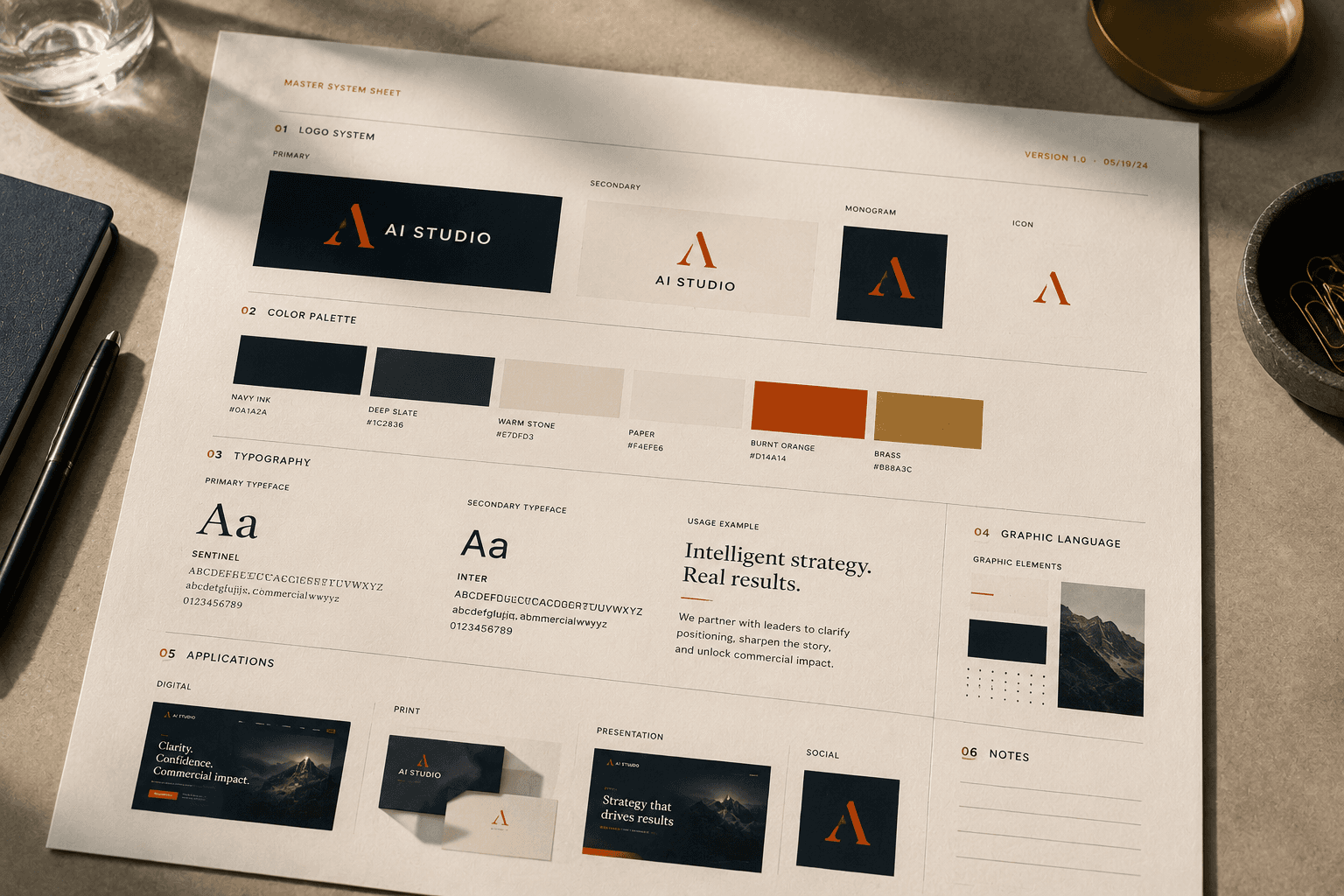
A logo is not an identity. A system is.
Most visual identity problems do not sound like "we need a new logo." They sound like nobody on the team knows which version of the logo to use, which colors are official, which font is correct, or what the deck template should look like. That is not a logo problem. It is a system problem.
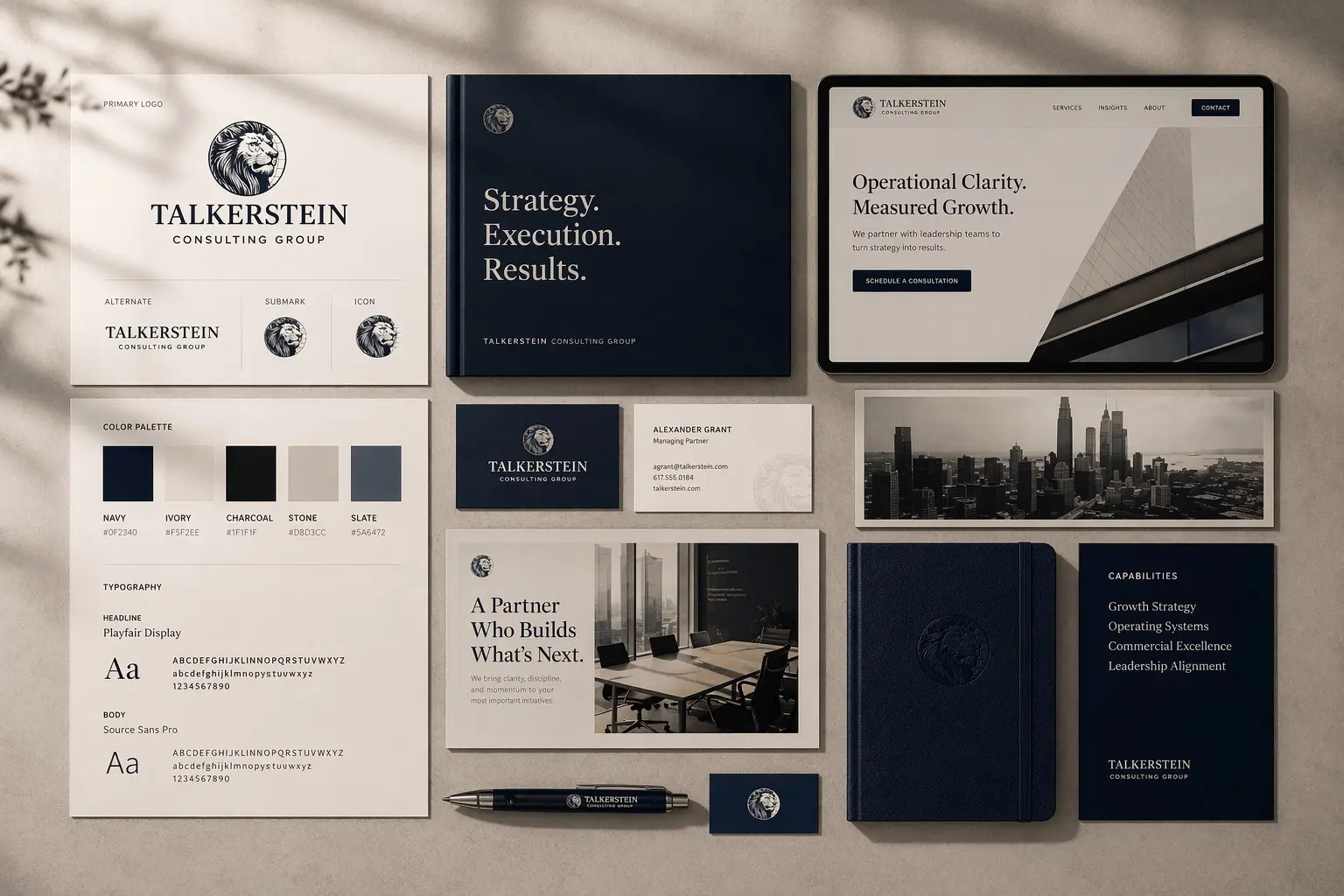
A logo file is an artifact. A system is a logo suite, a defined color language, a typography hierarchy, a grid, an icon style, photography direction, and the templates and rules that govern how all of it gets used in production. Without the system, the logo gets reapplied wrong every time a new asset ships, and the brand quietly drifts.
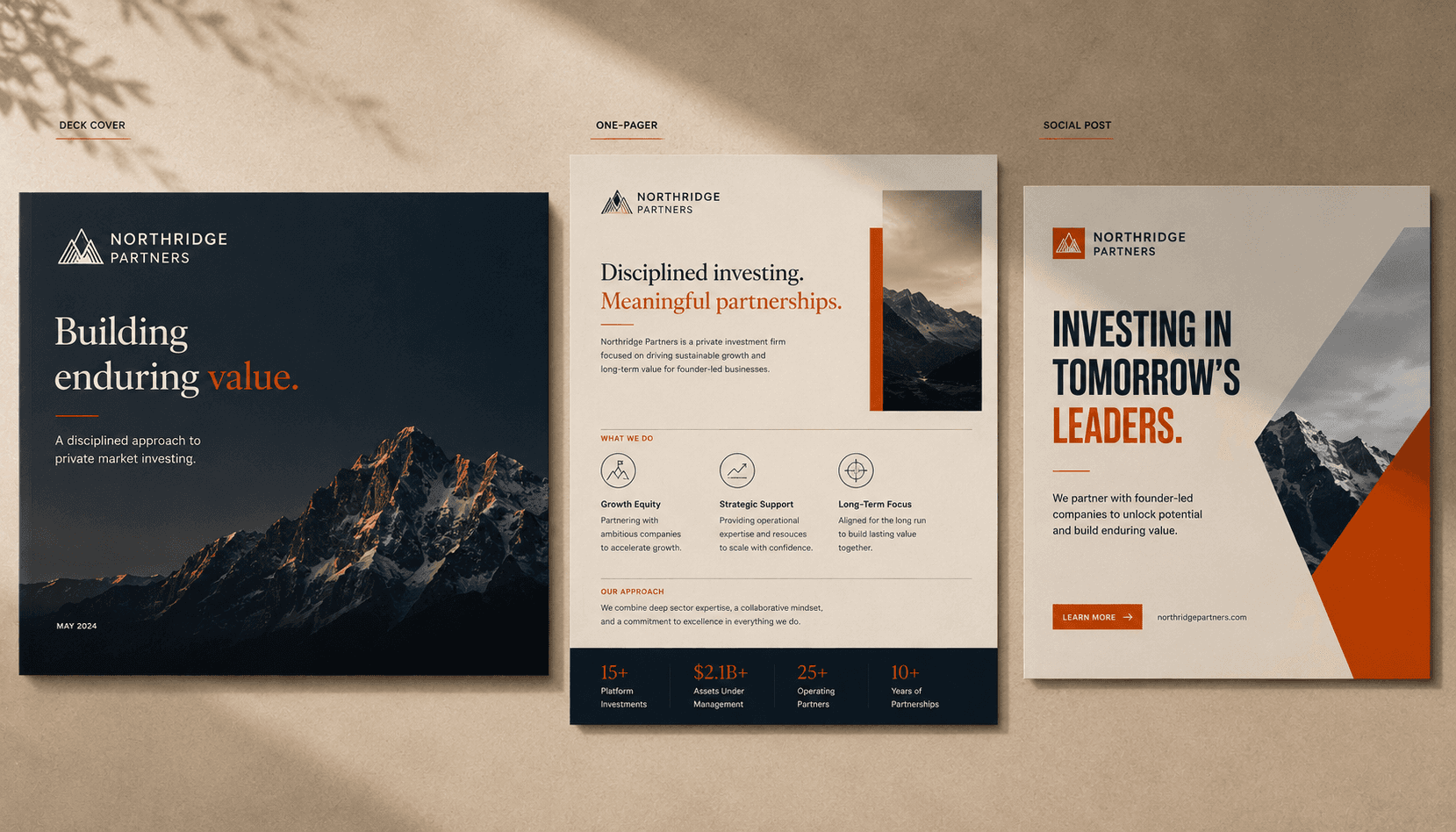
You are not losing deals because the logo is ugly. You are losing them because your surfaces do not agree.
Buyers do not evaluate a brand by looking at one touchpoint. They accumulate impressions across the deck, the website, the invoice, the LinkedIn post, the proposal cover, and the email signature. When those surfaces disagree, the cumulative read is "this company is not as serious as it claims." That feeling shows up as longer sales cycles, more discounting, and lost referrals you never trace back to design.
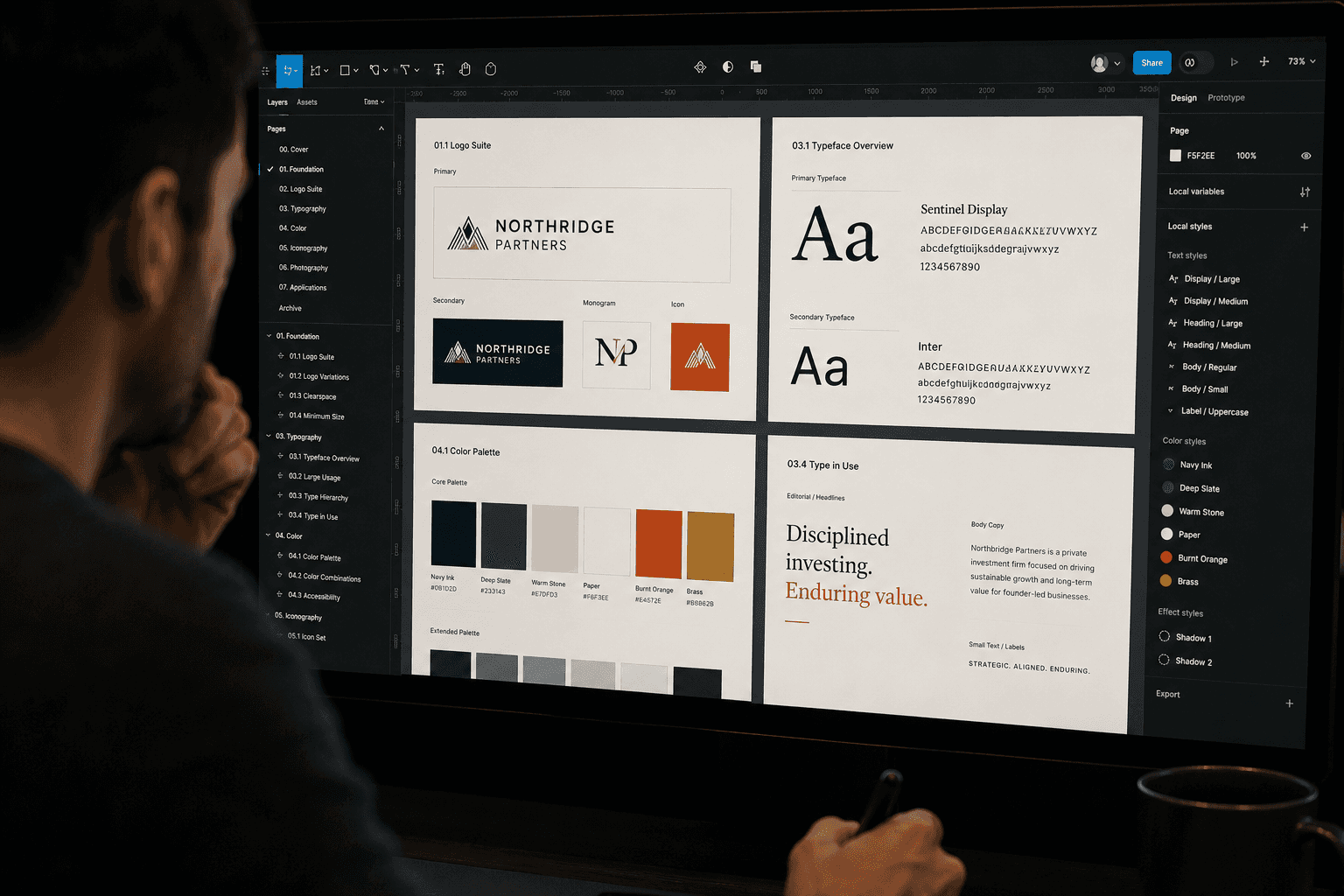
Three system shapes. Same design thinking. Different depth of build.
Visual identity runs inside our B1, B2, and B3 branding tiers. The right shape depends on how many surfaces the system has to carry, how many people will use it, and how much the next twelve months of brand expression will demand.
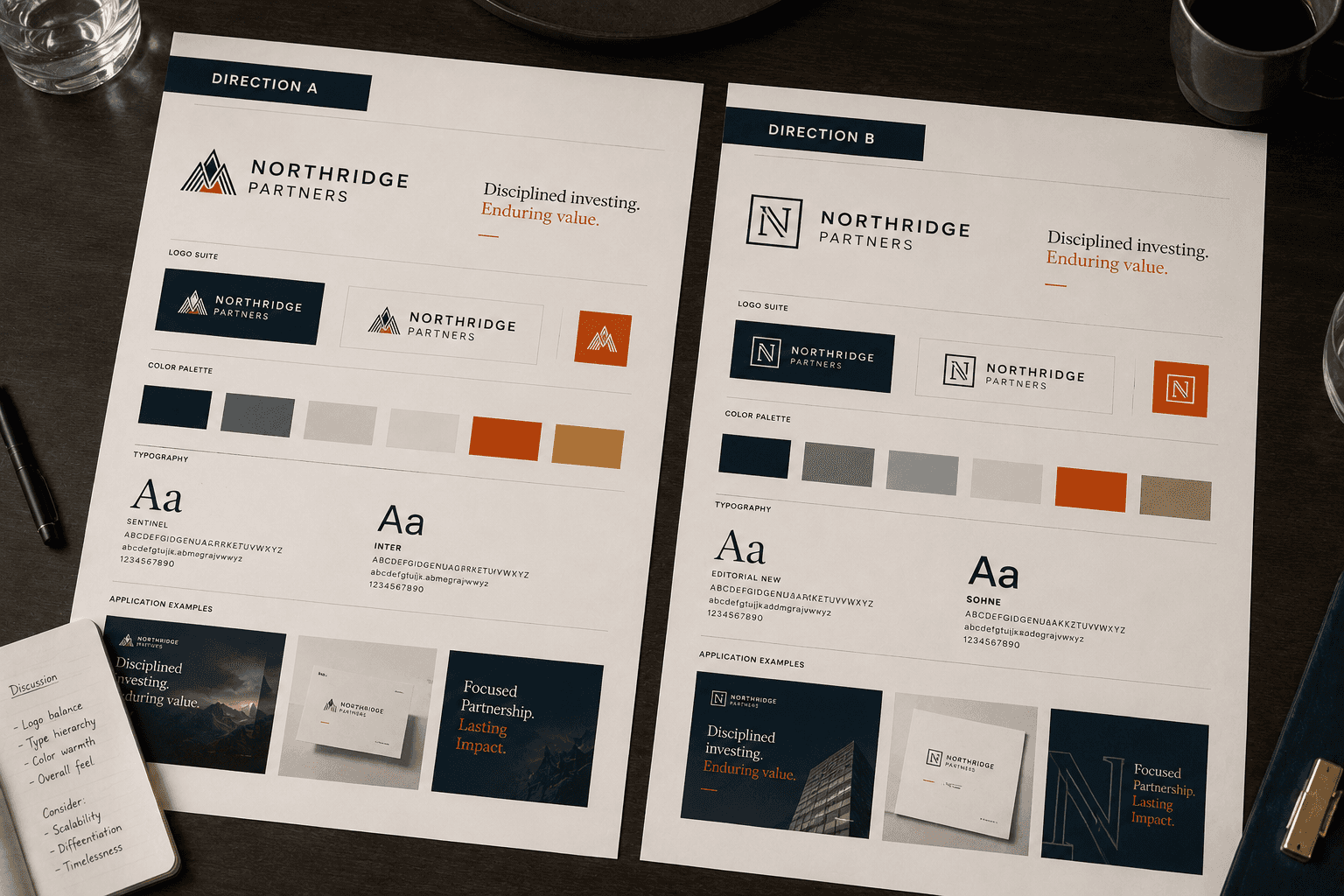
Four phases. Focused options, not designer-by-committee.
01 Diagnose
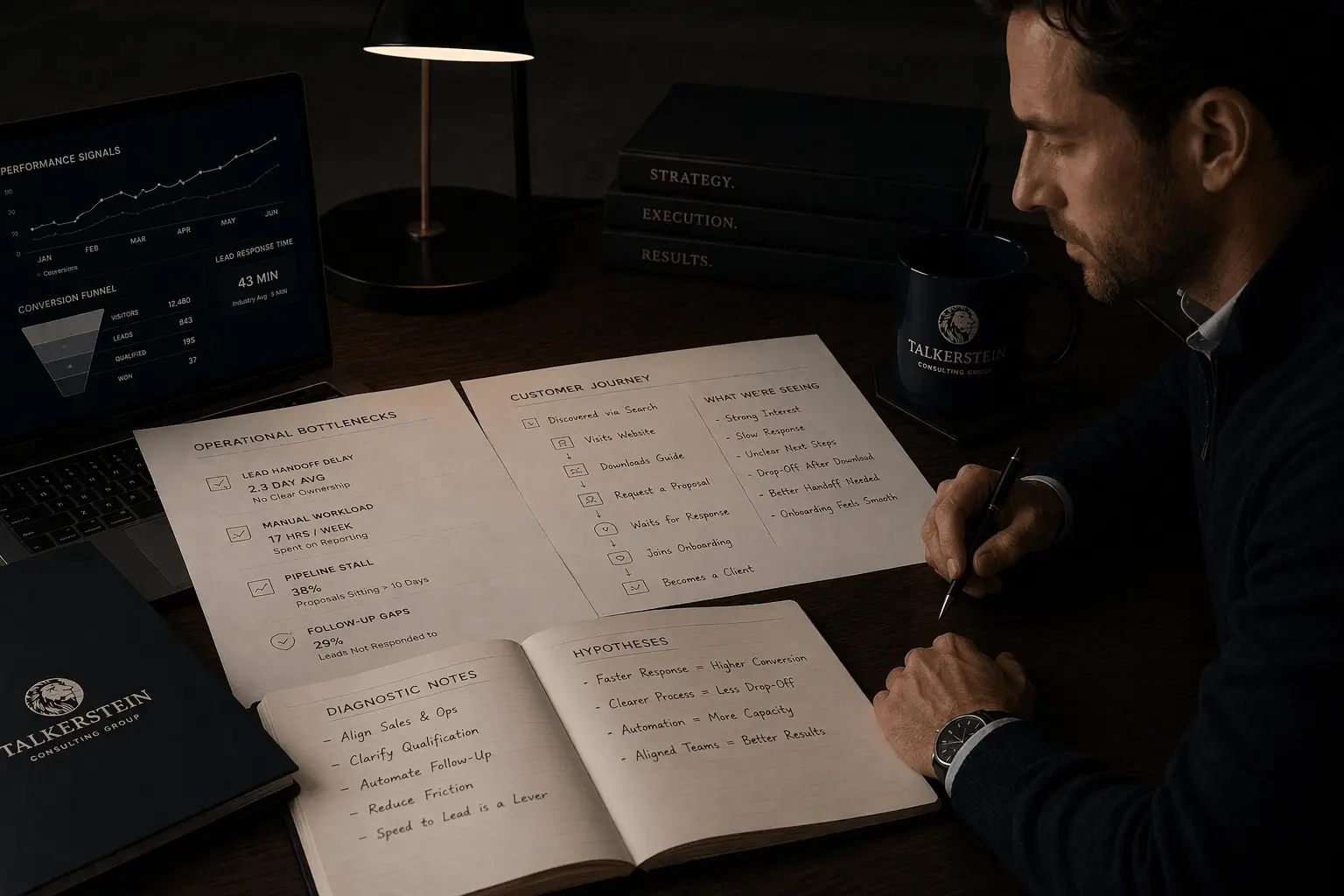
We audit the current identity across every surface the business actually ships on. Decks, website, socials, collateral, environments, signage. We map what is consistent, what is drifting, and what is structurally missing. The output is a one-page diagnostic that becomes the brief for the design phase.
02 Design
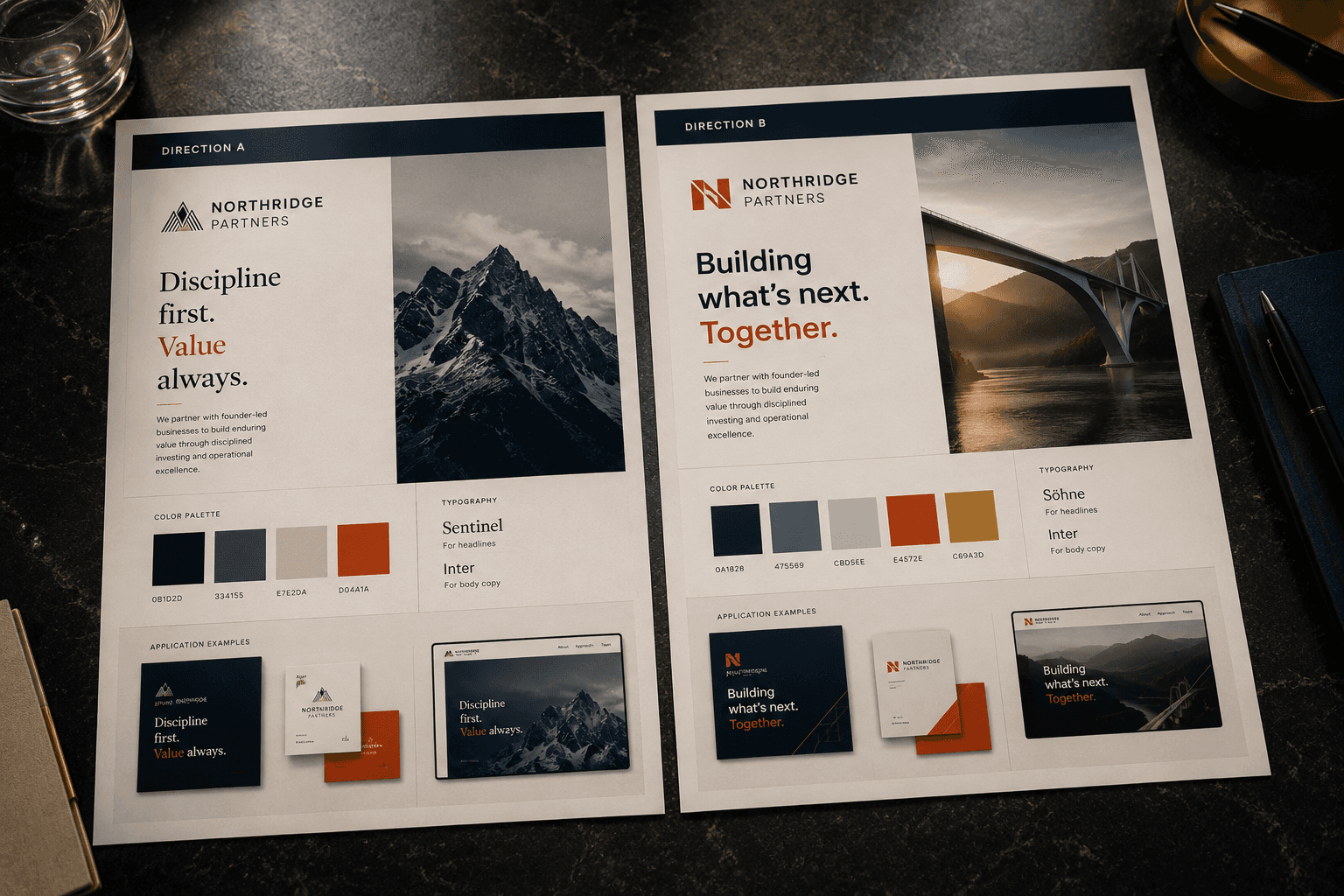
We develop two direction options, not twelve. Each direction carries a defensible point of view on type, color, logo treatment, and visual mood, applied to live surfaces so leadership is choosing between two real systems, not two moodboards.
03 Build
The chosen direction becomes the working system. Logo suite, color, type, icon, pattern, photography direction, templates, motion behavior, and the guidelines document that governs all of it.
04 Hand off
Guidelines document, source files, and a live training session with whoever on your team will own day-to-day application. For B2 and B3, a sixty-day support window covers the surfaces shipped first.
Four rules we refuse to compromise.
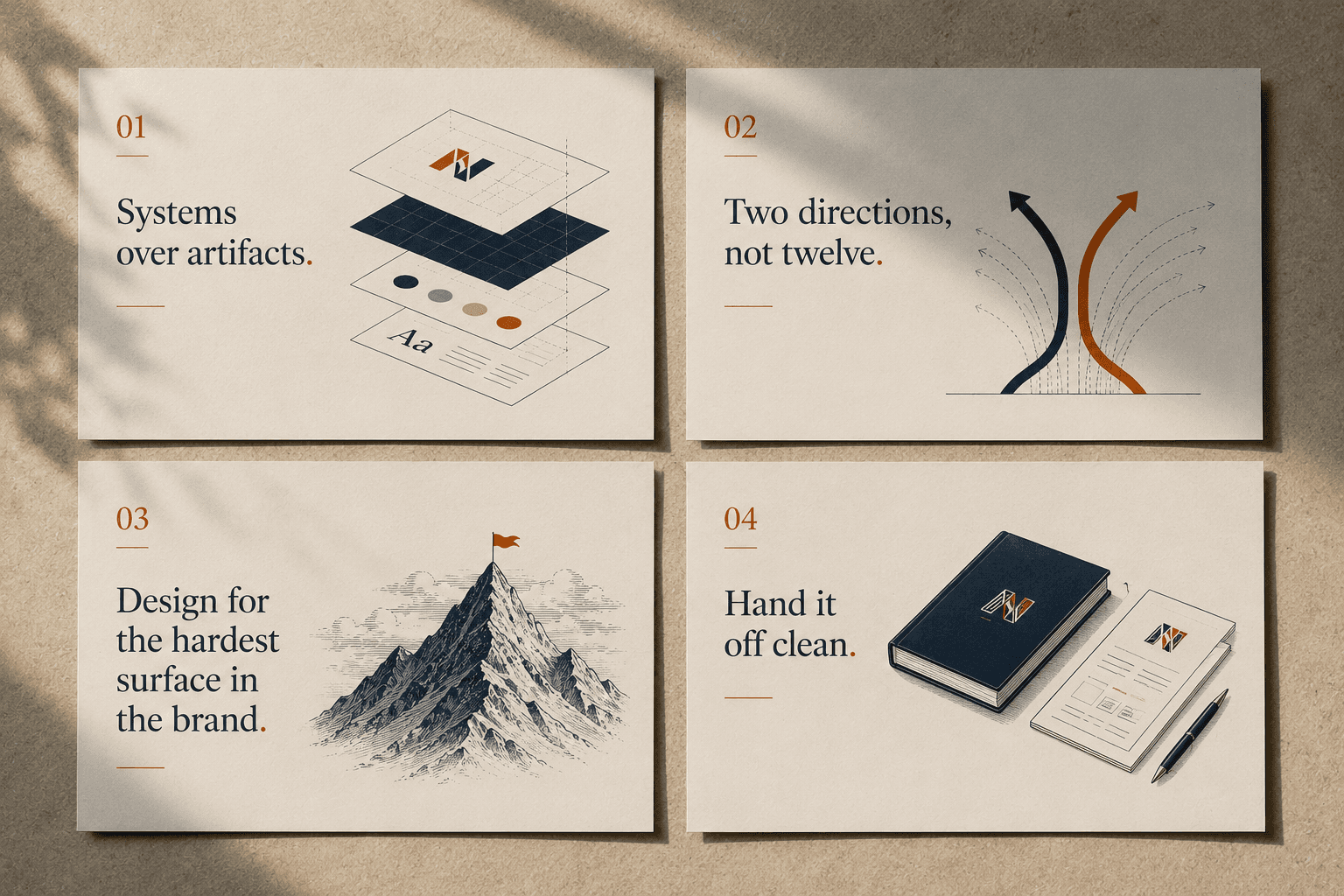
The operator-level shift a real identity system produces.
Teams that receive a working identity system tend to see the same pattern inside ninety days. Creative velocity goes up because the foundations stop being relitigated. Sales collateral stops drifting. New hires ship on-brand work in week one. The founder reclaims a meaningful slice of review time.

Is this the right engagement?
Strong fit if
You have a logo and a few assets but no real system tying them together
Your decks, site, socials, and collateral visibly disagree with each other
You are preparing for a fundraise, an acquisition, a new market entry, or a category shift
You have outgrown the founder-era visual identity and need a system sized to the current business
You want a system a VA, contractor, or junior designer can use to ship on-brand work
Probably not the right fit
You only want a logo with no system, usage rules, or templates around it
You are pre-revenue and the money should be going into distribution and customer work right now
You are looking for twelve concept rounds and a team willing to chase feedback indefinitely
You do not have a defined brand strategy and are not ready to resolve that work first
You want a rebuild priced below what the downstream templates and rollout actually cost to build
What serious buyers usually ask.
How long does a visual identity engagement take?
B1 Core runs three to four weeks. B2 System runs six to eight weeks. B3 Flagship runs eight to twelve weeks depending on the number of surfaces in scope and the complexity of the rollout.
Do we own the final files and the logo trademark?
Yes, fully. You own the trademark on the logo, the source files in Figma and production formats, and the complete system including templates and motion assets.
Can you work with our internal designer or agency?
Yes, and we often do. On larger engagements we typically lead the master system and handoff, then collaborate with an internal designer or partner agency on application and rollout.
Do we need a new logo, or can we keep the existing one?
The diagnosis phase answers that honestly. Many engagements refine the existing logo and build a stronger system around it. Some require a full mark redraw. We do not invent a reason to redraw a working logo.
Does this engagement cover the website?
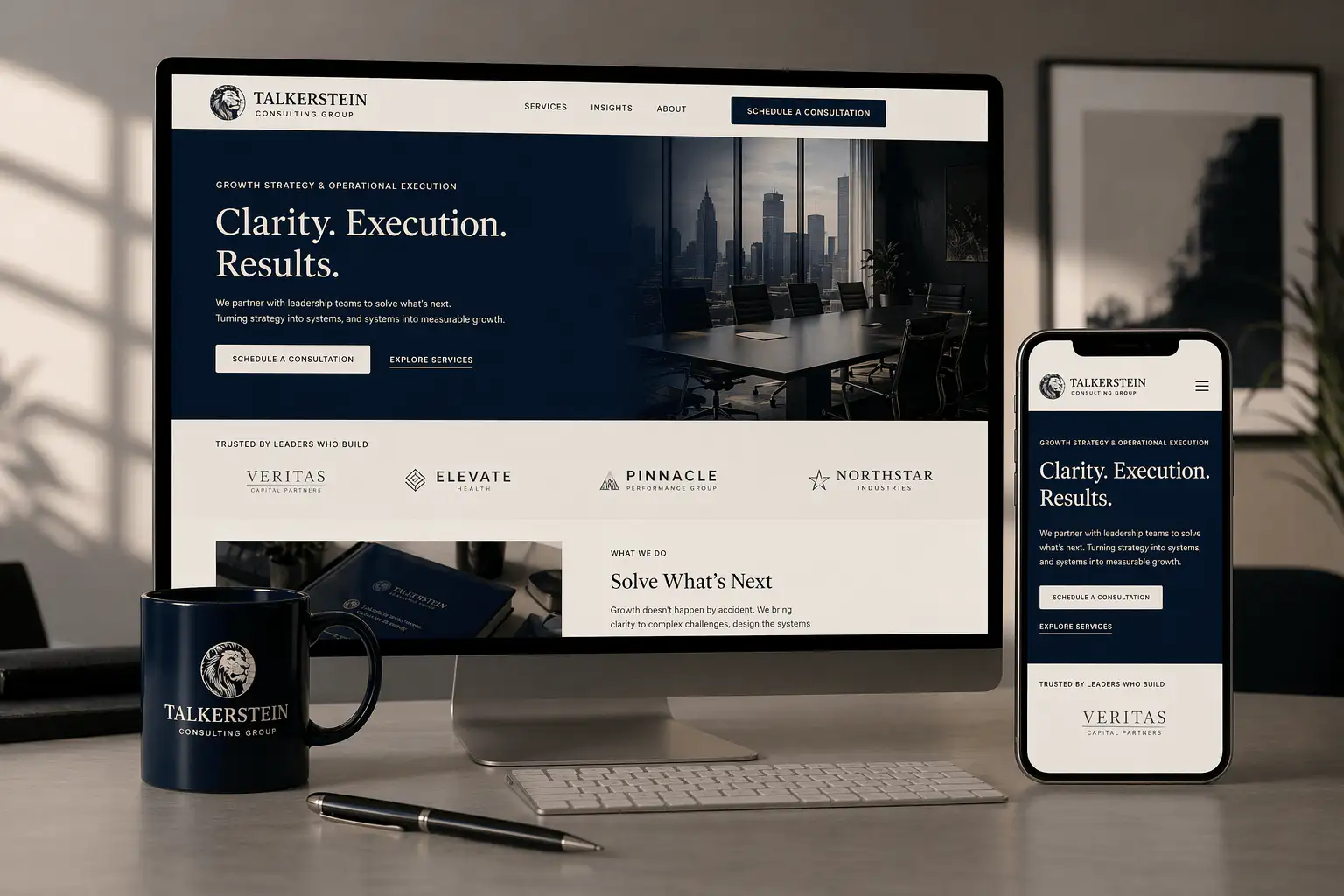
The visual identity informs the website but does not build it in the default scope. Website design and development run as a separate engagement under our W2, W3, or W4 tiers, scoped after the identity is locked.
How do you handle revisions and feedback cycles?
Two rounds of revisions on each major deliverable are included. We build in one explicit pivot moment during the design phase. Beyond that, additional rounds are scoped as a small change order so timelines stay protected.
Can you rebrand in phases instead of all at once?
Yes, and for larger businesses it is usually the right call. A phased rebuild typically runs as identity core first, then templates and collateral, then website and digital surfaces. We sequence to protect revenue and reduce risk.
How do you handle brands with multiple sub-brands or geographies?
We design the master system first, then define a sub-brand architecture that decides how product lines, business units, or geographic markets express the identity consistently while still flexing where they need to.
What pricing range does a real engagement sit in?
Pricing is scoped on the discovery call against the tier, the number of surfaces, the collateral scope, and the rollout depth. We share the range candidly so neither side wastes time. We will not enter an engagement priced below what the work actually requires.
What makes identity engagements go well, and what slows them down?
They go well when the brand strategy is already resolved, the leadership team commits to a small empowered decision group, and the existing surfaces are made available without delay. They slow when the strategy is still in flux, the decision group keeps expanding, or feedback cycles drag past the agreed pivot moment.
Our Services




Quick Links


" height="149.2535067768008px" id="IOCTf08f5" width="1199.9520008715217px"/></svg>)