
AI-Powered Lead Generation: How Small Businesses Get Customers on Autopilot
What AI lead generation actually means for a small business in 2026, what it costs, and the four-part system we build for clients.
A custom aquarium and pond builder in the GTA came to us with the same problem we hear from a third of new clients. He had a beautiful website, exceptional craftsmanship, and almost no leads. The phone rang once a week, sometimes less. His previous marketing agency had handed him a "lead generation strategy" that was a 14-page PDF and zero leads.
We rebuilt his entire intake system in six weeks. Within a few months, he was getting consistent weekly inquiries from the right kind of customer. Nothing about his business changed. The system around the business changed. This article is the system, written so you can build a smaller version of it yourself.
The Mistake Most Owners Make With "Lead Generation"
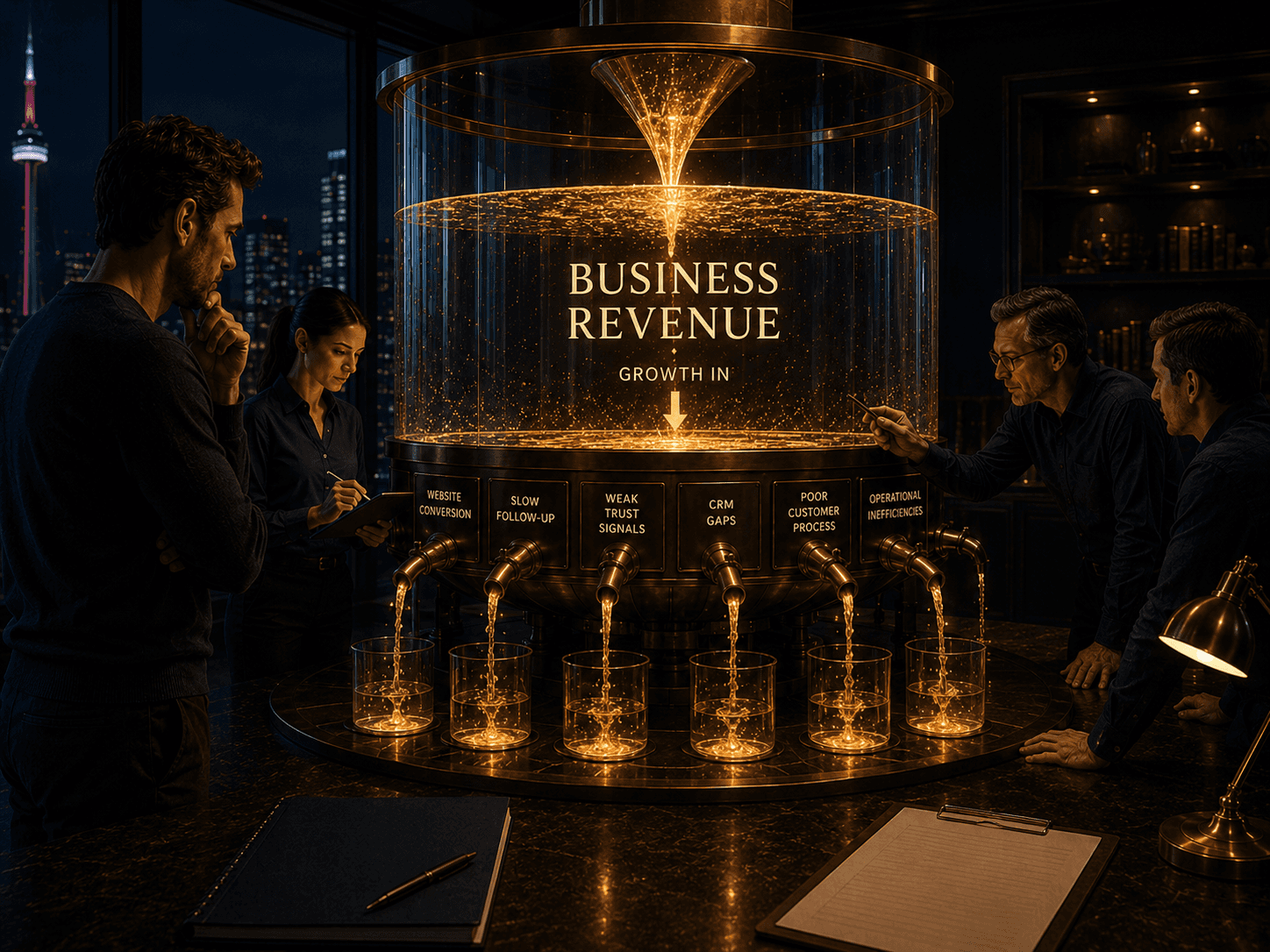
When a small business owner says "I need lead generation," they usually mean "I need more people to call me." That is a symptom, not a strategy. The real problem is almost always one of four things, and AI helps with each of them differently.
The first problem is that not enough people are seeing the business. AI does not solve this directly. Paid ads, SEO, and word of mouth solve it. AI helps you make those channels work better.
The second problem is that the people who do see the business do not know what to do next. The website is unclear. The CTA is buried. Traffic comes in and bounces. AI can rewrite your homepage in an hour and triple your conversion rate.
The third problem is that the leads who do contact you are the wrong fit. You waste time on tire-kickers and miss the few real buyers in the pile. AI can qualify leads automatically before you ever talk to them.
The fourth problem is that the right-fit leads who contact you never hear back fast enough. They book with a competitor while you are on a job site. AI can respond in 30 seconds and book the call before the lead loses interest.
A real AI lead gen system addresses all four. Most "AI lead gen" pitches you will hear address only one and call it a strategy.
The 4-Stage Engine We Build for Clients
This is the structure we build for every lead generation client, scaled up or down by budget. None of it requires custom software. All of it can be assembled from off-the-shelf tools.
Stage 1: Traffic that targets the right person. Google Ads, local SEO, or referral systems aimed at a specific buyer persona. AI helps by writing 30 ad variants in 10 minutes so you can test which message lands. AI does not generate the traffic. It makes the traffic conversion-ready.
Stage 2: A landing page that converts. One page, one offer, one call to action. AI writes the first draft of the headline, the body, and the CTA. A human edits it. Then you run real traffic at it and let the data tell you what works. We rebuilt the aquarium client's homepage around two questions only: "what kind of project do you want" and "where in the GTA are you." The whole page was three sections.
Stage 3: Lead qualification on intake. When a lead fills the form, an AI system reads the response and tags the lead by quality (hot, warm, cold) before it ever reaches the owner's inbox. This is where most small businesses save the biggest chunk of time. You stop wasting an hour on a bad-fit lead because the system already flagged it.
Stage 4: Automated follow-up that does not feel automated. Five to seven touches over two weeks, drafted by AI in the owner's voice, sent automatically with one human checkpoint per week. Most leads do not buy on the first response. They buy on the third or fifth. Most small businesses follow up once and stop. The follow-up sequence is where the actual money lives.
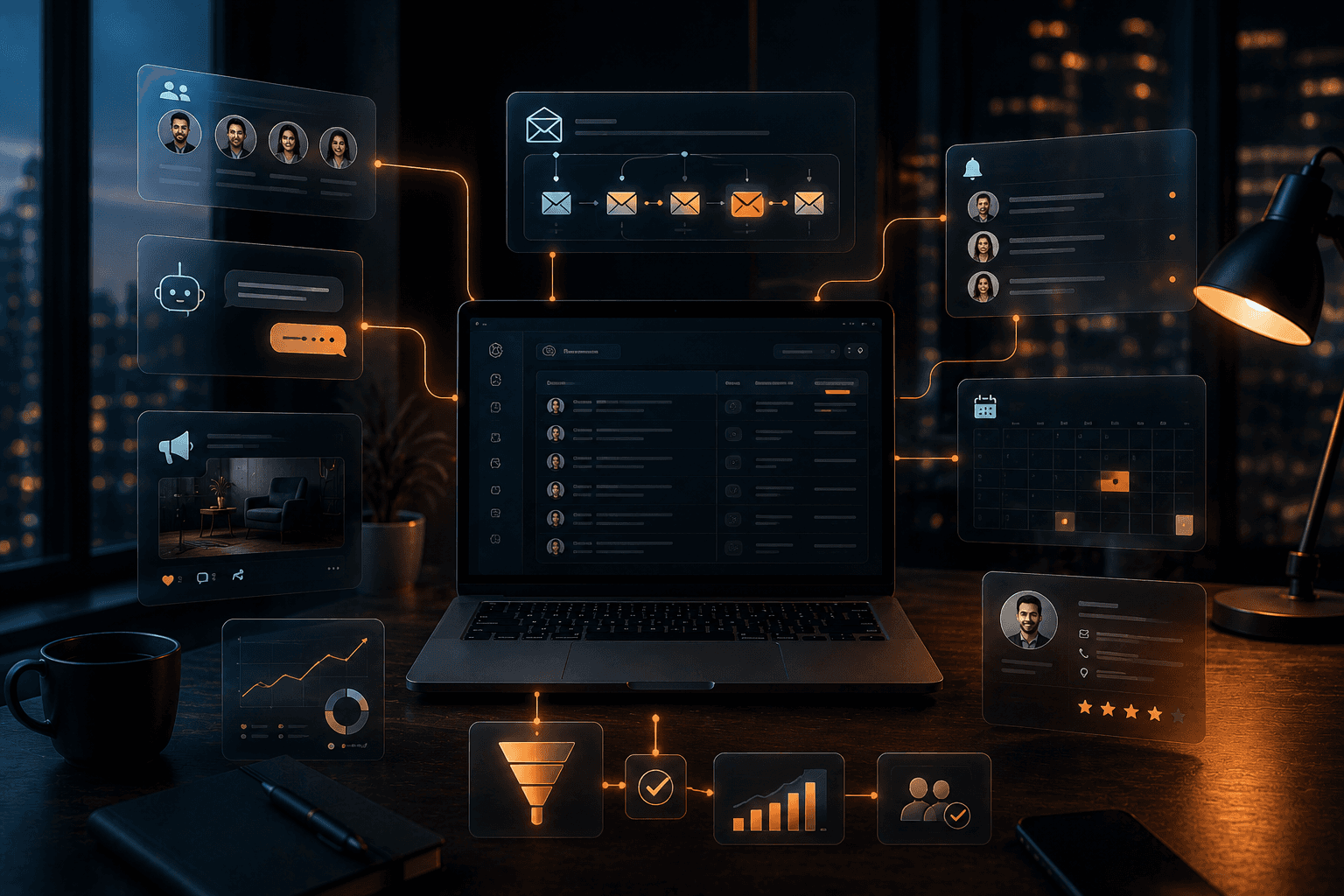
Built together, these four stages turn a leaky funnel into a system that quietly produces qualified meetings while you do other things.
A Real Example: Spectank's Build
When we started with the aquarium client, his existing flow was: ad clicks went to a homepage that talked about his "passion for aquatic ecosystems," a buried contact form at the bottom, and email that he checked once a day. Conversion rate from visitor to inquiry was effectively zero.
We did three things in the first month. We rewrote the homepage around "get a quote for a custom aquarium or pond in the GTA" with the form moved to the top. We added an AI lead-tagging step that classified each inquiry by project size and timeline before it hit his inbox. We built a five-email follow-up sequence in his voice that fired automatically when a lead came in but did not book within 48 hours.
Within a few months he had a consistent weekly stream of inquiries from the kind of customers he wanted. We did not buy him a chatbot. We did not build him a custom AI agent. We took four off-the-shelf tools, connected them, and let his existing craft do the rest.
The lesson: AI lead gen is not magic. It is a four-stage system that removes the failure points one at a time.
The Tools That Run This Stack
For a small business doing this for the first time, here is the stack we recommend. None of it is sponsored. We just use it.
For traffic targeting and ad variants: ChatGPT or Claude for copy, Google Ads for paid traffic, Google Business Profile for local SEO.
For landing pages: Framer or Webflow for the build, Claude for the copy first draft, real traffic for the validation.
For lead qualification: a simple Zapier or Make automation that reads the form submission, sends it to ChatGPT with a qualification prompt, and tags it in your CRM.
For follow-up sequences: HighLevel, ActiveCampaign, or even Gmail with a paid Mailchimp tier. Drafts written by Claude in the owner's voice, scheduled in batches, edited weekly.
Total monthly cost for this stack on a small business budget: under $200, including the ad spend you control. Compare that to a "fully managed AI lead gen platform" pitched at $1,500 per month and the math becomes clear.
What This Costs to Build vs Buy
If you build this system yourself with tutorials, plan on 30 to 40 hours of focused setup time and a learning curve that will frustrate you for the first week. After that it runs.
If you hire it out, expect $2,500 to $5,000 for the initial build with a competent agency, plus ongoing optimization. The reason agencies charge more than the tools cost is the integration knowledge: knowing which tool talks to which, where the failure points are, and which templates actually convert in your industry.
The middle path is to buy the audit and the build, then run it yourself. That is exactly the model we built our 90-day pilot offer around. Setup plus 90 days of support, then the client owns the system.
The Numbers That Matter
Stop measuring "leads." Measure these instead.
Time to first response. From form submission to first human or AI reply. If it is over 30 minutes, you are losing deals. Target: under 5 minutes.
Lead-to-meeting conversion rate. Of the leads that come in, how many turn into a real call. If under 20%, your qualification or your follow-up is broken. Target: 30 to 50% for a tuned system.
Meeting-to-customer conversion rate. Of the calls you take, how many turn into paying customers. AI does not change this number. The owner does.
Cost per customer. Total spend on the lead gen system divided by paying customers acquired. If you cannot calculate this, you do not have a system. You have hope.
Pick one number to improve this quarter. Run the system. Measure. Adjust.
Want a written diagnosis of your current lead gen system?
Our $197 AI Audit walks through your funnel and tells you exactly where the leaks are.
What is AI lead generation?
A system that uses AI tools to generate, qualify, and follow up with prospective customers automatically. It is not a single product. It is a stack of off-the-shelf tools (chat, automation, CRM) connected together so the routine parts of lead handling happen without human time.
How much does AI lead generation cost?
Built yourself with off-the-shelf tools: under $200 per month plus ad spend. Built and managed by a competent agency: $2,500 to $5,000 setup plus a monthly retainer. Avoid platforms charging $1,500+ per month for the same functionality.
Can AI find customers for my local business?
AI does not generate traffic out of thin air. It makes the traffic you already get convert better, qualifies the leads automatically, and follows up reliably. The traffic source still has to be ads, SEO, or referrals.
What is the difference between AI leads and regular leads?
There is no such thing as an "AI lead." The lead is the same person. AI changes how fast you respond, how well you qualify, and how often you follow up. The same lead is worth 3x more in a tuned system than in a leaky one.
How long until I see leads?
With a clean rebuild of an existing site and a working ad budget, first inquiries inside two weeks. Meaningful weekly volume inside 60 to 90 days. If it takes longer than that, the system has a leak and needs to be diagnosed.




Quick Links

" height="149.2535067768008px" id="IOCTf08f5" width="1199.9520008715217px"/></svg>)