
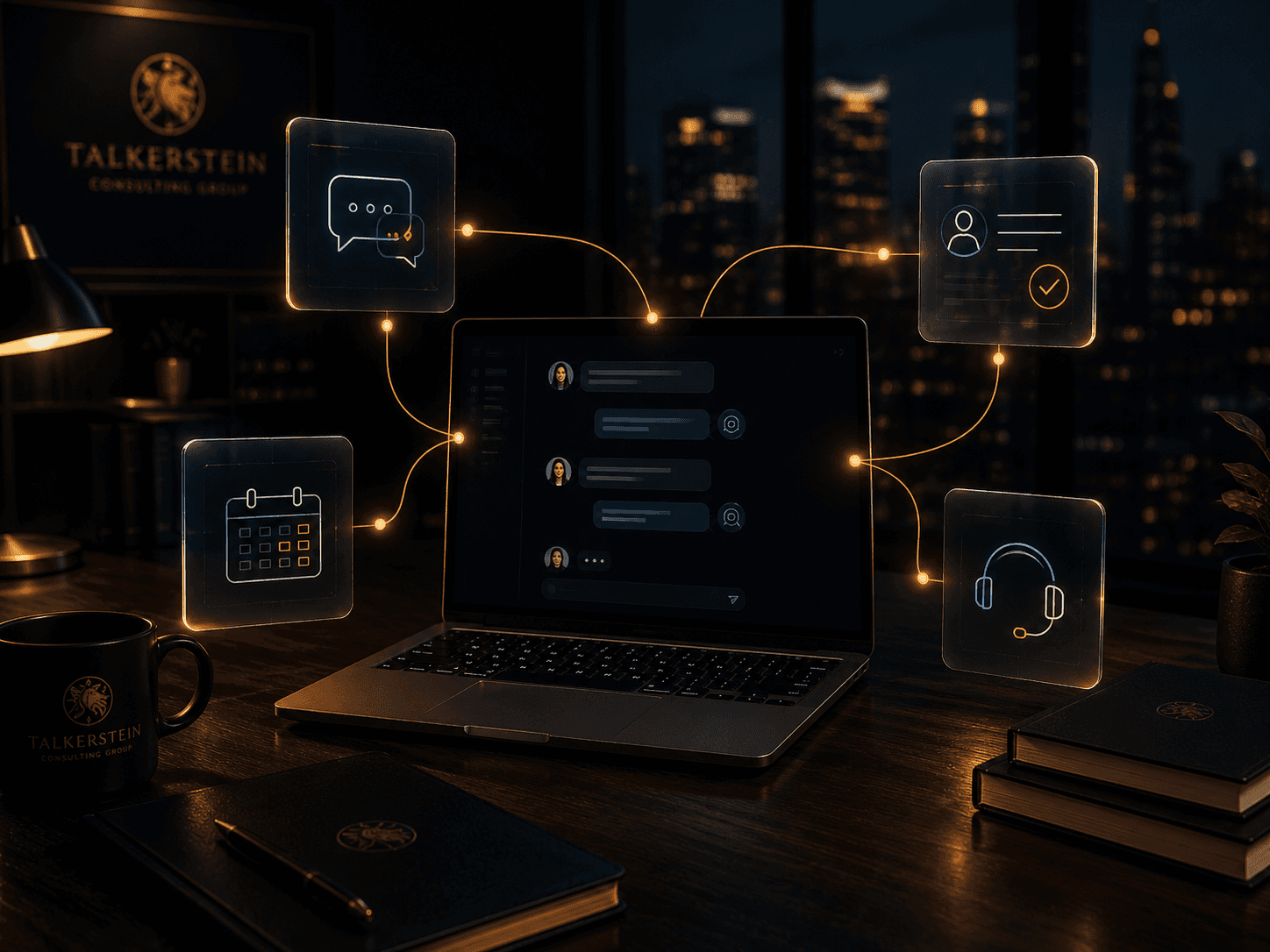
AI Chatbots for Small Business: Worth It or Just Hype?
When an AI chatbot makes sense for a small business, when it does not, and the four questions to ask before spending a dollar.
A luxury mobile IV therapy brand we work with in Miami spent six weeks evaluating whether to add an AI chatbot to their booking flow. The pitch from the chatbot vendor was compelling. Capture leads 24/7. Answer questions instantly. Book appointments while you sleep. The price was $400 per month with a $1,500 setup fee. The vendor promised an ROI in the first month.
We told them not to do it. Six months later they confirmed it was the right call. This article is the framework we used to make that decision and how to apply it to your own business.
Why Most Small Business Chatbots Fail
The AI chatbot industry is in a strange place in 2026. The technology is real. ChatGPT-class models can hold a coherent conversation. Some chatbots actually work. The problem is that most small businesses do not have the conditions a chatbot needs to pay back its cost. They get sold one anyway because the vendor pitch sounds good.
Three things have to be true for a chatbot to make money for a small business. If even one is missing, the chatbot becomes a $400 per month decoration that customers ignore.
Condition 1: Enough traffic for the math to work. A chatbot that handles 5 conversations a week cannot justify its cost no matter how good it is. The minimum viable threshold is roughly 500 unique website visitors per week. Below that, the chatbot is more expensive per conversation than a human responding manually.
Condition 2: Repeated questions you can predict. Chatbots are great at answering "what time are you open," "do you deliver to my zip code," "how much does X cost." They are terrible at handling edge cases, custom requests, or any conversation where the right answer depends on context the bot does not have. If 70% of your customer questions are predictable, a chatbot helps. If 70% are unique, a chatbot creates more work than it saves.
Condition 3: A team that cannot keep up. If your existing team responds to inquiries within a few hours during business hours, the chatbot's marginal value is small. If you are losing leads because nobody can respond fast enough, a chatbot is worth considering.
The IV therapy client we mentioned met one out of three. The conditions were not in place. The chatbot would have been an expensive decoration.
When a Chatbot Actually Pays Off
Despite the failure rate, there are real cases where a chatbot is the right call. We have built or recommended them for clients who fit one of these patterns.
Pattern 1: High traffic with predictable questions. An e-commerce site selling a single product line with thousands of monthly visitors and constant "shipping," "sizing," "in-stock" questions. The chatbot answers 70% of the queries instantly and frees the support team for the actual problems.
Pattern 2: After-hours lead capture for businesses with strong demand. A trades business in a city with high search volume that gets 20+ inquiries per night. A chatbot captures the request, qualifies it, and books a morning callback. By 9am the team has a list of qualified leads instead of 20 missed messages.
Pattern 3: Knowledge-base style support for SaaS or service businesses. A platform with detailed product documentation can route most user questions to a chatbot trained on that documentation. The chatbot handles the routine questions, the human handles the actual issues.
If your business does not match one of these three patterns, the answer is almost always "do not buy a chatbot yet." Spend the same money on the parts of your funnel that are actually broken.
A Real Example: Why We Said No to the IV Therapy Chatbot
The IV therapy client got an average of 12 booking inquiries per week through their website. Of those 12, about 8 were standard "how much, where, when" questions that a chatbot could answer. The other 4 were custom requests for events, group bookings, or specific medical questions that required a human.
The math was brutal. The chatbot would handle 8 conversations per week. The cost was $400 per month. That worked out to roughly $12 per chatbot conversation, before counting the setup fee. The owner could answer the same 8 messages herself in about 30 minutes total per week.
We gave her a different recommendation. Spend $0 on a chatbot. Spend 30 minutes per week answering messages personally. Use the saved $400 per month to run a Google Ads test for the underperforming "events booking" service line. Within three months the ad test was producing booked events worth more than the chatbot would have ever generated.
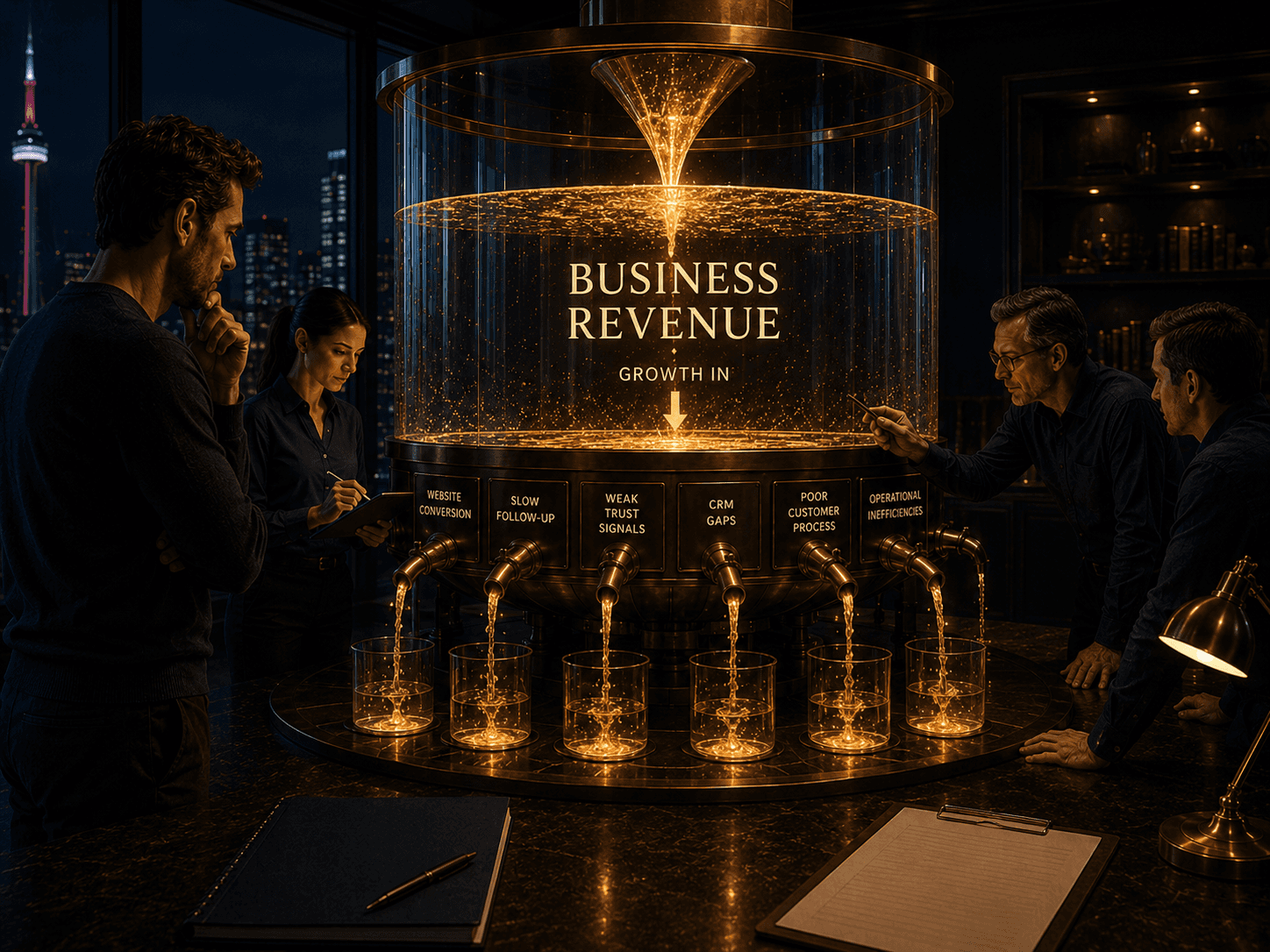
The lesson is not that chatbots are bad. The lesson is that the right answer is almost always "fix the biggest leak first," and a chatbot is rarely the biggest leak in a small business.
The Four Questions to Ask Before Buying a Chatbot
If a vendor is pitching you a chatbot, ask these four questions before you sign anything.
1. How many real conversations will it handle in my business? Get a number. If the vendor cannot quote a specific weekly volume based on your traffic, they are guessing. Walk away.
2. What is the cost per conversation, fully loaded? Take the total monthly cost (including setup amortized over 12 months) and divide by the expected conversations. If you are paying more than $5 per conversation, you can probably hire a human VA cheaper.
3. What happens to a conversation the bot cannot handle? A good chatbot has a clean handoff to a human. A bad chatbot dead-ends the conversation and the lead disappears. Ask for a demo of the handoff flow specifically.
4. Can I run this on my existing tools instead? Most "AI chatbot" features are now built into customer service platforms (Intercom, Zendesk, even Gmail) for free or near-free. If you already pay for one of those tools, you may not need a separate chatbot purchase at all.
If the vendor cannot answer those four questions cleanly, the answer is "no, not yet."
What to Do Instead
For most small businesses, the right alternatives to a chatbot solve the same problem at a fraction of the cost.
Alternative 1: A clean FAQ page. We covered this in our 5 Things AI Can Do post. A 20-minute AI-assisted FAQ rewrite handles most predictable questions, ranks for search, and costs nothing to maintain.
Alternative 2: An AI-drafted instant reply on your contact form. When a lead submits the form, an automation triggers an AI-generated personalized acknowledgment within 30 seconds. The lead feels heard. The owner replies in detail when they have time. This costs under $20 per month to set up.
Alternative 3: WhatsApp business with quick replies. For local businesses where customers prefer messaging, WhatsApp's free quick replies feature handles repeat questions without an AI layer at all. Simple. Free. Works.
Most chatbot use cases for small businesses are better solved by one of these three alternatives. Try them before paying $400 per month for a wrapper.
The Honest Bottom Line
Chatbots will become standard in small business marketing eventually. The technology is improving fast and the cost will drop. In 2026, for most small businesses, the cost-to-value ratio is still wrong. Wait until either the math works for your traffic volume, or the price drops below $50 per month, or you have already plugged the bigger leaks in your funnel.
If you cannot answer "what is the bigger leak in my funnel right now," that is the question to start with. Not the chatbot question.
Not sure if a chatbot is right for your business?
Send us your traffic numbers and your top 10 customer questions. We will give you a straight answer in 24 hours, free. Send an email to hi@talkerstein.ca.
How much does an AI chatbot cost?
Off-the-shelf chatbots run $50 to $500 per month plus setup fees of $500 to $5,000 depending on complexity. Custom chatbots built on top of OpenAI or Claude cost more. Most small businesses cannot justify the cost given their traffic volume.
Do customers like chatbots?
Customers like chatbots that solve their problem in under three messages. They hate chatbots that loop, dead-end, or block them from a human. The quality of the bot matters more than its presence.
When should a small business NOT use a chatbot?
If your weekly site traffic is under 500 visitors, if most of your customer questions require custom answers, or if your team can already respond to messages within a few hours, skip the chatbot. The math does not work.
What is the best chatbot for small business?
Off-the-shelf options: Intercom Fin, Tidio AI, Drift, ManyChat. Custom options: a GPT or Claude-powered bot built by a developer for around $2,000 to $5,000 setup. Most owners do not need either yet.
Can a chatbot replace my receptionist?
For appointment booking and FAQ-style questions, yes. For anything requiring judgment, empathy, or a real conversation with an upset customer, no. A chatbot complements a human receptionist; it does not replace one in most small businesses.




Quick Links

" height="149.2535067768008px" id="IOCTf08f5" width="1199.9520008715217px"/></svg>)